Looking for reliable flooring installation in Virginia Beach, VA? Coastal humidity, sandy soil, a high water table, and the occasional nor’easter all shape what works underfoot here. Common projects include waterproof luxury vinyl plank in a Kempsville split-level, hardwood floors in a Great Neck colonial, and tile in a Sandbridge beach house.
Homeowners across Hampton Roads use our network of vetted flooring professionals to collect competing quotes and find installers who understand coastal homes.
- Flooring Installation Services in Virginia Beach
- Virginia Beach Homes and What Lies Under the Floor
- Coastal Climate: Humidity Is the Main Concern
- Sand, Salt, and Daily Wear
- Cost Factors in Hampton Roads
- Military Moves and Rental Turnovers
- Questions to Ask Before You Hire
- Best Time to Book
- How It Works
- Helpful Flooring Guides
- Frequently Asked Questions
- How much does flooring installation cost in Virginia Beach?
- How long does flooring installation take?
- Do I need to be home during installation?
- Are your Virginia Beach flooring contractors licensed?
- Do you offer free estimates in Virginia Beach?
- Is hardwood a good idea over a Virginia Beach crawlspace?
- What flooring is best for a flood-prone first floor?
- Can flooring be installed quickly before a military move?
Flooring Installation Services in Virginia Beach
- Hardwood and engineered wood installation
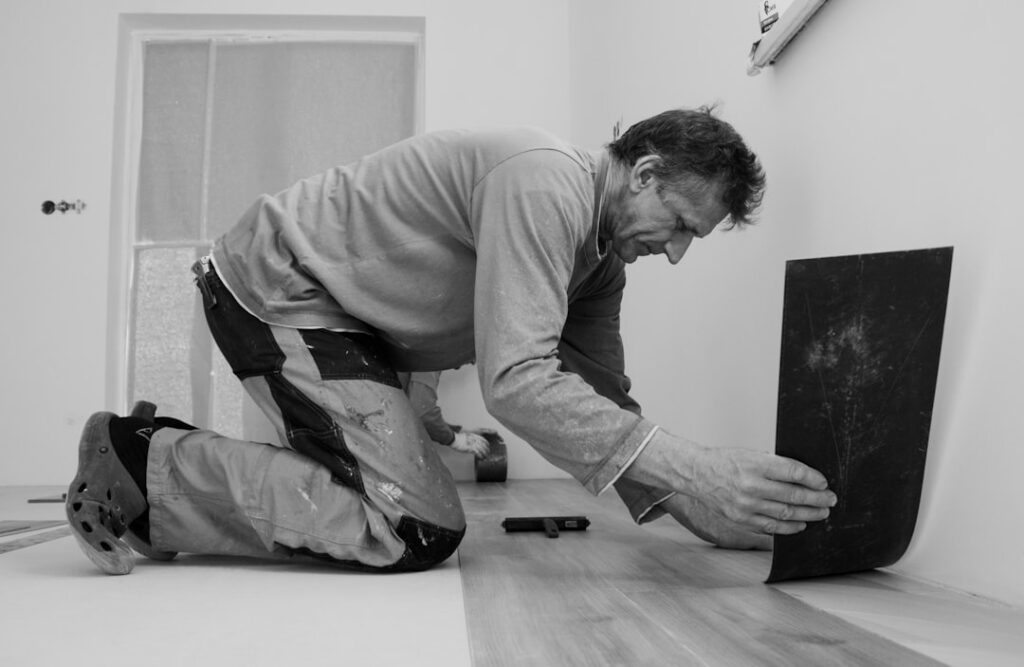
- Waterproof LVP and vinyl plank
- Tile installation for baths, kitchens, and entries
- Carpet installation
- Laminate flooring installation
- Epoxy flooring for garages
- Commercial flooring
Virginia Beach Homes and What Lies Under the Floor
Much of the city grew quickly from the 1960s through the 1990s, driven in part by the Navy presence at Oceana and Little Creek. That era left thousands of brick ranches, split-levels, and two-story colonials in areas like Kempsville, Princess Anne, Green Run, and Lynnhaven. Many of them sit on vented crawlspaces; others, especially newer subdivisions, are on slabs.
The foundation type changes the job:
- Crawlspace homes: wood subfloors over a damp crawlspace can swell and cup a new floor from underneath. Before installing hardwood, have the crawlspace checked for standing water, a torn vapor barrier, or failing vents. Many local installers will moisture-meter the subfloor and refuse to install until it reads in range.
- Slab homes: slabs on sandy, wet soil should be moisture-tested before any glue-down or floating floor goes in. A vapor retarder under floating floors is standard practice here.
- Oceanfront condos and beach houses: elevated homes in Sandbridge and towers along the resort strip deal with salt air, sand, and in condos, association rules on sound underlayment and work hours.
Homes built before the 1980s may have vinyl tile or adhesive containing asbestos under carpet or newer flooring. Test before removal.
Coastal Climate: Humidity Is the Main Concern
Virginia Beach has a humid subtropical climate moderated by the ocean. Summers are long and muggy, winters are mild and fairly damp, and hurricane season runs from June through November. Indoor humidity in a home without strong air conditioning can sit well past the 30 to 50% range wood prefers for months at a time.
That has practical effects:
- Solid hardwood needs a steady indoor climate. Run the AC or a dehumidifier year-round and let the wood acclimate in the home as the manufacturer directs.
- Engineered wood moves less with humidity swings and is often a better choice over crawlspaces and slabs.
- Waterproof LVP and porcelain tile are popular on first floors in low-lying areas and in homes near the bays and inlets, since they recover from water exposure far better than wood or laminate.
If your home is in a flood zone, think about the ground floor differently. Tile and waterproof vinyl can often be cleaned and reused after a minor water event, while wood and carpet usually cannot.
Sand, Salt, and Daily Wear
Beach sand is abrasive. In homes close to the oceanfront or Chesapeake Bay beaches, a floor with a tough wear layer and a low-sheen finish hides scratches better. Put walk-off mats at every door and plan a hard-surface entry zone rather than carpet near the back door.
Cost Factors in Hampton Roads
Installed cost depends on material, square footage, and prep. Local factors that often show up on quotes include crawlspace or subfloor repair, slab moisture mitigation, leveling uneven split-level floors, removal of old carpet and tile, and stairs. Elevated beach homes and oceanfront condos add carrying time and parking challenges.
Military Moves and Rental Turnovers
With a large military population, many homeowners are preparing a house to rent or sell before a PCS move. Durable, mid-priced LVP is a common choice for rentals because it handles pets, spills, and tenant turnover. If you are on a tight move timeline, tell installers your hard deadline when you request quotes.
Questions to Ask Before You Hire
- Will you take moisture readings on the subfloor or slab, and what readings do you need before you install?
- Do you recommend a vapor retarder or a specific underlayment for my foundation?
- If you find soft or rotted subfloor near a bathroom or exterior door, how is that priced?
- How long will the material acclimate, and where?
- Does the product warranty allow installation in a home near the water or on a ground floor?
Good answers tend to be specific. An installer who has worked in Hampton Roads for years will talk about crawlspace conditions and summer humidity without being prompted.
Best Time to Book
Spring and fall offer moderate humidity and fewer storms, which helps wood acclimation and finish work. Summer is busy and humid, and late summer through fall carries hurricane risk. Book a few weeks out in spring, when demand jumps.
How It Works
- Request a free quote: Tell us your rooms, foundation type if you know it, and the flooring you want.
- Get matched with local pros: We connect you with up to 3 licensed flooring installation contractors in the Hampton Roads area.
- Compare and choose: Check how each quote addresses moisture testing and subfloor prep.
Helpful Flooring Guides
Frequently Asked Questions
How much does flooring installation cost in Virginia Beach?
Material choice drives most of the cost, followed by subfloor or slab prep and removal of the old floor. Crawlspace repairs, if needed, are a separate expense. Free quotes give you a firm price for your home.
How long does flooring installation take?
Most projects take 1 to 5 days. Wood acclimation, moisture mitigation, and subfloor repairs can add time before installation starts.
Do I need to be home during installation?
Be there at the start to confirm the layout and at the end for a walkthrough. Crews just need access and the AC running.
Are your Virginia Beach flooring contractors licensed?
Yes. Professionals in our Virginia Beach, VA network are licensed, insured, and background-checked. You can also look up a contractor license with Virginia’s Department of Professional and Occupational Regulation.
Do you offer free estimates in Virginia Beach?
Yes. All quotes are free with no obligation, and most contractors measure in person.
Is hardwood a good idea over a Virginia Beach crawlspace?
It can be, if the crawlspace is dry. Fix drainage and vapor barrier problems first, confirm subfloor moisture readings, and consider engineered wood for extra stability.
What flooring is best for a flood-prone first floor?
Porcelain tile and waterproof LVP handle water best. Avoid laminate and solid wood on ground floors that have taken on water before.
Can flooring be installed quickly before a military move?
Often, yes. LVP and carpet can usually be installed in a day or two once the material is on site. Share your deadline when you request quotes.
Prefer to explore on your own?
See how new flooring looks in your actual room in seconds — free, no signup.
Try the free Floor Studio →