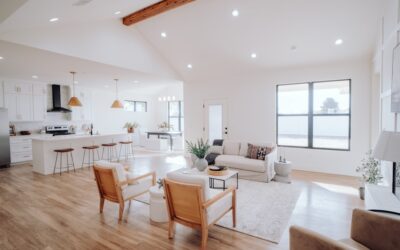
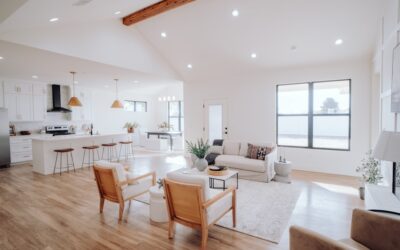
Coastal Newport homes — Rhode Island, Oregon, or California — share a flooring challenge inland buyers do not face: salt-air corrosion, persistent humidity above 65 percent, and sand tracked in from every door. Flooring Newport projects fail when installers use mainland spec sheets that ignore these conditions. After two decades doing residential flooring across coastal markets, I have learned that the right material in the wrong climate underperforms a mid-grade material chosen for the actual environment.
- What Newport Climate Does to Floors
- Best Materials for Coastal Newport Homes
- Hardwood Species That Suit the Climate
- Pros of Choosing Engineered or LVP
- Cons and Challenges
- Local Suppliers and Showrooms
- Installation Costs in Coastal Markets
- Subfloor Prep and Moisture Mitigation
- Maintenance for Long Service Life
This guide covers material choices, supplier options, costs, and the moisture and salt-exposure realities that drive success here.
What Newport Climate Does to Floors
Year-round relative humidity in coastal Newport regions typically sits between 60 and 80 percent, with summer spikes higher. Solid hardwood installed without humidity control swells in summer and shrinks in winter, with cumulative damage to tongue-and-groove joints after 3 to 5 seasons.
Salt-laden air corrodes mild-steel fasteners, threshold metal, and unfinished end-grain in hardwood. Pre-finished boards with sealed edges and stainless or aluminum threshold strips dramatically outlast site-finished installations with standard hardware.
Best Materials for Coastal Newport Homes
Engineered hardwood with European white oak or domestic hickory wear layer leads my recommendation list. The plywood substrate resists moisture-driven dimensional change far better than solid timber, and 3mm to 4mm wear layers allow one refinish cycle 15 to 20 years out.
Rigid-core luxury vinyl plank handles the salt and sand brutally well. Top picks for coastal use include CoreTec Pro Plus, Mohawk SolidTech Plus, and Karndean Korlok Reserve in 7 to 9 inch widths at $5.50 to $9 per sq ft installed.
Hardwood Species That Suit the Climate
White oak handles humidity better than red oak thanks to its closed-cell tyloses structure that resists moisture penetration. Hickory and maple come next, both with tight grain that limits dimensional movement. Cherry and walnut look beautiful but move more, and I steer beachfront clients away from them.
Quartersawn or rift-sawn cuts move less than plain-sawn boards because the growth rings run perpendicular to the face. Pay $1 to $2 per sq ft more for quartersawn in critical exposure rooms.
Pros of Choosing Engineered or LVP
Engineered hardwood gives the natural wood look coastal buyers want at resale, while resisting the cupping and gapping that destroys solid timber within a decade in beachfront homes. Plywood cores handle radiant-heated slabs in newer construction without warping.
Quality LVP delivers waterproof performance for entries, kitchens, and bathrooms tracked with wet feet from the beach. Modern visuals at 70+ unique board patterns per SKU eliminate the repeating-pattern look that flagged earlier-generation vinyl as cheap.
Cons and Challenges
Material selection is more constrained near saltwater. Solid hardwood, cheap laminate, and budget LVP with thin wear layers all fail within 3 to 7 years in coastal conditions. The premium tier of any material category becomes the practical entry point.
Acclimation timing matters more here. Plan 14 days minimum for engineered hardwood on site before install, longer in homes with intermittent HVAC use. Vacation properties used part-time face the toughest conditions because humidity swings without conditioning.
Local Suppliers and Showrooms
Newport, RI buyers should visit Atlantic Tile and Flooring, Newport Floor Covering, and East Bay Carpet for regional supply. Newport, OR and Newport Beach, CA have similar independent dealers in addition to regional chains like Carpet One Floor & Home. National brands stocked locally include Shaw, Mohawk, and Anderson Tuftex.
For custom wide-plank engineered hardwood, expect 6 to 10 week lead times from specialty mills. Local stocking dealers carry inventory ready within 1 to 2 weeks for common SKUs.
Installation Costs in Coastal Markets
Engineered hardwood runs $8 to $14 per sq ft installed across most of the Newport coastal markets. Wide-plank European oak hits $12 to $18 per sq ft installed. Quality LVP averages $5.50 to $9, with premium 12mm rigid-core at $7 to $11 installed.
Porcelain tile for entries, mudrooms, and bathrooms runs $10 to $18 per sq ft installed. Add 10 to 15 percent for coastal labor premium versus inland metros — the talent pool is smaller and installer demand stays high year-round.
Subfloor Prep and Moisture Mitigation
Concrete slabs in coastal homes can wick chloride-bearing moisture from the ground. Test using ASTM F2170 in-situ probes — any reading over 75 percent RH requires moisture mitigation. Ardex MC Rapid or Bostik UltraSet SingleStep2 at $1.50 to $3 per sq ft solves the problem before it becomes a callback.
Crawl-space foundations need encapsulation with 12-mil vapor barrier, perimeter sealing, and a dehumidifier sized for the cubic footage. Skip this step and your beautiful floor cups, gaps, or delaminates within 5 to 7 years.
Maintenance for Long Service Life
Three mats at every exterior door — outside, inside, and a secondary runner — catch 80 percent of salt and sand before it reaches finished floors. Remove shoes at the door whenever possible. The 30 seconds of inconvenience saves $3,000 in refinishing.
Damp-mop with pH-neutral cleaner weekly. Avoid steam mops, vinegar solutions, and any abrasive products. A dehumidifier sized for the floor area helps stabilize indoor RH during shoulder seasons. Done with respect for the climate, flooring Newport installations last 25 to 50 years and hold their resale value across every market cycle. Set monthly reminders for HVAC filter changes and quarterly dehumidifier reservoir cleaning so coastal mold and salt residue never build up unnoticed across the busy summer season. Take photos of the installed floor on day one and again at each maintenance milestone. The visual record helps when discussing warranty issues and dramatically simplifies any future insurance claims tied to storm or flood damage.
Prefer to explore on your own?
See how new flooring looks in your actual room in seconds — free, no signup.
Try the free Floor Studio →