
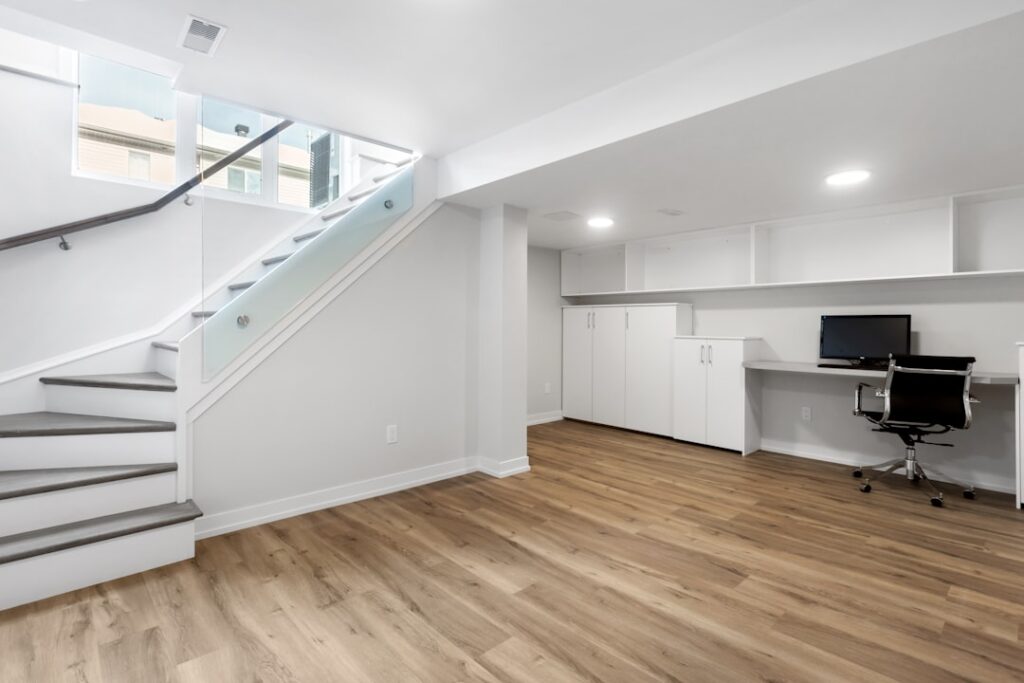
The honest answer to flooring price per square foot in 2026 is anywhere from $1.50 for sheet vinyl to $28 for wide-plank rift-and-quartered white oak. Most homeowners land between $4 and $9 per sq ft installed, depending on material choice, subfloor condition, and which part of the country they live in. Coastal metros run 20 to 40 percent higher than the national average. The numbers below are based on contractor bids I have collected over the past 12 months across 14 states.
- Carpet: $2.50 to $7.00 Per Sq Ft Installed
- Sheet Vinyl: $1.50 to $4.00 Per Sq Ft
- Luxury Vinyl Plank (LVP): $3.50 to $10.00 Per Sq Ft
- Laminate: $3.00 to $8.00 Per Sq Ft Installed
- Engineered Hardwood: $7.00 to $18.00 Per Sq Ft
- Solid Hardwood: $8.00 to $22.00 Per Sq Ft
- Tile: $7.00 to $25.00 Per Sq Ft Installed
- What Drives Regional Variation
- Material vs Labor: The 60/40 Rule
- How to Budget Realistically
Carpet: $2.50 to $7.00 Per Sq Ft Installed
Builder-grade Berber starts around $2.50 per sq ft installed including pad. Mid-range nylon plush with a 6-pound rehound pad runs $4 to $5.50. Wool and high-end stain-resistant polyester (think Stainmaster Petprotect) pushes $6 to $7.50.
Pad quality matters more than buyers realize. Stepping up from a 5-pound pad to an 8-pound rebond pad adds about $0.40 per sq ft and doubles the carpet’s effective lifespan. Always price labor and pad together because removal of old carpet is usually $0.50 to $1 per sq ft on top.
Sheet Vinyl: $1.50 to $4.00 Per Sq Ft
The cheapest legitimate flooring on the market. Roll vinyl runs $0.75 to $2 per sq ft for material, plus $1 to $2 for labor on a clean subfloor. Twelve-foot-wide rolls minimize seams in standard rooms.
Sheet vinyl gets a bad rap, but premium fiberglass-backed product from Armstrong or Tarkett can last 15 years in low-traffic areas and is essentially waterproof. The trade-off is that any tear means replacing the whole sheet, not a single plank.
Luxury Vinyl Plank (LVP): $3.50 to $10.00 Per Sq Ft
LVP and SPC are the dominant residential flooring in 2026. Builder-grade 5mm with a 6 mil wear layer costs about $1.79 per sq ft material and $2 to $2.50 to install. Premium 8mm SPC with a 22 mil wear layer runs $3.50 to $5 material plus $2.50 to $3.50 labor.
- Builder grade (4-6mm): $3.50-$5.00 installed
- Mid-range (7mm SPC): $5.50-$7.50 installed
- Premium (8mm+ with 20+ mil wear): $7.50-$10.00 installed
Wear layer is the single most important spec. Twelve mil is the minimum for residential, 20 mil for pets and kids, 28 mil for light commercial.
Laminate: $3.00 to $8.00 Per Sq Ft Installed
Laminate has lost market share to LVP but remains the better choice for very heavy point loads, like a music room with a baby grand. AC3-rated 8mm laminate from Pergo or Mohawk RevWood runs $1.69 to $2.89 per sq ft material. Labor adds $2 to $3.50.
Premium 12mm with attached cork underlayment from brands like Quick-Step pushes $5.50 to $8 installed. The thicker the core, the better the sound dampening, which matters in second-floor bedrooms over open kitchens.
Engineered Hardwood: $7.00 to $18.00 Per Sq Ft
Engineered hardwood has a real-wood top layer (the wear veneer) over a plywood or HDF core. Three-millimeter wear veneer can be sanded twice; 4mm or 6mm can be refinished three or four times.
Domestic species like red oak in 5-inch widths cost $5 to $7 per sq ft material. White oak, hickory, and walnut run $7 to $12. Wide-plank European oak with custom finishing pushes $14 to $18. Add $3 to $5 per sq ft for installation, more for glue-down on concrete slabs.
Solid Hardwood: $8.00 to $22.00 Per Sq Ft
Solid 3/4-inch hardwood is the highest-priced common flooring after natural stone. Site-finished 3.25-inch select red oak averages $8 to $10 per sq ft installed in the Midwest, $11 to $14 on the coasts. Wider 5 to 7-inch white oak with site finishing climbs to $14 to $22 installed.
Pre-finished solid is cheaper to install (no sanding, staining, or finishing on site) but more expensive to repair down the road because matching factory finishes is difficult.
Tile: $7.00 to $25.00 Per Sq Ft Installed
Ceramic tile material costs $1 to $5 per sq ft. Porcelain runs $3 to $10. Natural stone (travertine, marble, slate) ranges $5 to $20 just for the tile.
Labor is the killer with tile. A skilled tile setter charges $7 to $14 per sq ft because the work involves leveling the substrate, applying mortar, cutting around obstacles, and grouting. Add $2 to $5 per sq ft for an uncoupling membrane like Schluter Ditra, which prevents cracks but is non-negotiable on plywood subfloors.
What Drives Regional Variation
Labor dominates the price spread. A $4.50 sq ft LVP installed in rural Oklahoma costs $7.20 in San Francisco for the exact same material. Permits, parking restrictions, union labor, and licensing requirements all add up.
Subfloor prep is the wildcard. A perfectly flat subfloor adds nothing to the bid. A subfloor with 3/16 inch deflection per 10 feet adds $1 to $2 per sq ft for self-leveler. Get the contractor to inspect and document subfloor condition before signing.
Material vs Labor: The 60/40 Rule
For most flooring categories, material accounts for roughly 50 to 60 percent of total cost and labor 40 to 50 percent. Tile is the exception, where labor often equals or exceeds material cost. Understanding this split helps when comparing quotes; a contractor offering steeply discounted material is often making it up on labor lines, and vice versa.
For DIY budgeting, you can subtract labor entirely but should add 25 to 35 percent for tools, time, and the predictable mistakes a first-time installer makes. Renting a flooring nailer, miter saw, and underlayment cutter for a hardwood install runs $150 to $300 for a long weekend.
How to Budget Realistically
Take the per-square-foot installed price, multiply by your room area, then add 10 percent for waste, 5 percent for transitions and trim, and a contingency of 15 percent for surprises. A 400 sq ft room at $6 per sq ft becomes $2,400 base, plus $720 in adders, for a real budget of $3,120. The flooring price per square foot you see in advertising never reflects the final out-the-door cost.
Prefer to explore on your own?
See how new flooring looks in your actual room in seconds — free, no signup.
Try the free Floor Studio →

