
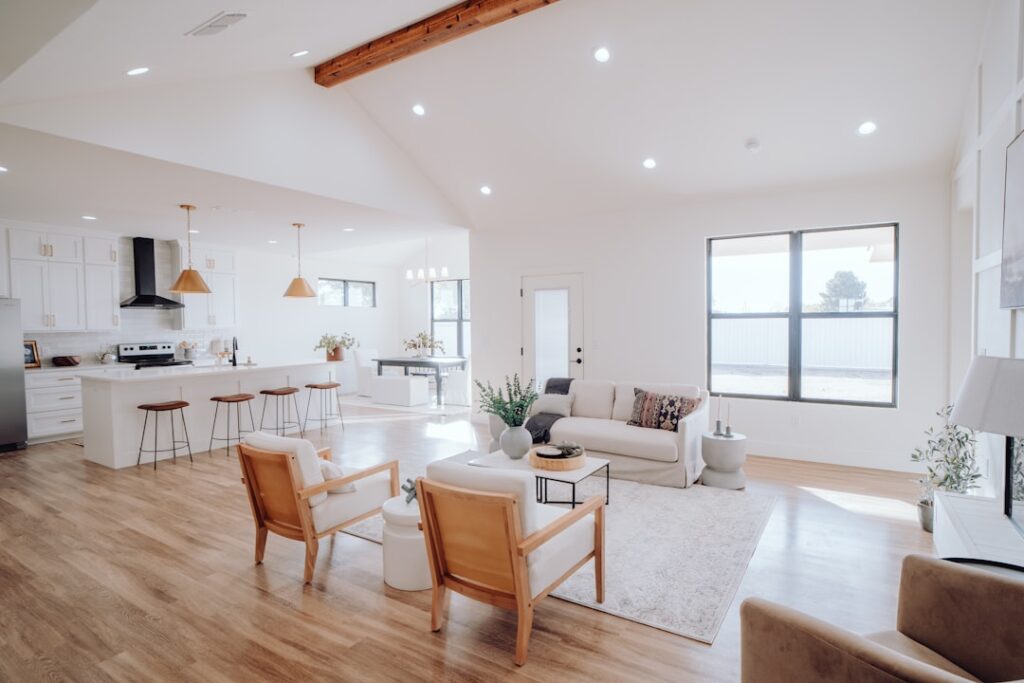
When you start comparing flooring stores Woodbury shoppers turn to, the showroom that looks nicest is not necessarily the one that will serve you best. In a Minneapolis-St. Paul suburb like Woodbury, the right floor has to survive brutal winters, salt and snowmelt at every entry, and dry indoor heat that shrinks wood for months at a time. This guide explains how to evaluate stores and installers, what materials suit the Minnesota climate, and how to make sure your quotes are actually comparable.
- What Separates a Good Flooring Store
- Types of Sources in the Woodbury Area
- Materials That Survive a Minnesota Winter
- The Pros of Buying Local
- The Cons and Tradeoffs
- How to Gather and Compare Quotes
- How to Vet an Installer
- Acclimation and Installation Notes
- Room-by-Room Recommendations
- Budgeting for the Whole Project
- Bottom Line
What Separates a Good Flooring Store
A strong local store does more than display samples. It employs staff who know which products warp in dry Minnesota winters, measures your home in person, tests your subfloor or slab for moisture, and either installs with its own crew or works with vetted, insured installers. The best stores stand behind both the product and the labor, so a problem next March is their problem to fix. Showroom polish is nice, but accountability and climate knowledge are what you are really paying for.
Types of Sources in the Woodbury Area
You generally have three kinds of sources, and a smart buyer gets quotes from more than one type.
- Big-box home centers: Wide selection and frequent sales, but installation is subcontracted and crew quality varies, so vet the installer separately from the store.
- Independent flooring retailers: Often carry higher-grade lines, offer hands-on design help, and negotiate on price, especially on closeouts and remnants.
- Flooring contractors: Some installers buy material at trade pricing and pass savings along while owning the whole job end to end.
Materials That Survive a Minnesota Winter
Climate should drive your material choice more than trends. Indoor humidity can drop below 25 percent in a heated Woodbury home, which is rough on solid wood.
- Engineered hardwood: Far more stable than solid wood in dry winter air; the smart real-wood choice at roughly $6 to $12 per square foot installed.
- Luxury vinyl plank: Waterproof, warm, and forgiving in entries and basements; about $3 to $8 installed.
- Tile with in-floor heat: Bulletproof in mudrooms where snowmelt and ice-melt salt land, and radiant heat beats the winter chill underfoot.
- Carpet: Still cozy for bedrooms in a cold climate; pair with a quality pad.
A whole-home humidifier is the unsung hero of any wood floor in this region; keeping indoor humidity between 35 and 55 percent dramatically reduces winter gapping.
The Pros of Buying Local
A nearby store or contractor offers accountability an online order never can. Local pros know which manufacturers honor warranty claims, handle acclimation and subfloor prep that make or break a floor in a dry climate, and are easy to reach when something needs attention. They can also coordinate the whole job, from measurement to disposal of your old flooring, so you are not stitching together a website order with a freelance installer.
The Cons and Tradeoffs
Local pricing usually sits above rock-bottom online material costs, and any single store stocks a finite selection, so you might not find a niche product you saw online. Good crews also book out weeks ahead during the busy spring and fall remodeling seasons, so plan rather than expecting an immediate install. These are real costs, but they buy accountability and climate-appropriate guidance you cannot get from a pallet on your driveway.
How to Gather and Compare Quotes
Never decide off a single bid. Collect at least three written quotes for the identical scope so you can compare honestly, because flooring pricing is notoriously hard to read at a glance. Insist that each quote itemizes the same components.
- Specific material brand, line, and grade
- Tear-out and disposal of the old floor
- Subfloor leveling and moisture barrier
- Underlayment, transitions, and trim
- Labor, and whether it is in-house or subcontracted
When one number is far lower than the others, ask exactly what is being skipped. The savings almost always come from omitted leveling, thinner underlayment, or a lower-grade product, and those shortcuts surface as problems within a year.
How to Vet an Installer
The installer matters as much as the store. Before signing, confirm the company carries current liability insurance and any Minnesota licensing or registration required for the work. Ask for two or three recent local references and call them; references from jobs that have been through a full winter are the most telling. Skim reviews, but weigh how the company handles complaints more than the star average. Get the full scope, timeline, payment schedule, and labor warranty in writing, and walk away from anyone pressuring you to decide on the spot or demanding a large upfront deposit.
Acclimation and Installation Notes
Acclimation is critical in Minnesota’s dry winters. Let wood and laminate sit flat in the room for 48 to 72 hours so it reaches the home’s low winter humidity before installation, and leave the manufacturer’s expansion gap around the perimeter so the floor can move with the seasons. Over a basement slab, a tested moisture barrier is essential. These steps prevent the gapping and buckling that get blamed on defective product when the real culprit is a rushed install.
Room-by-Room Recommendations
Matching the material to the room is where good decisions are made. In a cold climate, comfort and moisture handling vary a lot by space.
- Entry and mudroom: Tile, ideally with in-floor heat, to handle snowmelt, ice-melt salt, and grit.
- Kitchen: Waterproof LVP or tile that shrugs off spills.
- Living and dining: Engineered hardwood for a warm, real-wood look that stays stable in dry winter air.
- Bedrooms: Carpet for cozy warmth against the cold, with a quality pad.
- Basement: Waterproof vinyl over a vapor barrier; avoid carpet and solid wood where slab moisture is a risk.
Budgeting for the Whole Project
Build your budget around the complete job rather than the per-square-foot sticker. Factor in underlayment, moisture barrier, tear-out and disposal, subfloor leveling, transitions, trim, and labor, then add a 10 to 15 percent contingency for surprises. Older Twin Cities housing stock frequently hides uneven subfloors that only appear once the old flooring is removed. Buying 7 to 10 percent extra material upfront also protects you against future repairs, since dye lots change and a discontinued line cannot be matched later. A realistic all-in budget keeps a project from stalling halfway through.
Bottom Line
The best of the flooring stores Woodbury offers is the one that combines climate knowledge, fair itemized pricing, and a crew you can hold accountable. Lean on engineered wood and waterproof vinyl for the Minnesota climate, run a humidifier to protect any wood floor, and always compare three itemized quotes on identical scope. Verify insurance and references, get everything in writing, and your new floor will look great through many long winters.
Prefer to explore on your own?
See how new flooring looks in your actual room in seconds — free, no signup.
Try the free Floor Studio →

