When you shop for tile, you quickly learn that the brand behind it matters for quality, selection, and availability. Florida Tile is a long-established American manufacturer of porcelain and ceramic tile, producing flooring, wall tile, and backsplash collections sold through distributors and showrooms across the United States. For homeowners weighing a tile purchase, knowing what a manufacturer offers and how to buy from it helps you choose with confidence. This guide explains who Florida Tile is, the kinds of products it makes, where the tile fits in a home, and how to approach buying it.
Part of our Tile & Grout guide — explore the full guide →
Who Florida Tile Is
Florida Tile is a US-based tile manufacturer with a long history in the industry. The company produces porcelain and ceramic tile for residential and commercial projects and distributes its products through a network of showrooms, dealers, and home design centers. Like other major tile makers, it offers organized collections rather than one-off products, which makes it easier to coordinate floor, wall, and trim pieces from the same line. Because availability and current collections change over time, the most reliable way to see what is offered now is through an authorized dealer or showroom.
Porcelain Versus Ceramic Lines
Most major tile manufacturers, Florida Tile included, produce both porcelain and ceramic, and the difference guides where you use each.
- Porcelain is denser and more water-resistant, well suited to floors, showers, and high-traffic areas. Many porcelain styles imitate wood, stone, marble, and concrete using high-definition printing.
- Ceramic is lighter and often more affordable, a good fit for walls and backsplashes where heavy wear is not a concern.
When you browse a collection, check whether a given tile is porcelain or ceramic and confirm it carries the right ratings for your intended use, such as a slip-resistance rating for floors or a wet-area rating for showers.
Common Product Categories
A full-line tile manufacturer typically organizes products into categories that match how homeowners shop. Expect to find floor tile in popular formats like large-format rectangles and squares, wall and backsplash tile including subway and decorative shapes, and stone-look and wood-look porcelain that mimics natural materials with the durability of tile. Many collections also include coordinating trim and accent pieces, such as bullnose edges, mosaics, and listellos, so you can finish edges and add detail without mixing brands. Ask your dealer which trim pieces pair with the field tile you like.
Where the Tile Fits in a Home
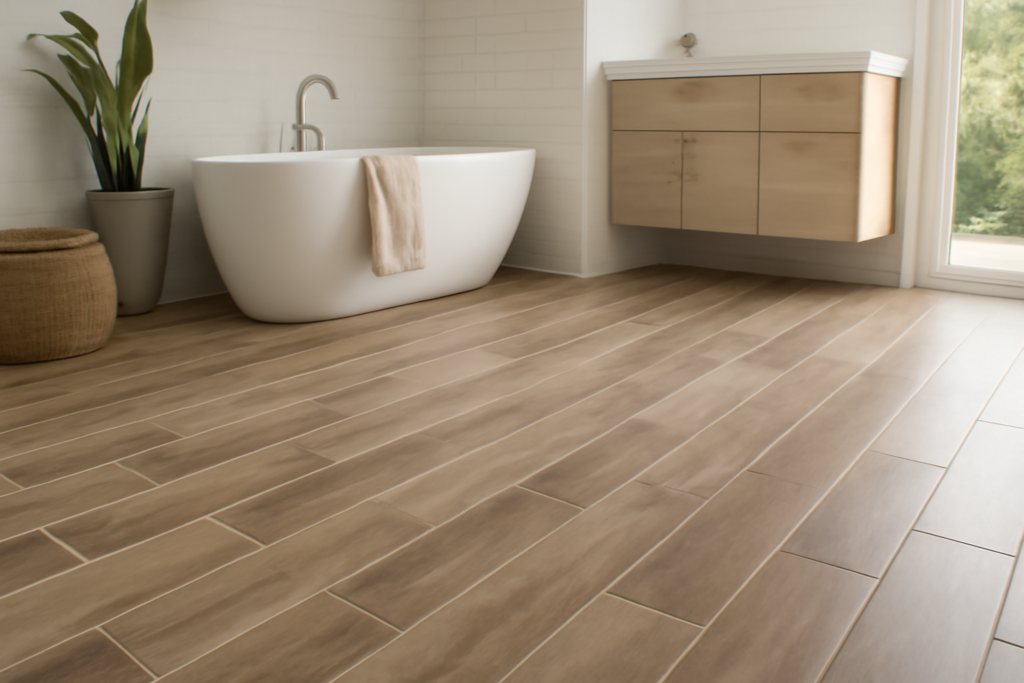
Manufactured tile from a brand like this works throughout the house. Durable porcelain floor tile suits kitchens, bathrooms, entryways, and living areas that see heavy foot traffic. Wall and backsplash tile dresses up kitchens and baths. Wood-look porcelain planks deliver the warmth of hardwood in moisture-prone spaces where real wood struggles. Stone-look porcelain offers the appearance of marble or travertine without the sealing and maintenance natural stone demands. Matching field tile with the same brand’s trim and mosaics keeps a project visually cohesive.
Judging Quality
To evaluate any tile, look past the brand name to the specs. Check the PEI rating, which indicates wear resistance and whether a tile is suitable for floors versus walls. Review the water absorption rating, since lower absorption means better performance in wet areas. For floors, confirm the slip-resistance rating fits the location. Consistent sizing, called rectified edges on many porcelain lines, allows tighter grout joints and a cleaner installation. A reputable manufacturer publishes these specs for each product, so ask to see them before buying.
How to Buy It
Tile from a manufacturer like this is generally sold through dealers and showrooms rather than directly to the public, though some products appear at home improvement retailers and through design centers. To buy, find an authorized dealer, view samples in person to judge color and finish under real light, and confirm current pricing and availability, since prices vary by region, collection, and dealer. Order all the tile for a project at once from the same production batch, called a dye lot, so colors match, and add 10 to 15 percent extra for cuts, breakage, and future repairs.
Installation Considerations
Whatever tile you buy, the installation determines how it performs and looks. Floor tile needs a flat, stable substrate, often cement backer board or an uncoupling membrane over a sound subfloor, to prevent cracking. Large-format and rectified tiles require extra attention to substrate flatness and benefit from a leveling system to avoid lippage. Wet areas like showers demand proper waterproofing behind the tile. Buy a thinset and grout suited to your specific tile and location, and seal cement-based grout after it cures. Many homeowners install wall and backsplash tile themselves, while large floors and showers are often best left to an experienced installer.
Caring for Manufactured Tile
One advantage of porcelain and ceramic tile is how little upkeep it needs. Sweep or vacuum regularly to keep grit from scratching the surface, and mop with a pH-neutral cleaner. Glazed porcelain and ceramic resist stains and moisture, so they rarely need sealing, though the grout between tiles does benefit from sealing to stay clean. Avoid harsh acidic cleaners on polished and stone-look surfaces. Address cracked grout promptly to keep water from getting behind the tile. Treated this way, quality manufactured tile holds its appearance for decades with minimal effort.
Domestic Manufacturing and Availability
One thing that sets a long-established American maker apart is domestic production. Tile manufactured in the United States tends to move through distribution faster than imported product, which can shorten lead times when you need to reorder or match a dye lot for a repair. It also means the company publishes specifications to US standards, so the PEI wear ratings, water absorption figures, and slip-resistance data you see are reported in the terms North American installers and inspectors expect. For a homeowner, that translates into easier spec verification and a better chance that an authorized dealer can source more of the same collection if your project grows or you damage a tile down the road.
Availability still varies by region and collection. Popular wood-look and stone-look porcelain lines are usually well stocked, while specialty mosaics, decorative pieces, and discontinued colors can be harder to find. The practical move is to confirm current stock and lead time with your dealer before you finalize a design, and to order all the field tile, trim, and a healthy overage in a single purchase so everything ships from the same production run.
Comparing It to Other Tile Brands
When you shop, Florida Tile sits alongside other well-known names in the porcelain and ceramic market, and the right comparison is feature by feature rather than brand by reputation. Look at the same factors across every option: the PEI rating for the traffic you expect, the water absorption class for wet or outdoor use, whether the tile is rectified for tight grout joints, and the range of coordinating trim. Two tiles that look identical in a showroom can perform very differently once you read the spec sheet, so let the published ratings guide the decision.
Price and design selection round out the comparison. Full-line manufacturers compete heavily on high-definition wood-look and stone-look porcelain, so you will often find a comparable style across several brands at different price points. Rather than assume one brand is automatically better, gather samples from a couple of makers, set them side by side under your own lighting, and weigh the finish, color accuracy, and the cost installed. The brand that offers the right specs for your room, in a finish you like, at a price your dealer can deliver on schedule, is the one to choose.
Making the Right Choice
Choosing tile is really about matching the right product to the right room, and a full-line manufacturer makes that easier by offering coordinated collections with published performance ratings. Decide where the tile is going, confirm the material and ratings suit that use, view samples in your own lighting, and buy enough from one batch to finish the job and keep spares. Approached this way, Florida Tile and other established makers give homeowners a dependable path to durable, good-looking floors, walls, and backsplashes.
Prefer to explore on your own?
See how new flooring looks in your actual room in seconds — free, no signup.
Try the free Floor Studio →