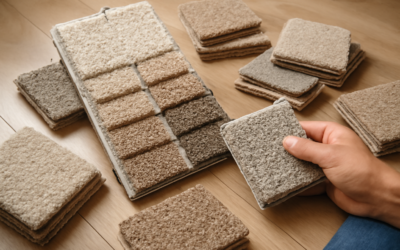
Choosing a wall color from a tiny chip under store fluorescents is how people end up repainting a room three times. Grabbing free paint swatches the right way saves you from that expensive mistake by letting you judge a color in your own light, on your own walls, at different times of day. The good news is that nearly every major brand gives away physical chips, and a growing number mail or hand out peel-and-stick samples that look far more accurate than the old fan decks. Knowing where to get them and how to test them is half the battle.
Part of our Paint & Walls guide — explore the full guide →
Where to Get Free Swatches
Most paint manufacturers want you sampling their colors because it leads to a gallon sale. That means you have plenty of no-cost options.
- Sherwin-Williams — free chip cards in store, plus order chips online with low shipping.
- Behr — free chips at Home Depot and a “Color a Room” online visualizer.
- Benjamin Moore — chips free at dealer stores; large peel-and-stick samples available for a small fee.
- Samplize — sells 12-by-12-inch peel-and-stick samples in true brand colors, occasionally with promo codes.
- Valspar and PPG — free chips at Lowe’s and independent dealers.
Hardware stores keep racks of chips you can take by the handful at no charge. Grab more shades than you think you need, including a couple lighter and darker than your target, since paint reads differently at scale.
Chips Versus Peel-and-Stick Samples
Traditional paper chips are free and convenient, but they’re small and printed with ink rather than actual paint, so the color is only approximate. They’re best for a quick first cut, narrowing fifty contenders down to five.
Peel-and-stick samples are made with real paint and measure roughly a square foot, giving a far truer read. Companies like Samplize charge a few dollars each, though watch for free-shipping or first-order promos. For the final two or three colors, the larger sample is worth it because it shows how the hue behaves across a real wall area.
How Lighting Changes Everything
The same gray can look blue at noon and lavender at dusk. North-facing rooms get cool, indirect light that mutes warm tones, while south-facing rooms flood with warm light that can make a beige feel yellow. Test every swatch against the actual light in the room where it will live.
Check your samples in the morning, midday, and under your evening artificial lights. LED bulbs come in color temperatures from a warm 2700K to a cool 5000K, and that range alone can swing how a color appears. Buy a bulb that matches your home’s existing fixtures before judging anything.
Testing Swatches the Right Way
Tape your chips or stick your samples to several walls, not just one. A color near a window behaves differently than the same color on a shadowed wall across the room. Move the samples around over a full day to catch how light travels.
- View samples against a white background to avoid the influence of your current wall color.
- Place candidates next to your fixed elements: flooring, trim, cabinets, and large furniture.
- Live with the top two for at least 48 hours before deciding.
- Avoid choosing in a freshly cleared, empty room, since furnishings shift the perceived tone.
Matching Paint to Flooring and Trim
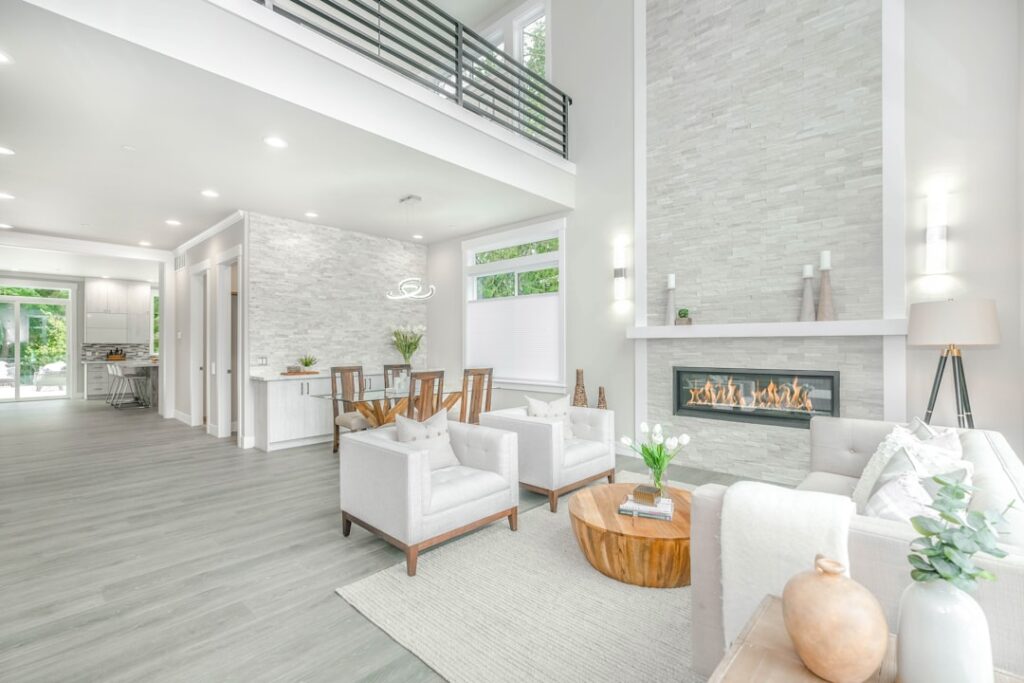
Wall color rarely fails on its own; it fails against the floor and trim. Warm-toned hardwood pairs naturally with creamy whites and earthy greens, while gray luxury vinyl or cool tile leans toward blue-grays and crisp whites. Hold your swatch directly against the floor before deciding.
Trim is the other anchor. A bright white trim makes mid-tone walls pop, but it can make an off-white wall look dingy. Decide your trim color first, then choose a wall color that flatters it rather than fighting it.
Avoiding Common Swatch Mistakes
The biggest error is committing to a color from the chip alone without painting a test patch. Even peel-and-stick samples are a layer on top of your existing wall; a true test is two coats of the actual paint over primer on a poster board you can move around.
Another trap is testing in isolation. Colors interact, so a wall that looks perfect alone may clash once your sofa and rug are back in place. Always evaluate the finalists with the room’s real contents present.
Using Online Visualizers and Apps
Most major brands now offer free color visualizer tools that let you upload a photo of your room and digitally paint the walls. Behr, Sherwin-Williams, and Benjamin Moore all run versions of these, and they’re genuinely useful for a first pass when you want to see whether a deep navy or a soft sage even belongs in the space. Treat them as a rough preview, not gospel, since screen color is never perfectly accurate.
Color-matching apps that read a photo and suggest the nearest paint color are handy when you want to match an existing fabric or a color you spotted elsewhere. Pair the digital tools with physical swatches rather than replacing them. The app narrows the field; the real chip and the painted sample confirm the choice in your actual light.
Understanding Undertones
The reason a “simple white” can go wrong is undertone, the subtle base color hiding beneath the main hue. Whites can lean yellow, pink, blue, or green; grays can read warm or cool; beiges can turn peachy or muddy depending on the light. These undertones only reveal themselves at scale and against your other finishes.
Compare your swatch against a pure white card to spot its undertone, then hold it next to your flooring, trim, and largest furniture. A gray with a blue undertone fights a warm oak floor, while a greige with a warm base flatters it. Catching the undertone before you buy a gallon is what separates a polished room from one that feels slightly off for reasons you can’t name.
Final Word
Free paint swatches are the cheapest insurance against a repaint, but only if you use them correctly. Gather chips to narrow your options, upgrade to large peel-and-stick or painted samples for the finalists, and judge them on your own walls in your own light across a full day. Match the hue to your flooring and trim, live with it for a couple of days, and you’ll buy that gallon with confidence.