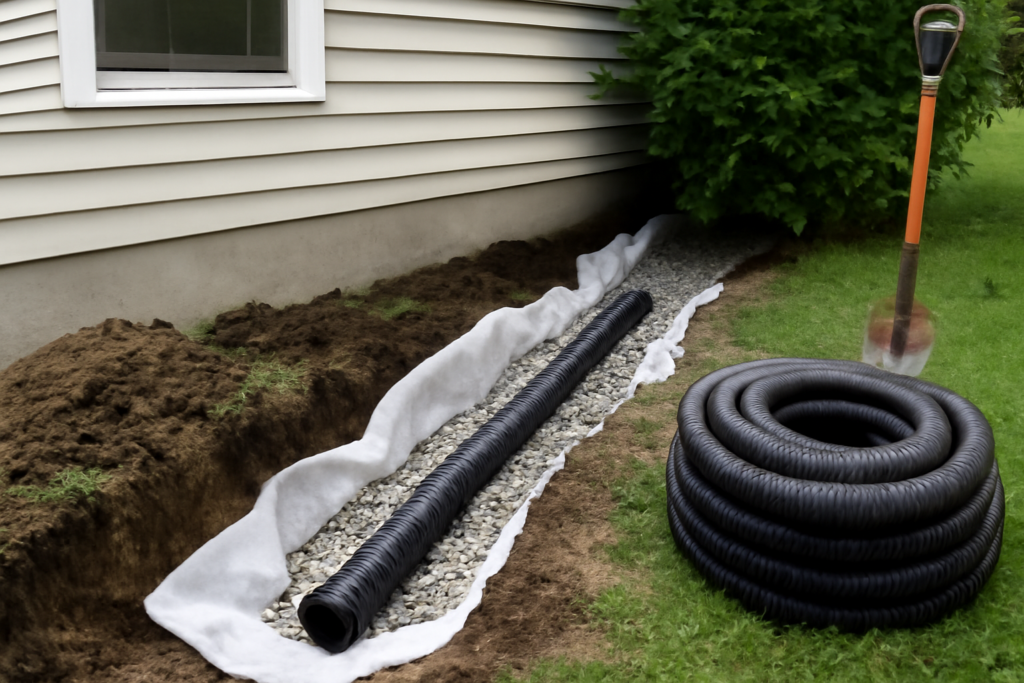
If water pools in your yard, seeps into your basement, or turns a low spot into a swamp after every storm, the solution is often surprisingly simple: French drain tile. Despite the name, this drainage system has little to do with the decorative tile on your floors. It is a proven, gravity-fed method for moving unwanted water away from your home, and understanding how it works can save you from costly foundation and moisture problems.
- What Is French Drain Tile
- How a French Drain Works
- Where French Drains Solve Problems
- Materials You Will Need
- Step-by-Step Installation Overview
- What French Drain Tile Costs
- Common Mistakes to Avoid
- DIY Versus Hiring a Pro
- Interior Versus Exterior French Drains
- Maintaining a French Drain
- Final Thoughts on French Drain Tile
What Is French Drain Tile
A French drain is a gravel-filled trench containing a perforated pipe that collects and redirects groundwater and surface water away from a problem area. The term “drain tile” is a historical holdover from when these systems used short lengths of clay or concrete pipe, called tiles, laid end to end. Today the “tile” is almost always a perforated plastic pipe, but the name persists. Water enters the pipe through its perforations and flows by gravity to a lower outlet, such as a drainage ditch, dry well, or daylight point downhill.
How a French Drain Works
The concept is elegant and relies entirely on gravity. Water always follows the path of least resistance and moves downhill. A French drain provides that easy path:
- A trench is dug on a slight downhill slope, typically about 1 percent grade.
- Gravel surrounds a perforated pipe, creating a highly permeable channel.
- Surrounding groundwater flows into the gravel and enters the pipe through its holes.
- The pipe carries water to a lower discharge point, away from the structure.
Because it works by gravity, correct slope is the single most important factor. Too little slope and water sits; too much is rarely a problem outdoors.
Where French Drains Solve Problems
French drain tile addresses a wide range of water issues around a property. Common applications include diverting surface water away from a soggy lawn, relieving hydrostatic pressure against a basement or foundation wall, drying out a persistently wet garden bed, protecting a retaining wall by relieving water pressure behind it, and channeling downspout runoff away from the house. Interior French drains, installed along the perimeter of a basement floor and tied to a sump pump, are a common fix for chronic basement seepage.
Materials You Will Need
A basic exterior French drain uses a straightforward set of materials:
- Perforated drain pipe: usually 4-inch corrugated or rigid PVC with holes.
- Landscape fabric: wraps the gravel and pipe to keep soil and silt from clogging the system.
- Washed drainage gravel: clean stone that allows water to flow freely.
- An outlet or dry well: where the collected water discharges safely.
The landscape fabric is easy to overlook but critical; without it, fine soil migrates into the gravel and pipe, eventually clogging the drain and defeating its purpose.
Step-by-Step Installation Overview
Installing a French drain is labor-intensive but conceptually simple. The general process is:
- Plan the route and slope: identify where water collects and where it can safely discharge downhill, confirming a consistent downhill grade.
- Call before you dig: have utilities located to avoid striking buried lines.
- Dig the trench: typically 8 to 24 inches deep and about 6 to 12 inches wide, maintaining the slope.
- Line with fabric and add gravel: lay landscape fabric, then a base layer of gravel.
- Lay the pipe: set the perforated pipe (holes down, per most modern guidance for exterior drains) on the gravel bed.
- Cover and wrap: add more gravel around and over the pipe, then fold the fabric over the top.
- Backfill: top with soil, sod, or decorative stone as desired.
What French Drain Tile Costs
Costs vary widely with length, depth, and access. A straightforward DIY exterior French drain may cost $10 to $25 per linear foot in materials. Professionally installed exterior drains commonly run $25 to $60 per linear foot, while interior basement French drains, which involve breaking and repouring concrete and often adding a sump pump, can range from $50 to $100 or more per linear foot. Total project costs frequently land between a few hundred dollars for a short DIY run and several thousand for a full basement perimeter system.
Common Mistakes to Avoid
Drainage projects fail for predictable reasons. Avoid these pitfalls: insufficient slope, which leaves water standing in the pipe; skipping landscape fabric, which lets silt clog the system; discharging water where it simply flows back toward the house; using unwashed gravel full of fines that reduce permeability; and burying the pipe too shallow to intercept the water table. Taking time to plan the slope and outlet correctly is what separates a drain that works for decades from one that fails in a season.
DIY Versus Hiring a Pro
A short, shallow exterior French drain in soft soil is within reach of a determined homeowner with a strong back or a rented trencher. But projects involving deep excavation, foundation work, interior basement drains, or heavy clay soil are usually worth hiring out. Professionals bring trenching equipment, know local codes and discharge regulations, and can diagnose whether a French drain alone will solve your specific water problem. For anything touching the foundation, professional assessment is money well spent.
Interior Versus Exterior French Drains
French drains come in two broad varieties, and understanding the distinction helps you target your specific water problem. Exterior French drains are installed in the yard or against the foundation from outside, intercepting groundwater and surface runoff before it reaches the house. They are ideal for soggy lawns, wet garden beds, and diverting water away from the foundation. Interior French drains are installed inside the basement, typically in a channel cut around the perimeter of the floor, and tie into a sump pump that lifts collected water out. They are the go-to fix for chronic basement seepage when exterior grading and drainage alone cannot keep water out.
Which you need depends on where and how water is entering. A few guiding points:
- Choose an exterior drain for yard flooding, downspout runoff, and keeping water away from the foundation.
- Choose an interior drain with a sump pump for water already seeping into a finished or unfinished basement.
- Combine both for severe, persistent water problems around the foundation.
Maintaining a French Drain
Like any drainage system, a French drain works best with periodic attention, and neglect is the leading cause of eventual failure. Over years, silt, roots, and debris can gradually clog the gravel or pipe, especially if landscape fabric was omitted or damaged during installation. To keep the system flowing, inspect the discharge outlet regularly to confirm water is exiting freely, and clear any leaves or debris blocking it. Periodically flush the pipe with a garden hose to dislodge sediment, and in systems with a cleanout access, use it to check for buildup. Watch for returning symptoms, such as pooling water or a soggy area, which signal a partial clog. For interior systems, test the sump pump before wet seasons and keep its intake clear. A well-maintained French drain can protect a home for decades, while a neglected one silts up and fails just when you need it most.
Final Thoughts on French Drain Tile
For persistent water problems around a home, French drain tile remains one of the most reliable and time-tested solutions available. The system is simple in principle, gravel, a perforated pipe, and gravity, but success hinges on getting the slope, fabric, and discharge point right. Whether you tackle a modest yard drain yourself or bring in a pro for a basement system, a properly installed French drain protects your foundation, dries out your landscape, and delivers peace of mind every time the rain comes.