
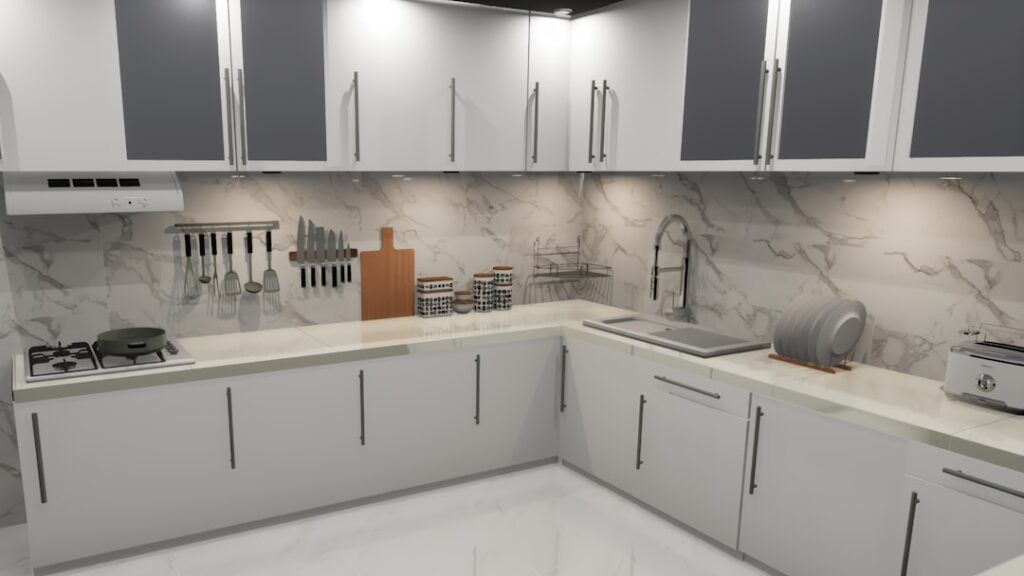
Done well, a French style kitchen reads as warm, collected, and lived-in — never staged or costume-y. Done poorly, it feels like a Parisian-themed dining room in a chain restaurant. The line between the two comes down to restraint, authentic materials, and a willingness to mix old with new. Whether you are drawn to a rustic Provençal farmhouse vibe or a more polished Parisian aesthetic, the same core design principles apply.
The Three Main French Kitchen Styles
Lumping every French-influenced kitchen together is the first mistake. Three distinct regional styles dominate, each with its own materials and color palette.
Provençal (Country French)
Originating in the south of France, the Provençal kitchen pulls from sun-bleached colors — terracotta, ochre, sage, lavender — paired with creamy off-white cabinets and rough-hewn beams. Tile floors in saltillo or hand-glazed terracotta, plaster or limewashed walls, and exposed wood ceilings define the look.
Parisian (City French)
Slimmer, more polished, more urban. Think black or deep navy cabinets, marble or quartz counters, brass hardware, dark wood floors, and a single statement light fixture. Walls in soft warm white with crown molding and tall casement windows. Less rustic, more refined.
French Bistro
The crossover style with restaurant influences — black-and-white checkered floors, marble café tables, leather barstools, and zinc countertops. A bit theatrical but always charming.
Cabinet Choices That Carry the Style
Cabinetry sets the tone. For French country and Provençal looks, choose inset Shaker doors or beadboard panel doors in cream, off-white (Benjamin Moore White Dove or Sherwin-Williams Alabaster), or pale sage. Avoid bright crisp white — it reads too contemporary.
For Parisian, look at deep blues (Hale Navy, Hague Blue from Farrow and Ball) or moody greens (Studio Green) with brass or aged bronze hardware. Glass-front upper cabinets show off white dishware. An open plate rack adds authentic country flair without screaming farmhouse.
Two practical details that elevate any French kitchen: tall toe-kick (4 inches versus the standard 3.5), and a furniture-style toe-kick that wraps the kitchen island base like the legs of an old farm table.
The Range Hood Statement
A French kitchen earns its character above the range. Skip the stainless box hood. Build a plaster or wood-paneled hood that mimics the look of an old fireplace mantel. Plaster hoods cost $1,500 to $4,000 to build site-style or order from companies like Castlewood. Wood-clad hoods can be DIYed for under $500 with cabinet-grade material wrapped around a basic stainless insert.
Inside the hood, install a quality vent insert (Best by Broan, Zephyr Tornado, or Vent-A-Hood) rated 600 to 1,200 CFM depending on your range. Underventing kills any kitchen, no matter how pretty.
Countertop Materials That Look Authentic
French kitchens traditionally use natural stone — limestone, soapstone, marble, or honed granite — never the polished engineered quartz that dominates modern American kitchens. If you want quartz for practicality, choose matte-finish options with subtle veining like Cambria Brittanicca Warm or Caesarstone Statuario Maximus, finished in a honed surface.
For period accuracy, honed Carrara marble runs $50 to $90 per square foot installed. It will etch and patina over time — embrace it. The wear is part of the look.
An alternative worth considering: butcher block on a kitchen island, paired with stone on the perimeter. The mix references a French farmhouse where workspaces evolved over generations.
Flooring: Stone, Wood, or Tile
Flooring choices reinforce the style direction. Three options that consistently read as authentically French:
- Wide-plank white oak (8 inches and wider), finished with a matte oil like Rubio Monocoat. Stay away from gray stains, which look distinctly American
- Reclaimed terracotta tile, sealed with a penetrating sealer like 511 Impregnator for stain resistance
- Honed limestone in large rectangular formats (16×24 or 18×36) with tight grout joints in a matching color
Avoid glossy ceramic tile, narrow strip oak, and any flooring with a strong sheen. French kitchens age into their patina; high-gloss finishes never quite work.
Hardware, Faucets, and Fixtures
Hardware metals carry meaning. For warm rustic kitchens, unlacquered brass (Rejuvenation, House of Antique Hardware) or aged bronze. For Parisian elegance, polished brass or matte black. Knobs and pulls in a mix of styles — round knobs on doors, bin pulls on drawers — feel collected over time rather than ordered from one catalog.
Faucets matter more than most homeowners realize. A bridge faucet (two handles connected by a horizontal bar above the deck) reads instantly classic. Look at Rohl Italian Country, Newport Brass Astor, or Kohler Artifacts for $700 to $1,800.
Lighting That Anchors the Room
French kitchens layer lighting rather than relying on one ceiling fixture. The standard formula:
- One statement pendant or chandelier over the island or table — brass, iron, or rattan
- Sconces flanking the range hood for ambient light
- Recessed cans on dimmers for general illumination, kept to a minimum (no more than four in an average kitchen)
- Under-cabinet LED strips for task light
Avoid the row of identical pendants over the island — three matching glass globes is an American convention rather than a French one. Choose one bold fixture instead.
Final Touches That Make It Feel Lived-In
The most French detail in any French kitchen is the deliberate clutter. Open shelving stacked with mismatched ironstone, copper pots hung on a wall rack, fresh herbs in terracotta pots on the windowsill, a fruit bowl always on the counter. Nothing in a French kitchen is too perfect or too matched.
Skip the words. Signs that say “Bon Appétit” or “Boulangerie” are kitsch in a French kitchen. Let the materials and proportions do the talking instead.


