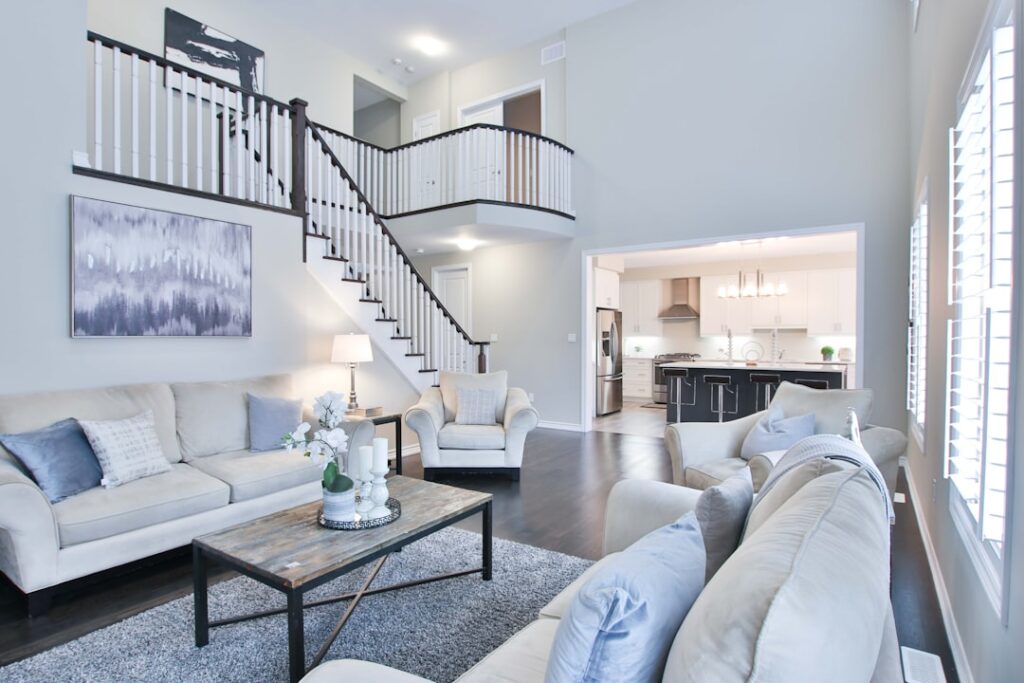
A portable air cleaner scrubs one room, but the air in the rest of your house keeps circulating dust, pollen, and pet dander untouched. A furnace air purifier solves that by treating every cubic foot of air as it passes through your central heating and cooling system, cleaning the whole house from a single unit tied into the ductwork. If anyone in your home has allergies, asthma, or simply hates dusting twice a week, this is one of the highest-impact indoor air upgrades you can make.
- How a Furnace Air Purifier Works
- Media Filters and MERV Ratings
- Electronic Air Cleaners
- UV and Oxidation Purifiers
- Choosing the Right System for Your Home
- Installation and Cost
- Whole-House Versus Portable Units
- Understanding Airflow and Static Pressure
- Signs Your Home Needs Better Filtration
- Keeping It Working
How a Furnace Air Purifier Works
Your forced-air furnace or air handler already moves the entire home’s air through its ducts every time it runs. A furnace air purifier installs in that airstream, usually in the return duct or the cabinet just before the blower, so it captures or neutralizes contaminants on every pass. Because it treats air continuously as the system cycles, it addresses the whole house rather than a single 200-square-foot room like a tabletop unit.
These systems fall into a few families: high-efficiency media filters, electronic air cleaners, and UV or oxidation-based purifiers. Some homes combine them, using a good media filter for particles plus a UV lamp for biological growth on the coil. Knowing what problem you are solving, particles versus odors versus germs, tells you which type to buy.
Media Filters and MERV Ratings
The most common and reliable upgrade is a high-efficiency media filter, a thick pleated filter, often 4 to 5 inches deep, housed in its own cabinet added to the ductwork. Filters are graded by MERV, the Minimum Efficiency Reporting Value, from 1 to 16 for residential use. Higher captures smaller particles:
- MERV 8: Catches dust, lint, and pollen; a basic baseline
- MERV 11: Adds finer dust, pet dander, and some mold spores; a great allergy-friendly middle ground
- MERV 13: Captures fine particles including smoke and many bacteria-sized particles
- MERV 16: Near-hospital grade, capturing very fine particulates
There is a catch. The higher the MERV, the more the filter restricts airflow, and a filter too dense for your blower strains the system and can reduce heating and cooling performance. A deep 4-inch media cabinet is the sweet spot because its large surface area delivers MERV 11 to 13 filtration without choking airflow the way a thin 1-inch MERV 13 would. Match the filter to what your system can handle, and change deep media filters every 6 to 12 months.
Electronic Air Cleaners
Electronic air cleaners, sometimes called electrostatic precipitators, charge incoming particles and then collect them on oppositely charged metal plates. Their advantage is that the collector plates are washable, so you rinse them in the sink instead of buying replacement filters. They can capture very fine particles down toward smoke size.
The tradeoff is maintenance and a caveat: neglected plates lose effectiveness quickly, and some ionizing designs can produce trace ozone, which is a lung irritant. If you choose an electronic model, commit to cleaning the cells monthly and pick a reputable ozone-safe unit. Many homeowners find a deep media filter simpler to live with.
UV and Oxidation Purifiers
Ultraviolet germicidal lamps mounted near the evaporator coil target biological contaminants, killing or inactivating mold, bacteria, and viruses in the airstream and, importantly, keeping the coil itself free of the mold that loves that cold, damp surface. UV does not capture dust, so it is a complement to a good filter, not a replacement.
Newer photocatalytic and hydroxyl-based systems aim to break down odors and volatile organic compounds in addition to microbes, useful in homes fighting cooking smells, pet odor, or smoke. Pair one of these with a MERV 11 to 13 media filter and you cover particles, germs, and odors together.
Choosing the Right System for Your Home
Match the solution to your actual complaint:
- Allergies and dust: A 4-inch MERV 11 to 13 media filter is the best first move
- Mold on the coil or musty air: Add a UV lamp at the coil
- Odors, smoke, or VOCs: Consider a carbon filter or an oxidation-based purifier alongside your media filter
- Immune-compromised household: Combine MERV 13-plus filtration with UV
Before buying the densest filter available, confirm your blower can move air through it. An HVAC tech can check the static pressure and recommend the highest MERV your system tolerates without straining.
Installation and Cost
A media filter cabinet must be cut into the return duct or furnace cabinet, which is straightforward for an HVAC installer and doable for a skilled DIYer with sheet-metal tools. UV lamps mount into the plenum near the coil and wire to power. Realistic installed costs:
- Media filter cabinet: roughly $300 to $700 installed, plus $40 to $90 per replacement filter
- Electronic air cleaner: roughly $600 to $1,000 installed
- UV germicidal lamp: roughly $300 to $800 installed, with bulbs replaced yearly
Whole-House Versus Portable Units
Homeowners often wonder whether to invest in a furnace-mounted system or just buy a few portable purifiers. Each has a place. A furnace air purifier treats the entire home from one location, runs quietly out of sight, and never takes up floor space, but it only cleans air while the system’s blower is moving air, so you may want to run the fan continuously. Portable units clean a single room independently of the HVAC and can be moved to wherever the need is greatest, but they are visible, take up space, and each one filters only its immediate area.
For a household with whole-home allergy or dust concerns, the furnace-integrated approach is more elegant and effective across the entire house. For a targeted problem, one asthmatic child’s bedroom or a home office, a good portable unit may be all you need. Many families use both: a media filter and UV lamp on the furnace for baseline whole-house cleaning, plus a portable HEPA unit in the bedroom of whoever is most sensitive. The two strategies complement rather than compete.
Understanding Airflow and Static Pressure
The most important technical concept with any furnace air purifier is that filtration and airflow are in tension. Every filter resists the air trying to pass through it, a force measured as static pressure. Push that resistance too high and your blower cannot move enough air, which reduces heating and cooling output, freezes the air-conditioning coil, or overheats the furnace’s heat exchanger, and it drives up your energy use as the system labors.
This is why professionals favor deep 4- or 5-inch media filters over thin high-MERV panels. The deep filter’s large pleated surface area gives the air far more room to pass through, so it delivers strong filtration at low resistance. If you want the cleanest air your system can support, ask an HVAC technician to measure the static pressure across your filter and blower. They can tell you the highest MERV rating your specific equipment tolerates and whether the return ductwork needs enlarging to handle a better filter without strain. Matching filtration to your blower’s capacity is what separates a system that quietly cleans the air from one that struggles and wears out early.
Signs Your Home Needs Better Filtration
How do you know a furnace air purifier is worth the investment? A few telltale signs point to poor indoor air. If you dust surfaces and they are gray again within a day or two, your current filtration is letting fine particles recirculate. Lingering cooking, pet, or musty odors, frequent sneezing and congestion that ease when you leave the house, and visible haze in a sunbeam all suggest the air handler is not cleaning the air well.
Certain households benefit more than others. Homes with pets, smokers, or wood-burning stoves put extra particulate into the air. Anyone with asthma, allergies, or a respiratory condition feels the difference most, and newborns and elderly family members are especially sensitive. If your home sits in a wildfire-prone region or a high-pollen area, upgraded whole-house filtration keeps outdoor smoke and pollen from taking over the interior. When several of these apply, stepping up from a basic 1-inch fiberglass filter to a proper deep media system or an added UV stage produces a difference you can genuinely feel and see on your shelves.
Keeping It Working
The best purifier fails if you ignore maintenance. Mark a calendar reminder to inspect filters seasonally, wash electronic cells monthly, and replace UV bulbs annually since they lose output long before they visibly burn out. Run your system fan on the “on” or “circulate” setting rather than “auto” if air quality is a priority, so air keeps passing through the purifier even when the furnace is not actively heating. Chosen correctly and maintained, a furnace air purifier quietly cuts the dust on your shelves, eases allergy symptoms, and keeps the whole house breathing cleaner air all year.