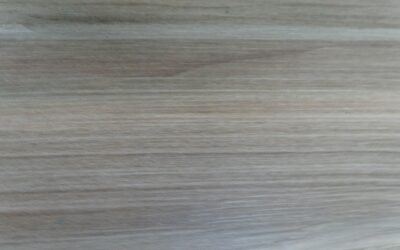
If you have ever pulled up a 20-year-old laminate in perfect condition, odds are strong it was made in Germany. German flooring built its reputation on ruthless quality control, DIN-certified emissions standards, and a manufacturing culture that still treats click-locking profiles as precision engineering rather than commodity millwork. The trade-off is price — expect to pay 20 to 40 percent more than comparable Asian or North American product — but the dimensional stability and finish wear rates are genuinely different. Here is what matters before you commit.
Why German Manufacturing Stands Apart
Germany’s flooring industry clusters in Bavaria, North Rhine-Westphalia, and Saxony, where family-owned mills have been building out of local beech, oak, and spruce for generations. The manufacturing standard is DIN EN 13329 for laminate and DIN EN 14342 for engineered wood, both of which cap formaldehyde emissions, specify abrasion class minimums, and require dimensional tolerances tighter than the equivalent ISO benchmarks most other producers settle for.
What you feel on install is the click profile. German click systems — Uniclic, 2Lock, Megaloc, ProClick — close with a positive snap and resist peaking over a decade of humidity cycles. The boards come out of the same CNC line that stamps Mercedes body panels down the road, and it shows.
The Major German Flooring Brands
Egger
Egger runs one of the largest laminate mills in Europe out of Wismar and exports to over 100 countries. Their Pro and Design collections offer AC4 and AC5 wear ratings at $2.50 to $5 per square foot. Egger is known for photorealistic wood and stone decors and a 30-year residential warranty on most ranges.
Kaindl
Austrian by headquarters but German in manufacturing culture, Kaindl produces laminate at Salzburg and ships widely into the US through specialty distributors. Their Natural Touch embossed-in-register finishes reproduce oak and walnut grain with depth that rivals engineered wood at $3 to $6 per square foot.
Kronotex
Part of the Swiss Krono group but manufactured in Heiligengrabe, Germany, Kronotex focuses on the high-traffic AC5 category. The Exquisit and Robusto lines are popular in rental properties and light commercial because they hold up to AC5 abrasion while pricing around $2 to $4 per square foot.
Classen
Classen, out of Kaisersesch, invented several of the click-locking systems other brands now license. Their Neo 2.0 SPC collection combines a mineral core with a German-engineered locking edge and runs $4 to $7 per square foot.
Meister
Meister (Meisterwerke Schulte) makes some of the most refined engineered hardwood in Europe out of Rüthen. Their Lindura range uses a real oak veneer bonded to an HDF core with a surface toughened by proprietary resin, hitting $8 to $14 per square foot.
Haro
Hamberger Flooring, sold as Haro, is the premium end of the German spectrum. Their Disano SPC and 4000-series engineered oak plank command $9 to $18 per square foot and carry 30-year residential warranties with transferable coverage.
Pros of German Flooring
- Tight tolerances — Click edges mill to fractions of a millimeter, giving near-seamless joints
- Low emissions — DIN-certified products meet or beat CARB Phase 2 and EPA TSCA Title VI formaldehyde limits
- Long warranties — 25 to 30 years residential is standard, with some lines offering lifetime structural coverage
- Photorealistic decor — Embossed-in-register surfaces align visual grain with tactile texture for a convincing wood look
- Sustainable forestry — Most brands carry PEFC or FSC chain-of-custody certification
Cons to Weigh
Price is the obvious hurdle. You are paying for labor costs, European shipping, and smaller-volume US distribution. Budget laminate from Home Depot can land at $1.50 per square foot; comparable German product starts at $3.
Availability is the second constraint. Outside major metro areas, you may need to order through a flooring specialty dealer and wait two to six weeks. Kaindl, Haro, and Meister in particular ship in smaller US quantities and can take longer.
Board dimensions are often metric. German planks commonly run 1380 x 193 mm rather than standard US 48 x 7 inch sizing, which matters if you are patching into existing flooring.
Laminate vs Engineered Wood
German laminate dominates the AC4-AC5 high-durability category because the HDF cores are denser (850-900 kg/m³) than competitors. Expect 20+ years of service in residential use and 10+ in light commercial.
German engineered wood from Meister, Haro, and Parador uses 3 to 4 mm oak veneers over multi-ply or HDF cores. The Lindura process in particular bonds wood and resin in a way that pushes surface hardness past solid oak while preserving refinishability.
Installation Notes
Most German laminate and engineered products float over a 2 to 3 mm underlayment. For basements and bathrooms, pair with a vapor-barrier pad (6 mil poly minimum). Leave 3/8-inch expansion gaps at walls and under every 40 linear feet of run.
Radiant heat compatibility is strong across German brands, but confirm the specific SKU. Surface temperatures should not exceed 82°F, and the product data sheet will list the thermal resistance (R-value) needed for under-floor heating calculations.
Where to Buy in the US
- Floor & Decor stocks select Egger and Kronotex lines
- BuildDirect and Flooret carry Kaindl and Classen
- Specialty retailers like European Flooring Source and The Hardwood Flooring Store handle Meister and Haro
- LL Flooring and Lumber Liquidators occasionally run Egger closeouts
Is It Worth the Premium
If you are flipping a rental, the math rarely pencils — a $1.50 laminate hitting AC3 will serve fine. For a primary residence you plan to hold ten-plus years, the tighter milling, lower emissions, and genuine 25-year warranty on German product make the upcharge reasonable. Run the numbers on replacement cost: a $3 floor that lasts 25 years beats a $1.50 floor replaced at year 12.
Prefer to explore on your own?
See how new flooring looks in your actual room in seconds — free, no signup.
Try the free Floor Studio →