Cool gray floors dominated the 2010s, but the pendulum has swung back toward warmth, and golden oak vinyl plank flooring is leading the return. Its honeyed amber tones bring instant coziness to a room, flatter natural light, and pair beautifully with the warm-wood revival happening in kitchens and living rooms. Better still, you get that inviting classic-oak glow in a waterproof, scratch-resistant plank that costs a fraction of real hardwood and installs without a sander in sight.
What Golden Oak Looks Like
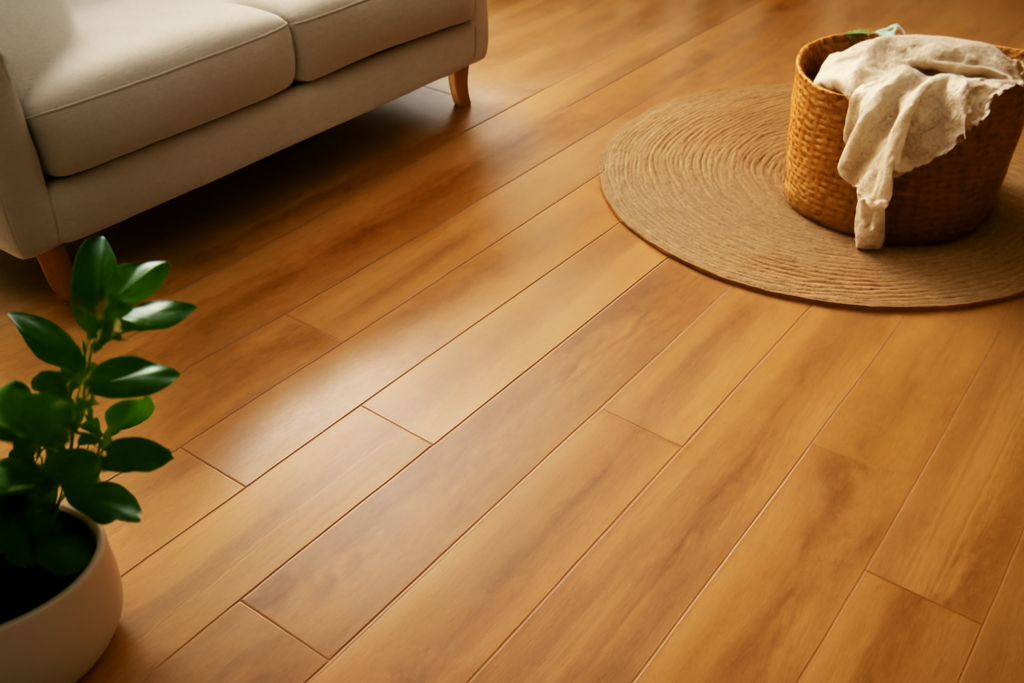
Golden oak sits in the warm middle of the wood spectrum: lighter and more amber than walnut, richer and more yellow-gold than a pale natural oak. Think of the honeyed tone of traditional solid oak flooring or vintage oak furniture. Quality golden oak LVP reproduces the wood’s open, cathedral grain, subtle knots, and plank-to-plank color variation using high-definition printing and embossed texture.
The best products use embossed-in-register (EIR) texture, where the surface grooves align with the printed grain so the plank feels like real oak underfoot. A satin or low-matte finish reads most authentically; high gloss tends to look plasticky and dates quickly.
Why Choose Golden Oak Vinyl Over Hardwood
Real golden oak hardwood is gorgeous but demanding. It scratches, dents, and must stay dry. Golden oak vinyl keeps the look and drops the drawbacks:
- Waterproof — a rigid SPC or WPC core survives kitchens, baths, and basements where solid oak can’t
- Scratch and dent resistant — a thick wear layer handles pets, kids, and furniture without gouging
- No refinishing — the color never needs sanding and re-staining; it stays golden for the life of the floor
- Budget-friendly — typically $2.50 to $5.50 per square foot versus $6 to $12 for solid oak plus finishing
- Easy DIY install — click-lock planks float over most subfloors without nails or glue
Best Design Pairings for Golden Oak
Golden oak’s warmth is versatile, but the pairings matter. Because the floor already brings strong warm color, balance it thoughtfully:
- White and cream cabinets — crisp white cabinetry keeps a golden floor from feeling heavy and creates a bright, classic contrast
- Sage and muted green — soft greens complement amber wood beautifully in modern farmhouse kitchens
- Navy and deep blue — a bold blue island or accent wall pops against golden oak’s warmth
- Warm neutral walls — greige, warm white, and soft taupe let the floor be the star
Avoid pairing golden oak floors with equally golden or orange oak cabinets, since two competing warm woods can look dated and muddy. If your cabinets are also warm oak, add contrast through white countertops, black hardware, or a painted island.
Which Rooms Suit It Best
Golden oak works almost anywhere, and its waterproof core expands the options past what real oak allows. It warms up living rooms and bedrooms, brightens kitchens, and, because it resists moisture, holds up in bathrooms, mudrooms, and finished basements. Running the same golden oak plank across an open floor plan creates a seamless, cohesive flow that makes a home feel larger and more expensive.
In north-facing or dim rooms, golden oak’s amber tone counteracts cool, flat light and adds a sunny feel that gray floors can’t provide.
What to Look for When Buying
To avoid a cheap-looking result, check these specs before you order:
- Wear layer — 12 mil minimum for family homes; 20 mil or more for high-traffic areas and pets
- Core — rigid SPC for the best stability and dent resistance, WPC for a warmer, softer feel underfoot
- Texture — EIR embossing for realistic grain, not a smooth or generic surface
- Finish — satin or matte over high gloss
- Plank size — wider planks (7 inches plus) and longer boards read more like premium hardwood
- Pattern variety — 12 or more unique plank faces to reduce repetition
- Certifications — FloorScore or GREENGUARD Gold for low indoor VOC emissions
Always order samples and view them in your own lighting. Golden oak can flash more orange under warm bulbs and more muted under daylight, so confirm the tone against your cabinets and trim before committing.
Installation Overview
Most golden oak LVP uses a click-lock floating system. Acclimate the boxes in the room for 48 hours, leave a 1/4-inch expansion gap around the perimeter, and stagger end joints by at least 6 inches for a natural layout. Mixing planks from several boxes as you install scatters the printed patterns and prevents color clumping. A tapping block, rubber mallet, and utility knife handle most of the work, and an average room installs in a day.
For a professional-looking result, dry-lay the first few rows to arrange the color variation attractively before locking anything down.
Cost and Value
Expect material costs of $2.50 to $5.50 per square foot for quality golden oak vinyl, with premium wide-plank, 20-mil collections at the top of the range. Professional installation adds $1.50 to $4 per square foot. A 300-square-foot living room lands around $1,200 to $1,700 in DIY materials, well under the cost of solid oak plus sanding and finishing.
With a durable wear layer and no refinishing ever required, golden oak vinyl delivers strong long-term value, especially in moisture-prone rooms where hardwood would be a risky choice.
Golden Oak vs. Other Warm Wood Looks
Golden oak is one of several warm-wood options, and knowing the differences helps you land on the right tone:
- Golden oak — amber-honey warmth, classic and inviting; the sweet spot between pale and dark
- Natural oak — lighter and more neutral, with less yellow; reads more modern and Scandinavian
- Honey oak — very similar to golden but often slightly more yellow-orange, common in older kitchens
- Walnut — noticeably darker and browner, richer and more formal
- Hickory — warm but with dramatic light-to-dark contrast and heavy graining
If your space already leans warm and traditional, golden oak reinforces that beautifully. If you want warmth with a cleaner, more current edge, a lighter natural oak may serve you better. Ordering samples of two or three adjacent tones side by side is the surest way to feel the difference in your own room.
Caring for Golden Oak Vinyl
Maintenance is refreshingly simple and never involves the sanding or refinishing that real oak demands. Sweep or dust-mop regularly to remove grit that would otherwise dull the finish, and damp-mop with a pH-neutral vinyl cleaner as needed. Avoid steam mops, wax, and abrasive pads, all of which can damage the wear layer. Protect the surface with felt pads under furniture legs and walk-off mats at entrances to trap sand. With that basic routine, a quality golden oak floor with a 20-mil wear layer holds its warm color and looks new for 15 to 25 years, and the amber tone never fades from washing the way a stained hardwood eventually would. Because the color runs through the printed layer rather than sitting in a surface stain, there’s no risk of wearing through to bare wood in traffic paths, which is a common complaint with site-finished oak in hallways and kitchen work zones.
The Bottom Line
Golden oak vinyl plank flooring brings back the warm, honeyed wood look that makes rooms feel inviting, without the fragility or upkeep of real oak. Choose a rigid core, a 12-mil-plus wear layer, EIR texture, and a satin finish, then pair it with white cabinets, sage, or navy for a fresh, current look. Sample in your own light, install with staggered joints, and golden oak vinyl plank flooring gives you timeless warmth and waterproof durability in one affordable package.
Prefer to explore on your own?
See how new flooring looks in your actual room in seconds — free, no signup.
Try the free Floor Studio →