Bathrooms are the toughest room in the house for wall coverings. Constant humidity, splashing water, and big temperature swings will defeat ordinary paper wallpaper in months. That is exactly why vinyl wallpaper for bathroom walls has become the go-to choice for homeowners who want pattern and personality without inviting peeling and mildew. Vinyl’s water-resistant surface stands up to steam far better than paper, making it a smart, design-forward upgrade when it is chosen and installed correctly.
- Why Vinyl Holds Up in Bathrooms
- Types of Vinyl Wallpaper
- Where to Use It and Where to Be Careful
- Preparing the Walls
- Installation Tips for Moisture Areas
- Cleaning and Maintenance
- Design Ideas for Bathroom Walls
- Vinyl Wallpaper vs. Other Bathroom Wall Options
- How Long It Lasts
- Is It the Right Choice?
Why Vinyl Holds Up in Bathrooms
The advantage comes down to the surface. True vinyl wallpaper has a plastic-coated face that repels moisture, so steam and the occasional splash bead up and wipe away instead of soaking in. That same coating makes it scrubbable, which matters in a room that collects toothpaste flecks, soap film, and the inevitable splatter near the sink.
Paper-based and many delicate specialty papers absorb humidity, swell, and lift at the seams. Vinyl resists that cycle, which is why it lasts dramatically longer in a high-moisture room.
Types of Vinyl Wallpaper
- Solid vinyl: A continuous vinyl layer on a paper or fabric backing. The most durable and moisture-resistant option, ideal for full bathrooms with showers.
- Vinyl-coated paper: Paper with a thin vinyl coating. More water-resistant than plain paper but better suited to powder rooms and low-humidity areas than steamy showers.
- Peel-and-stick vinyl: Self-adhesive panels that are renter-friendly and easy to install. Great for accent walls, though seams need extra attention in wet zones.
For a full bath that sees daily showers, solid vinyl is the safest bet. For a half bath, a vinyl-coated or peel-and-stick option is usually plenty.
Where to Use It and Where to Be Careful
Vinyl wallpaper performs beautifully on the dry and semi-dry walls of a bathroom, the vanity wall, the area around a mirror, an accent wall, or a powder room with no shower. What it is not designed for is direct, prolonged water contact. Avoid applying wallpaper inside a shower enclosure or on a wall that gets hit directly by the showerhead; those surfaces belong to tile or proper waterproof paneling.
Think of vinyl wallpaper as moisture-resistant, not waterproof. It thrives in humidity but will eventually fail if it is constantly drenched.
Preparing the Walls
Good prep is the difference between wallpaper that lasts a decade and wallpaper that curls in a year. Start with a clean, smooth, dry surface. Repair holes, sand rough spots, and wipe away any soap residue or grease. In a bathroom, applying a mold- and mildew-resistant primer is well worth the extra step, because it gives the adhesive a sound surface and adds a layer of protection against moisture trapped behind the paper.
Make sure the walls are fully dry before you begin. Hanging wallpaper over a damp or recently painted wall traps moisture and almost guarantees peeling.
Installation Tips for Moisture Areas
Seams are the weak point in any bathroom wallpaper job, so treat them carefully. Use a quality adhesive rated for high-humidity environments, and press seams down firmly with a seam roller to keep edges from lifting. Wipe excess paste immediately and smooth out air bubbles as you go.
Ventilation during and after installation helps the adhesive cure properly. Once it is up, run the exhaust fan during and after showers to pull humidity out of the room quickly. Reducing how long the walls stay damp is the single best thing you can do to extend the life of any bathroom wall covering.
Cleaning and Maintenance
One of vinyl wallpaper’s best traits is how easy it is to keep clean. Wipe it down with a damp microfiber cloth and a mild, non-abrasive cleaner to remove splashes and dust. Avoid harsh scrubbing pads and strong solvents, which can dull or damage the surface. Address any visible moisture at the seams promptly, and keep an eye on corners and edges where lifting tends to start.
Design Ideas for Bathroom Walls
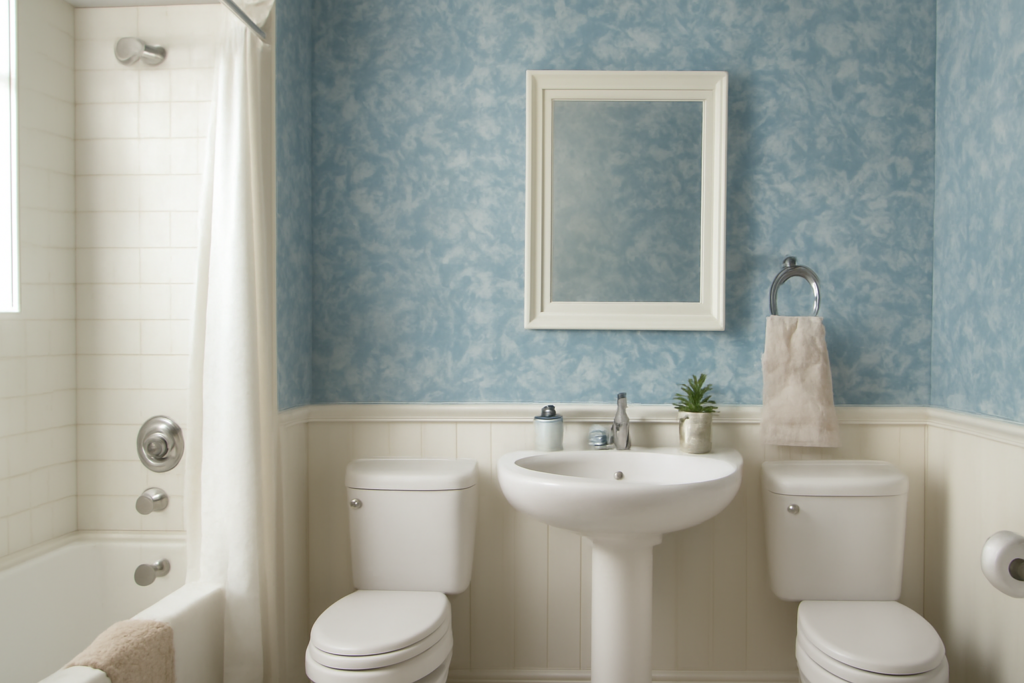
Vinyl wallpaper opens up design possibilities that paint and tile cannot easily match. A bold floral or botanical print turns a small powder room into a jewel box, while a subtle geometric or grasscloth-look texture adds quiet sophistication to a larger bath. Many homeowners use wallpaper on a single accent wall, often behind the vanity or toilet, to create a focal point without committing the whole room.
For a balanced look, pair patterned wallpaper with simple finishes elsewhere, plain tile, solid paint on the remaining walls, and neutral fixtures, so the wallpaper stays the star rather than competing with everything around it.
Vinyl Wallpaper vs. Other Bathroom Wall Options
It helps to see where vinyl wallpaper fits among the alternatives:
- Tile: The most waterproof option and the only choice for shower walls, but more expensive and labor-intensive to install.
- Paint: Cheapest and easiest, but lacks pattern and texture and shows wear on bathroom walls over time.
- Vinyl wallpaper: The middle ground, offering pattern and washability with moderate cost, ideal for walls outside the direct splash zone.
- Beadboard or paneling: Durable and classic, often combined with wallpaper above a chair rail.
How Long It Lasts
With good installation and proper ventilation, quality solid vinyl wallpaper in a bathroom can last many years, often a decade or more on walls outside the splash zone. Lifespan drops sharply in poorly ventilated rooms where steam lingers, or when seams were not sealed well. The biggest factors in longevity are keeping the room dry between uses with a working exhaust fan, applying a mildew-resistant primer at install, and addressing any lifting edges promptly before they peel further. Treat those three things seriously and your wallpaper will outlast paint by a wide margin.
Is It the Right Choice?
For homeowners who want the warmth, color, and pattern that tile and paint cannot easily deliver, vinyl wallpaper is an excellent fit for bathroom walls outside the direct splash zone. Choose solid vinyl for full baths, prime with a mildew-resistant primer, seal the seams well, and keep the room ventilated. Do that, and you will get a durable, washable, stylish finish that holds up to the daily humidity a bathroom throws at it for years to come.
Prefer to explore on your own?
See how new flooring looks in your actual room in seconds — free, no signup.
Try the free Floor Studio →