Walk down any cleaning aisle and the choices blur together fast: spinning buckets, flat pads, steam wands, and old-fashioned strings. Finding a good mop is less about chasing the newest gadget and more about matching the right tool to your floors, your space, and how much effort you want to spend. This guide breaks down the main mop types, what each one does well, which floors they suit, and the features that separate a workhorse from a frustrating purchase.
Why the Right Mop Matters
The wrong mop wastes your time and can actually harm your floors. Too much water on hardwood or laminate causes swelling and warping. A flimsy sponge head smears grime instead of lifting it. Meanwhile a well-chosen mop cuts cleaning time, leaves floors genuinely clean rather than streaky, and lasts for years. Before you buy, think about your dominant flooring, the size of your home, and whether you would rather wring by hand or press a pedal.
The Main Types of Mops
String and Cotton Mops
The classic looped or cut-end cotton mop is still hard to beat for big spills, textured surfaces, and rough floors like garage concrete, tile, and sealed stone. The thick strands hold a lot of water and scrub into grout lines and uneven surfaces. The trade-offs are real, though: they drip, they need a separate bucket and wringer, and the cotton heads can stay damp and develop odor if not dried fully. Expect to pay roughly $10 to $30. Best for utility spaces and large hard floors, not delicate wood.
Microfiber Flat Mops
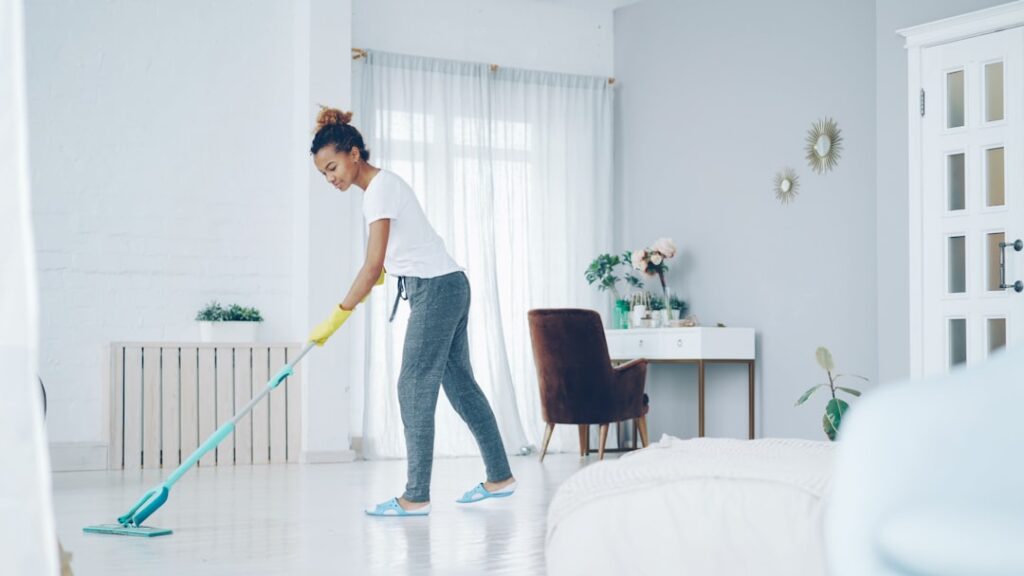
For most modern homes, a flat microfiber mop is the all-around favorite. A flat rectangular head holds a washable microfiber pad that grabs dust, hair, and fine grime through static and texture rather than flooding the floor. It uses very little water, glides under furniture, and the pads toss in the laundry. This makes it the go-to for sealed hardwood, laminate, luxury vinyl, and tile. Prices run about $15 to $50. Keep several pads on hand so you can swap a dirty one mid-clean.
Spin Mops
A spin mop pairs a round microfiber head with a bucket that has a built-in spinning basket. Push the handle or step a pedal and the basket whirls the head nearly dry, so you never touch dirty water. The control over wetness makes spin mops versatile across tile, vinyl, and sealed wood, and the round head works into corners. The bucket takes up storage room and has more moving parts to fail, but for hands-off wringing it is excellent. Typical cost is $25 to $60.
Steam Mops
Steam mops heat water and blast hot vapor through a microfiber pad to loosen grime and sanitize without chemicals. On sealed ceramic and porcelain tile, they shine, cutting through sticky kitchen messes and killing many germs with heat alone. The critical caution: do not use a steam mop on unsealed hardwood or on laminate. The heat and moisture can penetrate seams, swell the boards, and ruin the finish, and most flooring manufacturers warn against it. Use steam only where the floor is rated for it. Prices range from about $40 to $120.
Sponge Mops
A sponge mop uses an absorbent cellulose head, often with a built-in lever wringer in the handle. It excels at soaking up wet spills and works fine on smooth vinyl and tile. The downsides are that sponge heads can push dirt into a corner rather than lift it, they wear out and tear, and they can leave streaks if the sponge is overloaded. They are inexpensive, usually $10 to $25, and handy as a backup for quick spill cleanup.
Spray Mops
A spray mop builds a refillable solution reservoir and a trigger right into the handle. Squeeze to mist the floor ahead of the microfiber pad, then wipe. With no bucket at all, it is the fastest tool for a quick once-over on sealed hardwood, laminate, and vinyl. The reservoir is small, so it suits routine maintenance rather than deep grime, and battery-powered versions add convenience at a higher price. Most cost $20 to $50.
Matching the Mop to Your Floor
Use this quick reference to steer your choice:
- Sealed hardwood: microfiber flat mop or spray mop; keep it barely damp. Avoid steam and soaking-wet string mops.
- Laminate: microfiber flat or spray mop, lightly damp only. Never steam.
- Luxury vinyl plank and sheet vinyl: microfiber flat, spin, or spray mop. Steam only if the product specifically allows it.
- Ceramic and porcelain tile: spin mop, string mop, or steam mop all work well.
- Natural stone: microfiber flat or spin mop with pH-neutral cleaner; avoid harsh chemicals and excessive water.
- Garage or utility concrete: a heavy cotton string mop handles the texture and volume.
What to Look For in a Good Mop
Once you have narrowed the type, the details decide whether you will reach for it happily or shove it in a closet:
- Washable, replaceable pads: reusable microfiber that survives dozens of laundry cycles saves money and waste.
- Comfortable, adjustable handle: look for a telescoping handle and a comfortable grip to save your back.
- A swivel head: a 360-degree pivot reaches under cabinets and around table legs.
- Easy wringing: a pedal-spin bucket or in-handle lever keeps your hands out of dirty water.
- Build quality: sturdy plastic clips and a metal-reinforced handle outlast bargain models that crack at the joint.
- Easy storage: a hang hole or slim profile matters if closet space is tight.
Caring for Your Mop
Even the best mop turns into a germ-spreader if you neglect it. Rinse the head thoroughly after every use and let it air-dry completely so bacteria and mildew cannot multiply. Wash microfiber pads in the machine, but skip fabric softener, which clogs the fibers and kills their grip. Replace worn cotton or sponge heads when they fray or thin, and empty and dry buckets between uses. Treated well, a quality mop easily lasts several years.
The Bottom Line
There is no single good mop that beats every rival, only the right mop for your floors and habits. For most homes with sealed wood, laminate, vinyl, and tile, a microfiber flat mop or spin mop covers nearly everything. Add a string mop for heavy utility jobs and reserve a steam mop strictly for sealed tile. Match the tool to the surface, look for washable pads and a comfortable handle, and keep it clean. Do that, and mopping stops being a chore you dread.