The right granite cleaner and sealer routine is what keeps a natural stone countertop looking like the day it was installed, instead of slowly dulling and staining over the years. Granite is tough, heat-resistant, and beautiful, but it is also a porous natural stone. Without proper cleaning and periodic sealing, it can absorb oils, wine, and coffee, leaving dark spots that are difficult to remove.
The good news is that maintaining granite is simple once you understand why the wrong products cause damage and how a few minutes of care protects your investment.
Why Granite Needs Special Care
Granite forms from interlocking mineral crystals, and the spaces between them create microscopic pores. Liquids can seep into those pores, especially if the protective sealer has worn thin. Acidic spills and harsh chemicals are the real enemies. They can etch the surface, strip the seal, and dull the polish over time.
That is why generic household sprays, vinegar, lemon, and bleach are poor choices for granite. They may clean the surface but slowly degrade both the stone and its protective layer, undoing the very protection you are trying to maintain.
Choosing the Right Cleaner
For everyday cleaning, use a product made for natural stone or a simple pH-neutral solution. The goal is to lift grease and grime without attacking the stone or the sealer.
- Dedicated stone cleaners formulated to be pH-neutral and streak-free
- A few drops of mild dish soap in warm water for routine wiping
- Microfiber cloths that clean without scratching the polish
- Avoid vinegar, lemon, ammonia, bleach, and abrasive powders
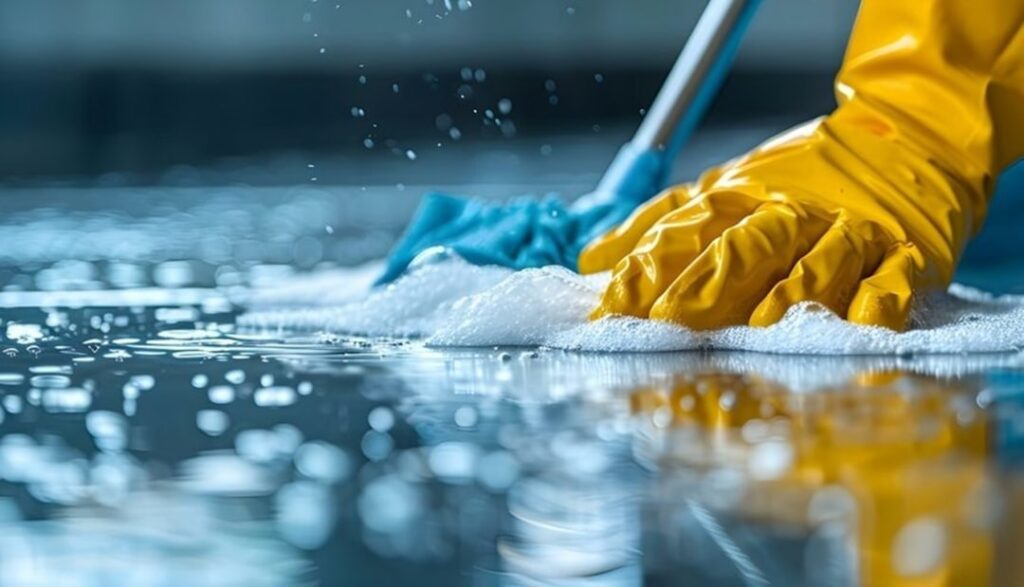
Spray or apply the cleaner, wipe with a soft cloth, and buff dry to prevent water spots. Dry buffing is the small step that keeps a polished surface looking crisp rather than streaky.
How to Tell If Your Granite Needs Sealing
Not all granite needs sealing on the same schedule, and some dense stones rarely need it at all. The reliable way to check is the water test. Pour a small puddle of water on the counter and watch it for 10 to 15 minutes.
If the water beads up and sits on top, the seal is intact and you do not need to reseal yet. If the stone darkens where the water sat, it is absorbing moisture and is due for sealing. Test a few areas, since wear is heaviest around the sink and cooktop. Most kitchen granite benefits from resealing roughly once a year, though high-use or lighter stones may need it more often.
How to Seal Granite Step by Step
Sealing is a straightforward job most homeowners can handle in under an hour. Work on a clean, completely dry surface, and read your sealer’s directions, since dwell and cure times vary by product.
- Clear the counter and clean it thoroughly with a stone-safe cleaner, then let it dry for several hours.
- Apply the sealer evenly with a clean cloth or per the bottle’s instructions, covering the whole surface.
- Let it dwell for the recommended time, usually 15 to 20 minutes, so the stone absorbs it.
- Wipe away all excess before it dries, or it can leave a hazy film.
- Apply a second coat if the manufacturer recommends it, then allow the full cure time before using the counter.
Avoid placing food or wet items on the surface until the sealer has fully cured, often 24 hours.
Safety First
Both cleaners and sealers are chemicals, so treat them with care. Work in a well-ventilated kitchen with windows open or a fan running, since some sealers contain solvents with strong fumes. Wear gloves to protect your skin and keep products away from children and pets.
The most important safety rule is simple: never mix cleaning chemicals. Combining products such as bleach and ammonia can release dangerous gases. Use one product at a time, rinse between different cleaners, and always follow the manufacturer’s instructions on the label.
Daily Habits That Protect Granite
Good habits reduce how hard you have to work. Wipe spills promptly, especially acidic ones like wine, citrus, and tomato sauce, before they can sit and penetrate. Use cutting boards rather than slicing directly on the stone, and set trivets under hot pans even though granite tolerates heat, since thermal shock and grit can still cause issues over time.
- Blot spills instead of wiping them across the surface
- Use coasters under bottles and glasses that can leave rings
- Keep a stone-safe cleaner handy for quick daily wipe-downs
Store-Bought Versus Homemade Solutions
Plenty of online tips suggest homemade granite cleaners, and a simple mix of a few drops of mild dish soap in warm water is genuinely fine for daily wiping. Where homemade advice goes wrong is with acidic ingredients. Vinegar and lemon, popular in DIY cleaning recipes, are exactly what you must avoid on granite because they etch the stone and break down the sealer.
Dedicated commercial stone cleaners are formulated to be pH-neutral, streak-free, and safe for the sealer, which is why many homeowners prefer them for convenience and consistency. They also often clean and lightly protect in one step.
- Safe homemade option: a little mild dish soap in warm water, buffed dry
- Avoid: vinegar, lemon juice, ammonia, and bleach-based mixes
- Commercial stone cleaners offer reliable, no-guesswork results
- Always rinse and dry to prevent soap film and water spots
For sealing, skip homemade shortcuts entirely. A proper penetrating stone sealer is inexpensive relative to the counter it protects, and there is no DIY substitute that bonds and protects the same way. When in doubt, buy products labeled specifically for natural stone.
Keeping the Shine for the Long Haul
A consistent routine is all granite really asks for. Clean with the right pH-neutral product, test for sealing once or twice a year, and reseal when the water stops beading. That small investment of time keeps the surface stain-resistant, glossy, and hygienic. With the proper granite cleaner and sealer routine, your countertops will stay a striking, durable centerpiece of the kitchen for decades.