Gray has quietly become the most versatile neutral in kitchen design, and a gray backsplash kitchen hits a sweet spot between the crisp brightness of white and the drama of dark tones. Gray reads as modern yet timeless, hides everyday grime better than pure white, and pairs beautifully with nearly any cabinet and countertop color. Whether you want a subtle, tonal look or a bold graphic statement, understanding the shades, materials, and pairings will help you get it right.
Why Gray Works So Well
The appeal of gray is its flexibility. As a neutral, it sits comfortably between warm and cool palettes and does not compete with the rest of the kitchen for attention. That makes a gray backsplash a safe long-term choice that will not feel dated as trends shift, unlike a bolder color you might tire of. It also flatters a wide range of styles, from sleek contemporary to cozy farmhouse.
Practically, gray earns its keep. A backsplash takes constant splashes of grease, sauce, and water, and gray disguises minor smudges and hard-water spots far better than stark white, which shows every mark. That combination of style versatility and real-world forgiveness is why so many homeowners land on gray for the wall behind their range and sink.
Choosing the Right Shade of Gray
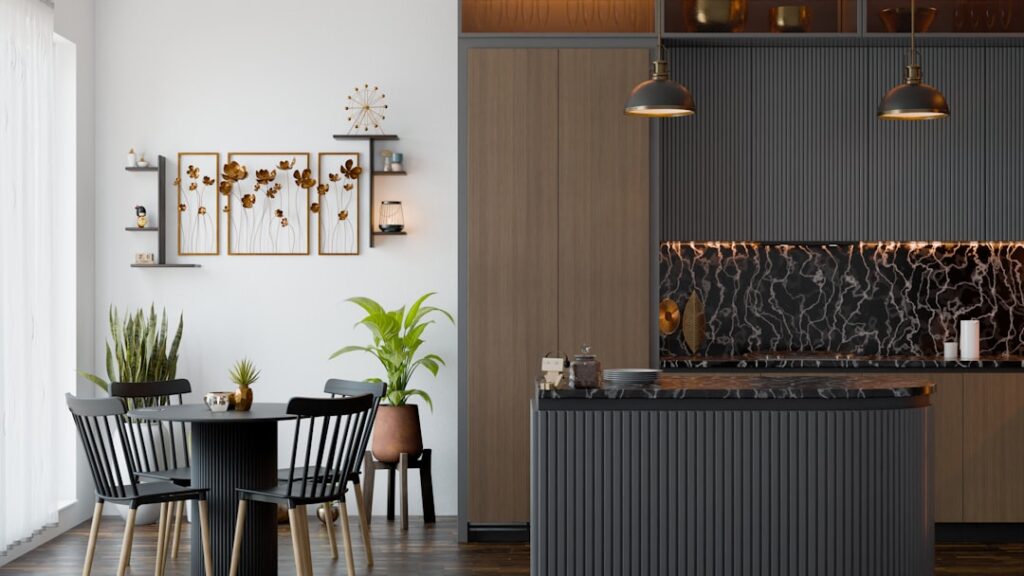
Gray is not one color but a whole spectrum, and the shade sets the mood. Light, pale grays keep a kitchen feeling airy and bright, close to white but softer, and they make small kitchens feel larger. Mid-tone grays are the most versatile, offering enough presence to define the space without darkening it. Deep charcoal and slate grays make a dramatic, sophisticated statement, especially against light cabinets.
Undertone matters as much as depth. Cool grays lean blue and pair naturally with white and cool-toned counters for a clean, modern feel. Warm grays, sometimes called greige, carry a hint of beige or taupe and complement wood tones and warm countertops for a cozier look. Always test a sample against your cabinets and counters in your kitchen’s actual light, since gray shifts noticeably under different lighting.
Tile Materials and Styles
Gray comes in every backsplash material, so you can match the look to your budget and style. Gray subway tile is a perennial favorite, offering the classic shape in a modern color for a clean, timeless result. Gray glass tile adds a subtle sheen and reflects light, brightening the space, while gray natural stone like marble or slate brings organic veining and texture for an upscale, one-of-a-kind wall.
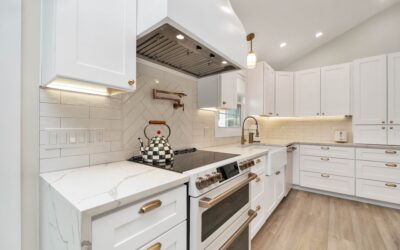
For a gray backsplash kitchen with more character, consider patterned or textured options. Gray herringbone, hexagon, or picket-shaped tiles add geometry and interest. Zellige-style handmade tiles in soft gray bring artisanal variation and a matte, tactile surface. Large-format gray porcelain or a full slab backsplash creates a seamless, contemporary look with minimal grout lines, ideal for a modern kitchen.
Pairing Gray with Cabinets and Counters
The magic of a gray backsplash is in how it plays off the surrounding elements. With white cabinets, a gray backsplash adds definition and keeps the kitchen from feeling flat, a fresh update on the all-white kitchen. With gray cabinets, a slightly lighter or darker gray backsplash builds a sophisticated tonal, monochromatic scheme. Against navy or dark cabinets, a light gray backsplash provides contrast and breathing room.
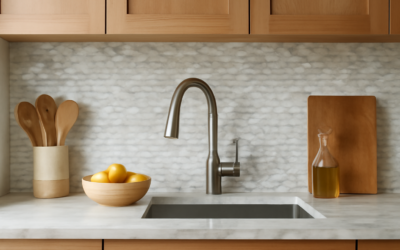
Countertops complete the picture. Gray pairs seamlessly with white quartz, which brightens the whole composition, and with gray-veined marble-look quartz for a cohesive, layered gray palette. Warm wood cabinets or butcher-block counters look striking against a cool gray backsplash, balancing warmth and coolness. Wood or brass hardware and fixtures add warmth that keeps a gray kitchen from feeling cold or clinical.
Grout and Finishing Details
Grout choice dramatically changes the final look of any tile, and gray is no exception. A matching gray grout makes the backsplash read as a seamless field, quiet and understated. A contrasting grout, such as white grout with dark gray tile or dark grout with light gray tile, emphasizes the tile shape and pattern for a bolder, more graphic effect.
For a kitchen backsplash, choose a stain-resistant grout and seal it if it is cement-based, since the area behind the stove and sink takes the most abuse. Consider extending the backsplash all the way to the underside of the upper cabinets, or full height on an open wall, for a more finished, custom appearance. A clean edge trim where the tile meets the wall or cabinets gives the whole installation a polished border.
Lighting and Room Size Considerations
Gray is famously sensitive to light, so the same tile can look warm and inviting in one kitchen and cold and flat in another. Kitchens with abundant natural light can carry deeper charcoal grays without feeling gloomy, while dim or north-facing kitchens usually do better with lighter grays and a touch of reflective glass or gloss tile to bounce what light there is. Always evaluate a sample on the wall at different times of day before committing.
Room size plays into the choice as well. In a small kitchen, a light gray backsplash keeps the space feeling open and airy, and pairing it with light cabinets avoids a boxed-in feel. In a larger kitchen, you have the freedom to use a bolder mid-tone or charcoal gray as a genuine design feature without overwhelming the room. Under-cabinet lighting is worth adding regardless of size, since it washes the backsplash in even light, shows off the tile’s texture, and prevents a gray wall from reading as a dull gray shadow after dark.
Bringing Your Gray Backsplash Together
A gray backsplash kitchen offers a rare combination of style, flexibility, and practicality. It suits almost any design direction, hides daily wear, and works with the widest range of cabinet and counter colors of any neutral. The keys to success are choosing the right shade and undertone for your light and cabinetry, selecting a tile material and pattern that fits your style and budget, and coordinating grout to control how bold or subtle the result feels.
Take the time to test samples in your own kitchen before committing, since gray is deceptively sensitive to light and surrounding colors. Get those choices right, and a gray backsplash will give your kitchen a modern, timeless backdrop that looks fresh for years and pairs effortlessly with whatever you put around it.