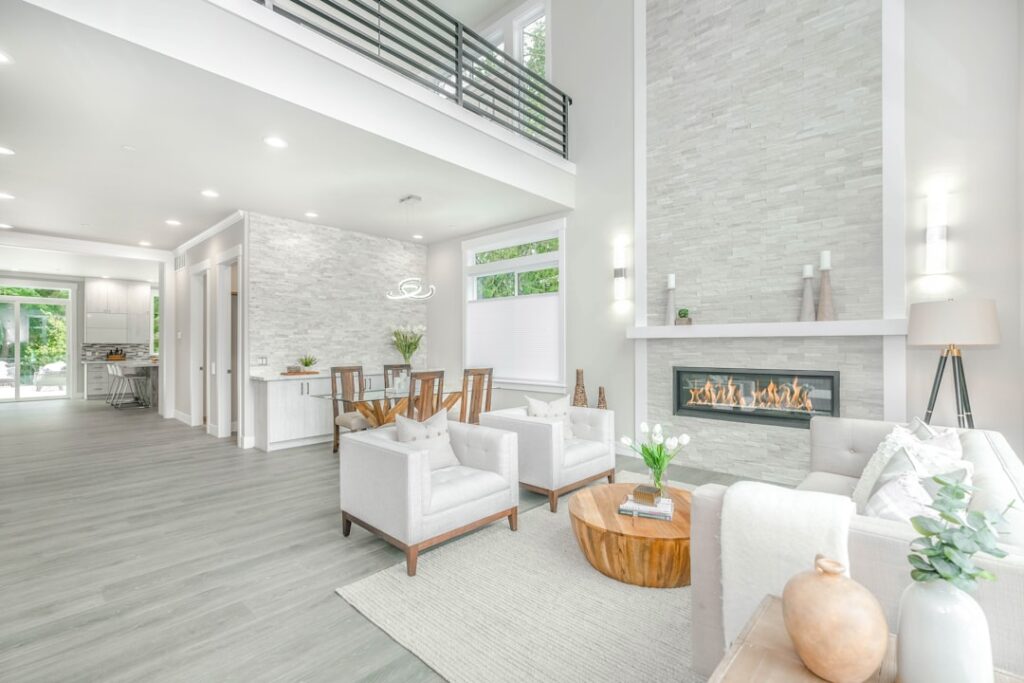
Ask ten interior designers for the single most useful rug a homeowner can own, and a surprising number will name the same thing: a gray rug 8×10. It hits the sweet spot on two fronts at once, gray is the most flexible neutral of the last decade, and 8×10 is the size that fits the greatest number of American living rooms. Put those together and you get a floor covering that works in almost any home, hides real-life mess, and pairs with nearly any color. This guide breaks down the gray shades, the layouts, and the styling tricks that make the combination sing.
Why 8×10 Is the Go-To Size
An 8×10 rug covers 80 square feet, and that number is no accident, it is the size that anchors a standard 12×14 to 14×16 living room without swallowing it. Most sofas and sectionals in that room can rest their front legs on the rug, tying the seating together into one grounded arrangement. Go smaller, say a 5×7, and the furniture floats around a stranded island; go much larger and you may crowd the walls.
The 8×10 also happens to be the most widely stocked size, which means more choices and better prices. In gray, you will find everything from $150 machine-woven polypropylene to $2,000 hand-knotted wool in that exact dimension, so you can shop your budget without compromising on fit.
Understanding the Shades of Gray
Gray is not one color, and the undertone you pick decides whether the room feels crisp, cozy, or cold. Before buying, learn the family so the rug agrees with your walls and wood tones.
- Cool gray — blue or slate undertones; sharp and modern, best with white oak and cool paint
- Warm greige — a gray-beige blend that flexes with almost any decor and reads inviting
- Charcoal — deep and dramatic, excellent at hiding dirt and grounding a light room
- Silver and dove — pale, airy grays that brighten a dark space
- Heathered gray — flecked with multiple tones, the most forgiving option for busy households
Hold a sample against your flooring and your largest piece of furniture in daylight. A cool slate rug can clash with golden oak floors, while a warm greige harmonizes with them. If your room already leans cool and gray, a matching cool-gray rug keeps the palette tight and intentional.
Furniture Layout for an 8×10
Placement is where an 8×10 earns its keep. The most common and forgiving approach in a living room is the “front legs on” layout: the sofa and chairs rest their front feet on the rug while the back legs stay on the bare floor. That pulls the whole seating group toward the center and makes the room feel cohesive without needing a larger rug.
Position the rug so it extends past the coffee table on all sides and reaches at least the front third of your main sofa. In a smaller room you can sometimes fit all furniture legs fully onto an 8×10, which creates the most luxurious, grounded look. Leave 8 to 18 inches of bare floor between the rug and the walls so the room reads framed rather than wall-to-wall carpeted.
Why Gray Hides Dirt and Pet Hair
Practicality is a big reason gray dominates. Unlike a solid ivory that shows every footprint or a black rug that flaunts every hair and speck of lint, mid-tone and heathered grays sit in a forgiving middle. A flecked or multi-tonal gray visually breaks up crumbs, shadows, and shed fur the way a speckled countertop hides them.
For homes with kids, dogs, or heavy traffic, lean toward a medium heathered gray or charcoal rather than a pale dove. The darker, busier the surface, the less often you will notice you need to vacuum. That said, still choose a stain-resistant fiber if spills are a regular event, because gray hides dry mess far better than it hides a splash of red juice.
Avoiding the Cold, Sterile Look
The one real risk with gray is that a room full of it can feel like a corporate waiting area. The fix is warmth, layered in deliberately. Pair your gray rug with warm woods, walnut, teak, or golden oak in the coffee table and shelving, and the contrast instantly softens the space. Brass or aged-bronze lamps, hardware, and frames add a glow that gray alone lacks.
Texture and warm accent colors do the rest. Toss in cream and camel pillows, a chunky knit throw, or a few terracotta and olive accents, and a gray-based room turns cozy rather than cold. Think of the gray rug as the calm foundation and the warm elements on top as the personality; together they read balanced and intentional instead of clinical.
Materials for a Gray 8×10
The right fiber depends on the room and your budget. Wool is the premium choice, naturally stain-resistant, resilient under heavy furniture, and soft underfoot, running $8 to $20 per square foot, so a wool 8×10 lands around $650 to $1,600. It holds its color and shape for 15 to 20 years.
For families and tighter budgets, machine-woven polypropylene delivers the same gray look with excellent stain and fade resistance for $150 to $400 in an 8×10. A wool-blend or viscose-accented rug splits the difference, adding a subtle sheen and softness at a mid-range price. Whatever you pick, add a quality rug pad; it stops slipping, cushions the fibers, and noticeably extends the life of an 8×10 that sees daily foot traffic.
Keeping Your Gray Rug Looking Sharp
Maintenance is straightforward. Vacuum weekly, more in a pet home, using suction and avoiding an aggressive beater bar on wool. Blot spills immediately with a white cloth from the outside in so you do not spread the stain into the surrounding gray. Rotate the rug 180 degrees every six months so foot traffic and any sun exposure fade the color evenly across the full 80 square feet.
Once a year, a professional cleaning refreshes a gray rug for $150 to $350 depending on fiber, lifting the ground-in grit that dulls the color over time. Treated well, a quality gray 8×10 stays the reliable, good-looking anchor of your room for many years, which is exactly why it remains the size and shade designers recommend first.
Where an 8×10 Gray Rug Works Beyond the Living Room
While the living room is the classic home for this size, an 8×10 gray rug travels well. In a primary bedroom it fits neatly under a queen or king bed with generous margins on three sides, so you step onto softness when you get up. Under a dining table it grounds a six-seat setup, and gray hides the inevitable dropped crumbs better than a pale alternative would.
Open-concept spaces are another strong fit. Use an 8×10 to visually carve out the seating zone within a larger great room, letting the gray define where the living area ends and the walkway begins. In a home office or a finished basement, the same rug tames echo, warms a cold subfloor, and pulls the furniture into a defined group. Its neutral shade means you can move it from room to room over the years as your needs change, which is part of why the size and color earn their reputation as a safe, lasting buy.
The Bottom Line
A gray rug 8×10 combines the most versatile neutral with the most useful size, and that is why it works in so many homes. Choose your gray by undertone to match your floors and furniture, lay it out with the front legs of your seating on the rug, and warm it up with wood tones and brass so it never feels cold. Back it with a good pad, keep it vacuumed and rotated, and you will have a floor that grounds the room, forgives daily life, and pairs with whatever decor you throw at it for the next decade.