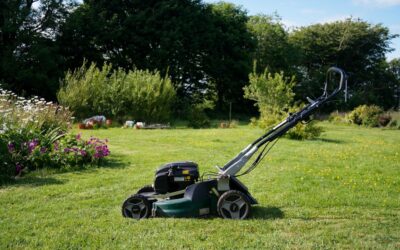
The Greenworks 60V 17″ cordless push lawn mower targets a very specific and very common homeowner: someone with a small-to-medium yard who is tired of gas fumes, pull cords, oil changes, and trips to the gas station. With a 17-inch cutting deck and a 60-volt battery platform, it sits at the compact, lightweight, budget-friendly end of the cordless lineup, ideal for lawns up to roughly a quarter acre. It will not replace a self-propelled 21-inch mower for a big property, and it is not trying to. Understanding exactly what this machine does well, and where its limits lie, keeps you from either underbuying for a large yard or overspending for a tiny one.
Who This Mower Is For
This is a push mower, meaning you provide the forward motion; there is no drive system pulling it along. Combined with the narrow 17-inch deck, that makes it a natural fit for smaller, flatter lawns.
- Yard size: best for lawns up to about 1/4 acre, or roughly 5,000 to 8,000 square feet
- Terrain: flat to gently sloped; a push mower is tiring on steep hills
- Storage: excellent for tight garages and sheds, especially with a folding handle
- User: homeowners who want quiet, low-maintenance, fume-free mowing
The compact size that limits it on big lawns is exactly what makes it nimble around flower beds, tight corners, and the narrow strips a wide deck cannot navigate.
The 60V Battery Platform
Greenworks anchors this mower to its 60V system, which is one of the brand’s most popular battery lines and covers dozens of tools from string trimmers to leaf blowers to chainsaws. That matters because the battery is the expensive part.
If you already own Greenworks 60V tools, you can often buy this mower as a bare tool and share batteries, saving a good chunk of money. The 60V line offers batteries in various amp-hour capacities, commonly 2.0Ah, 2.5Ah, and 4.0Ah, and the higher-capacity packs directly extend your runtime. A brushless motor on this class of Greenworks mower delivers better efficiency and longer life than older brushed designs.
Runtime and Battery Life
Runtime is the question every cordless buyer asks first. With a single battery, expect roughly 30 to 45 minutes of mowing depending on grass thickness, height, and the battery’s amp-hour rating.
A 4.0Ah pack running in normal grass generally covers a quarter-acre lawn on one charge, while a 2.0Ah pack suits smaller lots or requires a spare for larger ones. Tall, wet, or thick grass drains the battery faster because the motor works harder. Recharge time runs about 45 to 60 minutes with a standard charger, so a second battery lets you mow continuously without waiting. Charging a battery indoors at room temperature, rather than in a freezing garage, preserves both runtime and long-term cell health.
Cutting Performance and Features
Despite its modest size, this mower handles typical residential grass capably. The 17-inch steel or reinforced deck cuts a respectable swath for a compact machine.
- Cutting width: 17 inches, requiring more passes than a 21-inch mower but easier to maneuver
- Cutting height adjustment: single-lever or multi-position adjustment, typically ranging from about 1.5 to 3.5 inches
- Mulching and bagging: most versions offer 2-in-1 or 3-in-1 capability, bagging clippings or mulching them back into the lawn
- Push start: a simple button-and-safety-bar start, no cord to yank
For a healthy lawn, set the deck around 3 inches and mulch the clippings; the fine trimmings feed nitrogen back into the soil and reduce how often you need to fertilize. Only bag when the grass has gotten long or you are cleaning up leaves.
Weight, Maneuverability, and Storage
At roughly 35 to 40 pounds, this mower is dramatically lighter than a gas push mower, which typically weighs 60 to 80 pounds. That lightness is a real quality-of-life advantage, especially for older users or anyone who has to lift the mower over thresholds or carry it up steps.
The trade-off is that a lighter mower can bog down or lift slightly in very thick grass, where a heavier machine plows through. Many Greenworks models feature a folding handle that lets the mower stand upright or lie flat, shrinking its storage footprint to fit in an apartment closet or a crowded garage corner.
Mulching, Bagging, and Side Discharge
How you handle clippings affects both lawn health and how often you empty a bag, and this mower’s 2-in-1 or 3-in-1 design gives you options. Understanding when to use each mode keeps your lawn healthier and your mowing faster.
- Mulching: a plug blocks the discharge so blades chop clippings fine and drop them back into the turf, feeding nitrogen to the soil
- Bagging: clippings collect in the rear bag, best for long grass or leaf cleanup, but requires stopping to empty
- Side discharge: where available, throws clippings out the side for very tall or overgrown grass
For a regularly maintained lawn, mulching is the smart default. It returns nutrients, cuts your fertilizer needs, and eliminates the interruption of emptying a bag. Save bagging for when the grass has gotten too long, when you are collecting fall leaves, or if you simply prefer a manicured, clipping-free finish.
Caring for the Battery and Mower
The battery is the priciest component, so treating it well protects your investment. Lithium-ion packs last longest when they are neither cooked in heat nor frozen, and stored at a partial charge rather than empty or full for long periods.
Charge and store the battery indoors at room temperature, not in a sweltering summer garage or a freezing winter shed, both of which shorten cell life. Over winter, store the pack around 40 to 60 percent charge and top it up every couple of months rather than leaving it dead. For the mower itself, cordless maintenance is refreshingly minimal: no oil, no spark plug, no fuel stabilizer. Just brush grass buildup off the deck underside after mowing (with the battery removed for safety), keep the blade sharp, and check that the air vents stay clear. A sharp blade matters more than people expect, since a dull blade tears grass, stresses the motor, and drains the battery faster.
Accessories and the Broader 60V System
Part of the appeal of buying into the Greenworks 60V line is that one battery powers an entire yard-care arsenal. If you start with the mower, you can add tools as bare units and share the battery, spreading the cost of the expensive packs across everything.
The 60V lineup includes string trimmers, leaf blowers, hedge trimmers, chainsaws, pole saws, and snow throwers, all running on the same batteries as the mower. For a small property, a single 4.0Ah battery might realistically handle mowing, edging, and blowing in one session with a swap or two. Buying a second battery early is a wise move regardless, since it doubles your working time and gives you a backup if one pack fails. When you tally the value, judge the whole ecosystem, not just the mower in isolation, because the shared-battery advantage is where cordless platforms genuinely pay off over years of ownership.
Is It Worth Buying?
For the right lawn, the Greenworks 60V 17″ cordless push lawn mower delivers genuine value: quiet operation, zero fumes, near-zero maintenance, and instant push-button starting, all typically for $250 to $400 with a battery and charger. Homeowners already in the 60V ecosystem get the best deal buying the bare tool.
Look elsewhere if your yard exceeds a quarter acre, has steep grades, or grows thick, fast grass that demands a wider self-propelled deck. But for a compact suburban lawn, a townhouse yard, or as a nimble second mower for tight spots, this machine hits a sweet spot of price, convenience, and performance that gas mowers in its class simply cannot match on the maintenance front.