
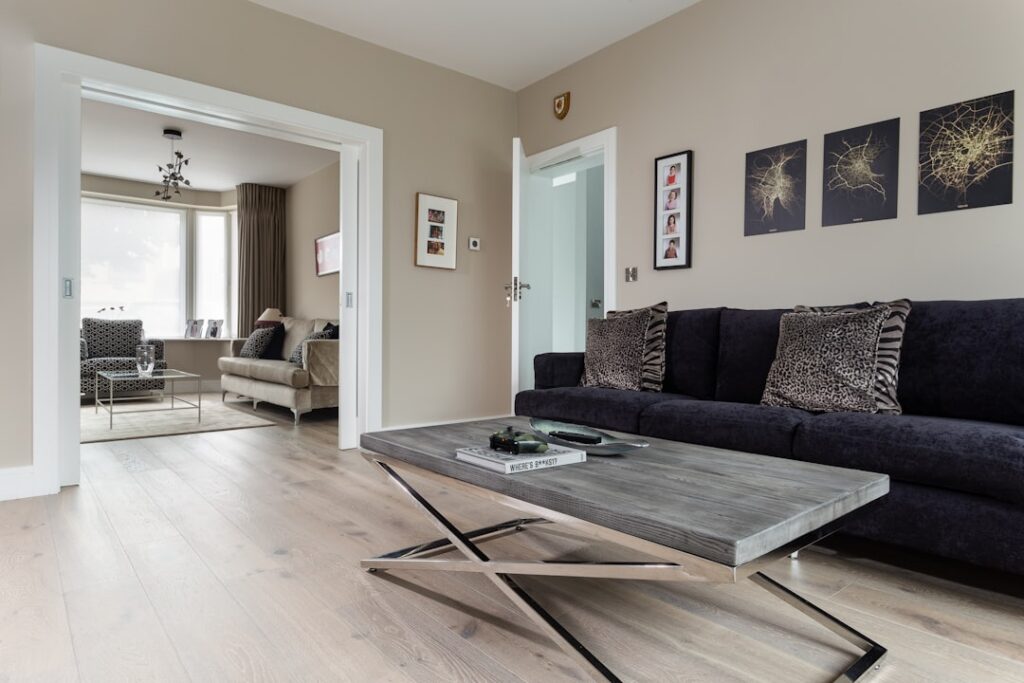
If you’ve shopped the laminate aisle at Home Depot, you’ve almost certainly walked past it without realizing the connection. Hampstead laminate flooring is part of the Home Decorators Collection, Home Depot’s house brand of laminate planks, and it has become a go-to for homeowners who want a realistic wood look without the price of engineered hardwood. This guide breaks down what Hampstead actually offers, where it performs, and what to check before you load up a cart.
What Hampstead Laminate Flooring Is
Hampstead is a collection name rather than a separate manufacturer — it falls under the Home Decorators Collection umbrella sold through Home Depot. The planks are high-density fiberboard (HDF) core laminate topped with a printed decorative layer and a clear wear layer. Many Hampstead products feature embossed-in-register (EIR) texturing, where the surface grain lines up with the printed wood pattern, which is what gives the better lines such a convincing look up close.
Planks typically come in wider, longer formats with attached underlayment pads on some products and a fold-and-lock or angle-tap click system for floating installation.
The Pros of Hampstead Laminate
The value-to-realism ratio is the main draw. You get textured, wide-plank visuals that mimic oak, hickory, and other species at a laminate price point. Other strengths include:
- Realistic texture — embossed-in-register grain on many SKUs reads as real wood underfoot and to the eye.
- Easy floating install — the click-lock system is genuinely DIY-friendly over most subfloors.
- Scratch and dent resistance — laminate’s tough wear layer handles kids, pets, and traffic well.
- Wide selection — multiple colors and plank widths are usually in stock at Home Depot.
- Accessible support — buying through a major retailer means easy returns and readily available trim and transition pieces.
The Cons to Keep in Mind
Laminate is still laminate, and it has the category’s inherent limits. Standard laminate cores are HDF, which can swell if water sits on a seam, so even water-resistant Hampstead lines aren’t a substitute for true waterproof vinyl in a flood-prone basement. Always confirm whether the specific product you’re eyeing is rated water-resistant and for how many hours.
Sound is another factor — laminate can feel hollow or click underfoot without good underlayment, though many Hampstead planks include an attached pad. Finally, because Hampstead is a retail collection, specific SKUs get discontinued and refreshed over time, so the exact plank you love today may not be available for a repair in a few years. Buy extra boxes up front.
Understanding AC Ratings
The single most useful spec on any laminate box is the AC rating, which measures abrasion and wear resistance on a scale from AC1 to AC5:
- AC3 — suitable for all residential use, including busy households. The common rating for quality home laminate.
- AC4 — handles light commercial traffic; great for high-use homes with pets and kids.
- AC5 — built for heavy commercial settings; overkill for most homes but extremely durable.
Check the AC rating on the specific Hampstead product rather than assuming the whole collection shares one number, since ratings vary by line.
Installation Basics
Hampstead installs as a floating floor, meaning the planks lock to each other and rest on top of the subfloor rather than being glued or nailed down. Acclimate the boxes in the room for 48 hours, ensure the subfloor is clean and level within tolerance, and leave a 1/4-inch to 3/8-inch expansion gap around the perimeter for the floor to move with temperature and humidity. Use spacers, stagger end joints by at least 8 to 12 inches for strength and looks, and add underlayment if the planks don’t have a pad attached.
A typical DIYer can lay a mid-size room in a weekend with a tapping block, a pull bar, and a saw. Skipping the expansion gap is the most common rookie mistake and leads to buckling.
How Hampstead Compares
Against premium European laminate brands, Hampstead trades a bit of edge sealing and warranty length for a lower price and one-stop retail convenience. Against luxury vinyl plank, it generally looks and feels more like real wood thanks to the HDF core and EIR texture, but it gives up the true waterproof performance LVP offers. If your priority is wood realism in dry-to-moderate rooms on a budget, Hampstead is a strong contender; if you need full waterproofing for a bathroom or basement, weigh a rigid-core vinyl instead.
What to Check Before Buying
Before committing, pull the spec sheet for the exact product and verify the AC rating, the wear-layer and warranty terms, the water-resistance rating, and whether underlayment is attached. Order 7 to 10 percent extra for cuts and waste, plus a spare box for future repairs. Inspect a few boards in person — texture and color photograph differently than they look in a showroom under store lighting.
The Bottom Line
Hampstead laminate flooring delivers convincing, textured wood looks at an approachable price through a retailer that makes buying and supporting the floor easy. It’s a smart choice for living rooms, bedrooms, and hallways where you want hardwood character without hardwood cost. Just match the AC rating to your traffic, confirm the water-resistance spec for the room, and follow the floating-floor install rules — especially that expansion gap.
Prefer to explore on your own?
See how new flooring looks in your actual room in seconds — free, no signup.
Try the free Floor Studio →

