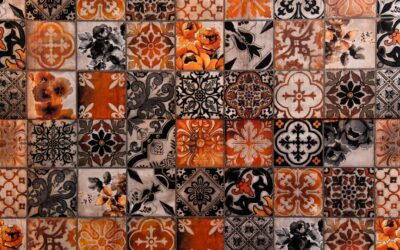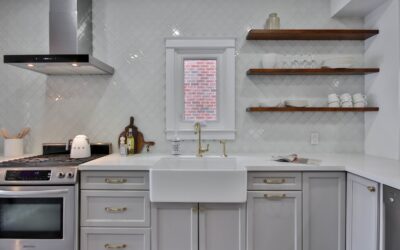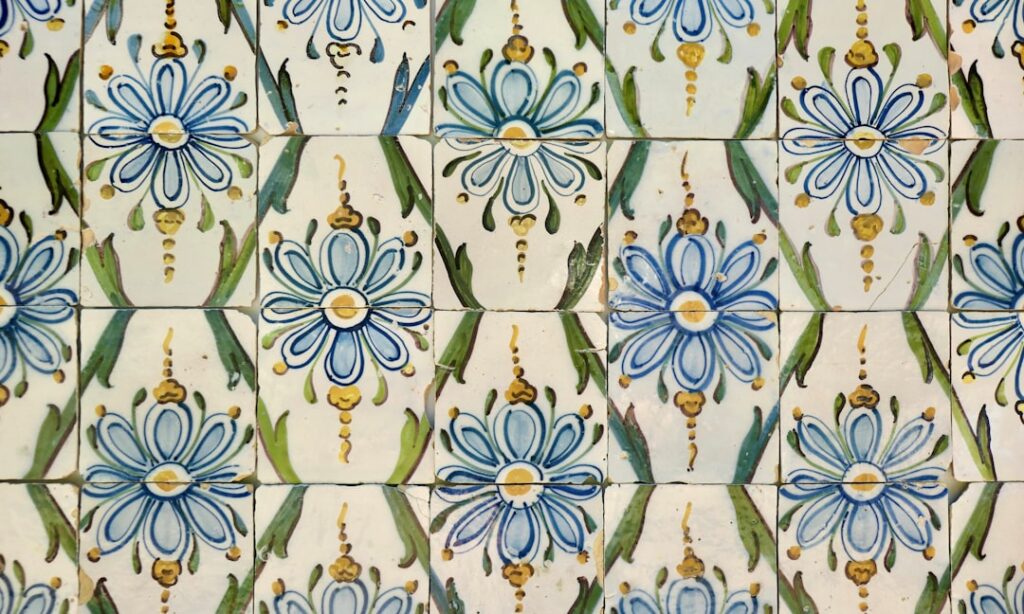
Mass-produced tile has become astonishingly good at pretending — inkjet porcelain now imitates marble, zellige, and even brushwork. But stand close to the real thing and the difference is instant: a hand painted tile backsplash carries the small tremble of a human line, glaze pooling where a brush paused, no two tiles quite alike. It is the difference between a print of a painting and a painting. I have installed artisan tile from Dutch delft blues to commissioned kitchen murals, and this niche rewards buyers who understand what they are purchasing — genuinely painted, kiln-fired ceramic versus “hand-painted look” — and who deploy it strategically, because at $20 to $150 per tile, strategy is the whole game. Here is the world of painted tile, tradition by tradition, with the sourcing, costs, and installation truths attached.
What “Hand Painted” Actually Means — and the Question to Ask
True hand painted tile is decorated by a person with a brush, using ceramic pigments or oxides on a glazed or bisque surface, then kiln-fired so the artwork fuses into the glaze. Fired underglaze or in-glaze painting is permanent — as washable and lightfast as any commercial tile, because the image is glass. The imposters to screen out: decal tiles (printed transfers fired on — durable but not painted), inkjet “hand-painted style” porcelain (fine products, honest prices, just not artisan work), and craft-painted tile decorated with cold (unfired) paints or enamels, which no sealer will make kitchen-proof. The one question that sorts everything at a market stall or an online listing: is the decoration fired in a kiln? Fired, glazed decoration belongs behind a stove. Unfired paint belongs on a trivet you never use.
The Traditions Worth Knowing
- Delft (Netherlands). Blue-on-white tin-glazed tiles, classically 5×5 inches — windmills, ships, birds, little tradesmen, each corner motif linking tile to tile. Genuine Dutch workshops still paint them ($25-$60 per tile new; antique 18th-century tiles trade from $20 into the hundreds). A delft field behind a range is the definitive Euro-farmhouse move, and mixing 90 percent plain white “witjes” with scattered painted scenes is the authentic — and budget-sane — way Dutch kitchens always did it.
- Portuguese azulejos. Blue-and-white (and polychrome) tin-glazed tile with a mural tradition — patterns that tessellate across walls, or full pictorial panels. Portuguese workshops export widely, roughly $15-$50 per tile for repeating patterns.
- Majolica/maiolica (Italy) and faience (France). Exuberant polychrome — lemons, acanthus, grotesques — from workshops in Deruta, Vietri, and Provence. The Mediterranean villa look, typically $20-$80 per tile.
- Spanish and Moorish traditions. Seville’s cuerda seca and hand-glazed geometrics, the ancestors of much of the above.
- Delft’s American cousins and studio potters. A thriving US scene of independent tile painters and art-tile houses produces everything from Arts-and-Crafts flora to custom pet portraits, commonly $30-$150 per decorated tile.
- Custom murals. Multi-tile paintings — a landscape over the range, an olive branch spray, a family farm scene — commissioned from studios that paint, fire, number, and ship the set ready to install. Typical range: $60-$200 per square foot, so a 30×24-inch range mural lands around $500-$2,500 depending on complexity and studio reputation.
Note on the tradition we cover separately: Mexican Talavera has its own deep catalog on this site, so I will simply say it is the most affordable entry into genuine hand painted tile and everything below about installation applies to it too.
Design Strategy: Concentration Beats Coverage
The universal amateur mistake with painted tile is buying too much of the loud stuff. Decorated tile is visually dense; a full wall of competing scenes exhausts the eye and the budget together. The approaches that consistently work:
- The framed mural. One pictorial panel behind the range, bordered in plain tile or a painted border rail, with quiet field tile everywhere else. Maximum art, minimum chaos — the classic deployment.
- The scatter. Plain handmade-look field tile with painted tiles seeded at 1-in-6 to 1-in-10, random-but-balanced (lay it out on the floor first; true random clusters, and clusters look like mistakes).
- The band. A single row of painted tiles running the backsplash at eye level through plain field — the most affordable structured look, often under $400 of painted tile for a whole kitchen.
- The all-over pattern. Tessellating azulejo-style patterns are the exception that tolerates full coverage, because the repeat reads as wallpaper rather than competing scenes. Commit fully or not at all.
Color discipline makes all of these sing: pull one or two pigment colors from the painted tile into the room — a blue on the island, terracotta in the runner — and keep counters and field tile quiet. Painted tile next to busy granite is a fight nobody wins.
Buying Well: Samples, Lots, and Lead Times
Hand work means variation, and variation is a feature you must plan for. Order physical samples always; screen colors lie about glaze. Buy the entire quantity in one order — hand-mixed glazes shift between batches more than commercial dye lots — and add 10 to 15 percent overage for cuts, breakage, and the future repair shelf, because you cannot reorder a matching tile in five years from a workshop that mixes glaze by eye. Expect size and flatness irregularity (tin-glazed and terracotta-bodied tiles can vary an honest 1/16-inch-plus and cup slightly); that is charm, and it dictates installation below. Lead times on commissioned work run four to twelve weeks — order the mural before the cabinets, not after the counters. And on marketplaces, apply the kiln question ruthlessly; “hand painted” is the most abused phrase in tile listings.
Installation: Setting Irregular Treasure
Everything about setting painted tile flows from two facts: the tiles are irregular, and they are irreplaceable. Use white polymer-modified thinset (many artisan tiles have translucent glazes or porous light bodies; gray mortar can shadow through, and mastic can stain terracotta bodies). Back-butter individual tiles to level their varying thicknesses, and open up the grout joint — 3/16 inch typical — to absorb size variation; the slightly generous joint is period-correct for every one of these traditions anyway. Lay out murals dry and photograph the numbered arrangement before a single tile goes up. Cut with a wet saw, slowly, and plan the layout so painted tiles never need cutting — cuts land in plain field tile, always. Grout with unsanded or fine grout in a tone that flatters (warm white or pale gray for delft and azulejos; sand tones for majolica), and if any tile has a crazed or matte hand-glazed surface, test grout release on a spare and pre-seal that tile face first. Fired-glaze surfaces themselves need no sealer, ever, and wipe down like any ceramic — dish soap, soft cloth, no abrasives on soft tin glazes.
Budget Reality Check: Three Kitchens, Three Numbers
To make the strategy concrete, here is how the money actually lands on a standard 30-square-foot backsplash. The band approach: 28 square feet of quality plain field tile at $6 ($170), plus a 10-foot eye-level row of genuine painted tiles — say 24 delft-style 5-inch tiles at $18 imported ($430) — comes in around $600 in material, with installation adding $450 to $750. The scatter: the same field with fifteen painted accents at $25 to $40 each lands near $700 to $900 in tile. The framed mural: $250 of field tile plus a commissioned 24×30-inch fired mural at $900 to $1,800 puts the whole wall between $1,200 and $2,100 before labor — real money, but compare it against a designer zellige or marble mosaic field at $30-plus per square foot covering the entire wall and the artisan option is often the cheaper way to own the most interesting backsplash on the block. Labor quotes run 10 to 25 percent above standard tile rates once installers see irregular artisan stock; that premium is worth paying to someone who has set handmade tile before, and worth asking about directly when you collect bids.
The way I frame this purchase for clients: a hand painted tile backsplash is the only element in a kitchen that is literally artwork, and it should be bought the way art is bought — from a maker you can name, in a quantity you can afford to concentrate, protected by an installer who understands the material. Spend $600 on a scatter of real delft in a field of $4 subway and you will own the most-commented-on six square feet in the house; it will outlast the appliances, the trends, and possibly the mortgage, because a fired image never fades. That is what the premium buys, and thirty years from now it is the one part of the kitchen nobody will want to renovate away.
Prefer to explore on your own?
See how new flooring looks in your actual room in seconds — free, no signup.
Try the free Floor Studio →