
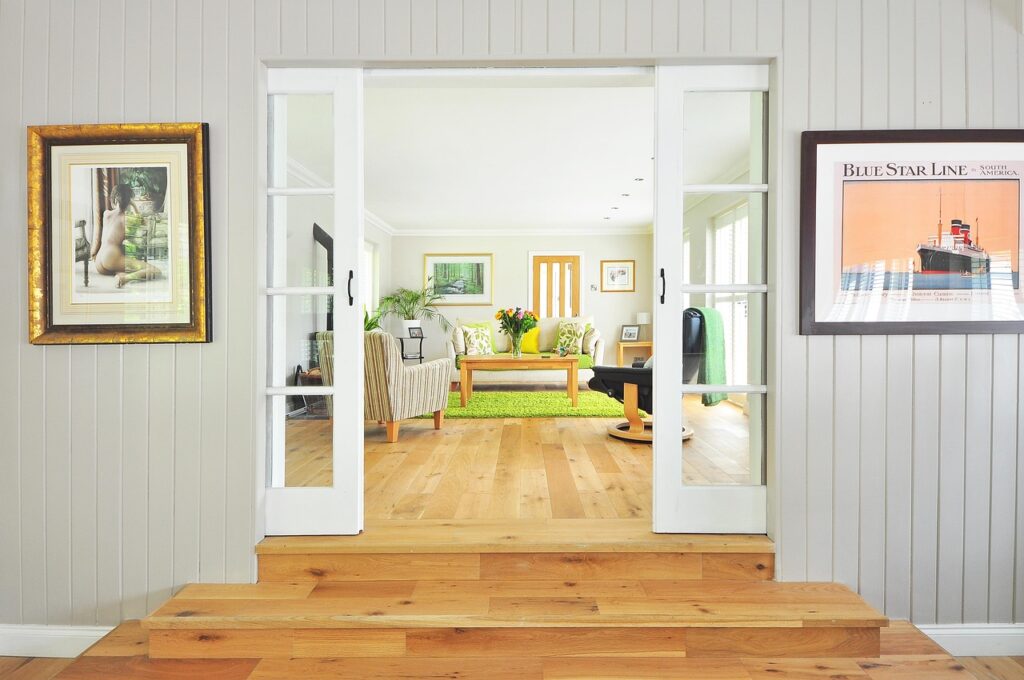
Knowing the hardwood floor refinishing cost per square foot before you call a contractor keeps you from overpaying or underestimating the job. Most homeowners spend $3 to $8 per square foot for a full sand-and-finish, which puts a typical 1,000 sq ft project at $3,000 to $8,000. That is a fraction of the cost of replacing the floors entirely, and the results can make 50-year-old oak look brand new.
Average Cost Ranges
Professional refinishing costs depend on the scope of work. A basic sand and three coats of polyurethane is simpler and cheaper than a job that includes stain color changes, board repairs, and custom finishes.
- Basic refinishing (sand + clear coat): $3 to $5 per sq ft
- Refinishing with stain: $4 to $6 per sq ft
- Refinishing with repairs and stain: $5 to $8 per sq ft
- Dustless refinishing: $5 to $9 per sq ft
Minimum job charges apply with most contractors. Even a small 200 sq ft room often carries a $600 to $1,000 minimum because the setup, sanding equipment transport, and finish application take roughly the same effort regardless of area size.
What Drives the Price Up
Several factors push refinishing costs toward the higher end of the range. Stain application adds $1 to $2 per square foot because it requires an extra step between sanding and sealing, plus additional drying time that extends the project by a day. Dark stains like ebony and jacobean require more coats for even coverage, which adds labor.
Board repairs are the other major cost driver. Replacing warped, cupped, or water-damaged boards costs $10 to $25 per board depending on the species and width. A room with 10 to 15 damaged boards can add $150 to $375 to the total. Lacing in new boards so the grain and stain match the surrounding floor requires skill and patience from the refinisher.
Floor condition matters too. Floors with deep scratches, pet stains, or multiple previous coats of finish require more aggressive sanding, which wears through sandpaper faster and takes longer. Paint overspray or adhesive residue from old carpet pads adds prep time that shows up on the invoice.
DIY vs. Professional Costs
Renting a drum sander runs $60 to $85 per day, and you will also need an edger ($40 to $55 per day) and a buffer ($30 to $45 per day). Sandpaper, polyurethane, applicators, and supplies add $200 to $400. A DIY refinishing job on 500 sq ft typically costs $400 to $700 in materials and rental fees, compared to $1,500 to $4,000 for a professional.
The savings sound appealing, but drum sanders are unforgiving. Running one too slowly gouges the wood. Running it unevenly creates visible waves that show up under side lighting. A botched DIY sanding job costs more to fix than hiring a professional from the start, because the contractor now has to sand out your mistakes before doing the finish work. If you have never operated a drum sander, practice on a closet floor or a less visible room first.
Cost by Room and Home Size
Here is what typical projects cost at $4 to $6 per square foot, a common mid-range rate:
- Single room (150 sq ft): $600 to $1,000 (minimum charge usually applies)
- Two bedrooms (400 sq ft): $1,600 to $2,400
- Main floor (800 sq ft): $3,200 to $4,800
- Whole house (1,500 sq ft): $6,000 to $9,000
Larger jobs often come with a lower per-square-foot rate. A contractor who charges $5 per square foot for 300 sq ft may drop to $3.75 to $4.25 per square foot for 1,500 sq ft because setup costs spread across more area and the crew works more efficiently in larger open spaces.
Finish Options and Their Cost Impact
Oil-based polyurethane is the traditional choice and the most affordable at $30 to $50 per gallon. It ambers slightly over time, which adds warmth to oak and maple. Drying time between coats is 8 to 12 hours, so a three-coat job takes three days of finish work.
Water-based polyurethane costs $45 to $75 per gallon, dries in 2 to 4 hours between coats, and stays crystal clear. It is the better choice for white oak or any floor where you want the natural color to remain unchanged. Hardwax oils from brands like Rubio Monocoat and Osmo run $100 to $150 per liter and create a matte, natural-looking finish popular in modern and Scandinavian-style interiors. They cost more upfront but are spot-repairable without sanding the entire floor.
How Often Floors Need Refinishing
Most hardwood floors need refinishing every 7 to 10 years in high-traffic areas and every 15 to 20 years in bedrooms. Solid hardwood 3/4-inch thick can be sanded and refinished 6 to 10 times over its lifespan, making it a 100-year flooring material. Engineered hardwood with a 2mm to 4mm wear layer can be refinished once or twice before reaching the plywood core.
Signs your floors need refinishing include visible wear patterns in traffic lanes, gray or discolored wood where the finish has worn through, and scratches deep enough to catch a fingernail. If you can still see the finish sheen and scratches are only surface-level, a buff-and-recoat at $1 to $2 per square foot can extend the floor’s life by three to five years without a full sanding.
Getting Accurate Quotes
Request in-home estimates from at least three refinishing contractors. Phone quotes based on square footage alone miss critical variables like floor condition, furniture moving requirements, stairs, and closet interiors. A reputable contractor will inspect the floor, check for moisture issues, and provide a written quote that breaks out sanding, staining, finish coats, and any repair work separately.
Ask about the hardwood floor refinishing cost per square foot upfront, and clarify whether the quote includes furniture moving, baseboard removal, and cleanup. Some contractors include everything in a single price; others charge $100 to $300 extra for furniture moving and $50 to $100 for final cleanup. Knowing the full scope avoids unpleasant surprises on the final invoice.
Prefer to explore on your own?
See how new flooring looks in your actual room in seconds — free, no signup.
Try the free Floor Studio →

