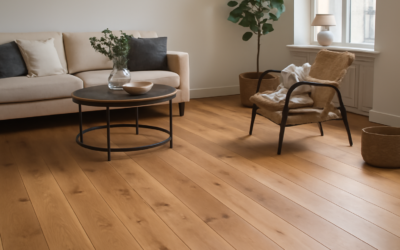
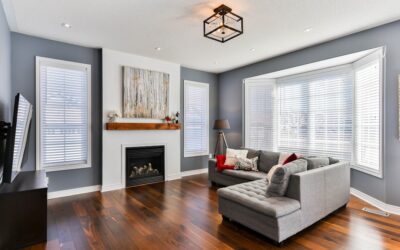
Vancouver’s wet shoulder seasons and warm dry summers swing relative humidity from 35 percent to 80 percent over a year, and that swing is the single most important variable when choosing a wood floor in this market. Picking the wrong product means cupping in November and gapping in August. Picking the right one means a floor that stays flat and tight for 30-plus years. This guide covers hardwood flooring Vancouver homeowners actually buy, what it should cost, where to source it, and how to install it so the climate works with you instead of against you.
- Why Vancouver’s Climate Demands Engineered Construction
- Species That Hold Up to Coastal BC Conditions
- Top Vancouver Suppliers Worth Visiting
- Pros of Choosing Hardwood for a Vancouver Home
- Cons and Costs to Plan For
- Installation Methods That Work Locally
- Maintenance for a Vancouver Climate
- Hiring a Vancouver Installer
Why Vancouver’s Climate Demands Engineered Construction
Solid 3/4 inch hardwood expands and contracts roughly 1/8 inch per 4 feet of plank width as humidity swings through a Lower Mainland year. That movement creates visible gaps in dry months and tight, cupped boards after a wet October. Engineered planks, with a hardwood wear layer cross-bonded to a plywood or HDF core, move only 25 to 40 percent as much. For Vancouver, that difference is the line between a floor you love and a floor you fight.
Almost every reputable Vancouver flooring dealer leads with engineered product for this reason. Solid hardwood is still available but is generally restricted to second-floor master suites in homes with year-round HVAC humidity control between 35 and 55 percent.
Species That Hold Up to Coastal BC Conditions
- European white oak: The dominant choice. Janka 1360, stable, takes natural and reactive finishes beautifully. $7 to $14 per square foot installed.
- Hickory: Janka 1820, very hard, strong grain pattern. Good for active households with pets. $7 to $12 installed.
- Maple: Janka 1450, lighter color palette, takes stain unevenly. $6 to $10 installed.
- Walnut: Janka 1010, softer but visually stunning. Best in lower-traffic areas. $9 to $16 installed.
- Reclaimed Douglas fir: Locally sourced, soft (Janka 660) but historically appropriate in Craftsman and East Van character homes. $10 to $18 installed.
Top Vancouver Suppliers Worth Visiting
Five names come up consistently in Lower Mainland renovations. Jordans Flooring (multiple locations) carries Mirage, Lauzon, and Preverco engineered lines and handles installs in-house. End of the Roll on Marine Drive offers high turnover on European oak engineered at competitive pricing. Hourigan’s Carpets in West Van leans high-end with European brands like DuChateau and Grato. Trail Appliances and 5 Element Flooring offer mid-tier engineered with quick lead times. Coast Mountain Flooring on Boundary Road specializes in custom widths and reclaimed product.
For Vancouver homeowners shopping on price, the East Van and Burnaby industrial corridor between Boundary and Willingdon hosts several wholesale dealers that sell trade-only product to retail buyers willing to pay cash and arrange their own installer.
Pros of Choosing Hardwood for a Vancouver Home
- Resale impact: Vancouver buyers consistently price hardwood at a premium over LVP, especially in homes above $1.8 million.
- Refinishability: A 4 mm wear-layer engineered plank takes two to three light sandings, extending floor life beyond 40 years.
- Local sourcing options: Reclaimed Douglas fir, Western maple, and BC-milled product are available with shorter lead times than imports.
- Acoustic warmth: A wood floor over a quality 3 mm cork or rubber underlayment reduces footfall noise meaningfully in Vancouver’s common condo construction.
- Strata compliance: Many Vancouver strata bylaws require IIC ratings of 65 to 72 for hard surface floors above another unit. Engineered wood with proper underlayment hits these targets.
Cons and Costs to Plan For
Engineered hardwood in Vancouver runs more than US averages because of import duties, Pacific shipping costs, and provincial taxes. Budget for $7 to $14 per square foot installed for a quality mid-tier product, $14 to $22 for premium European lines, and $4 to $6 per square foot extra for any subfloor work, demolition, or stair coverage.
Strata approval is another step often forgotten. Most Vancouver condo buildings require an acoustic compliance letter, schedule of work, contractor insurance, and a refundable deposit before permitting hard surface floor changes. Allow two to four weeks for that approval cycle.
Direct sunlight through Vancouver’s growing inventory of floor-to-ceiling glass also accelerates fade on darker species like walnut and smoked oak. UV-protective films on south-facing windows or naturally lighter species mitigate the issue.
Installation Methods That Work Locally
Floating click-lock installs over a quality 2 to 3 mm acoustic underlayment are the dominant method for Vancouver condos because they meet most strata sound rating requirements without glue penetration into the slab. Glue-down with a urethane adhesive like Bostik Best is preferred for ground-floor townhouses with concrete slabs, especially over radiant heat. Nail-down works in single-family homes with plywood subfloors over a crawlspace.
Acclimation is critical. Material should sit in the room of installation for 5 to 10 days at the home’s normal operating humidity before any boards are cut. Rushing this step is the most common cause of cupping complaints I see in coastal BC.
Maintenance for a Vancouver Climate
Two simple habits extend the life of any hardwood flooring Vancouver install. First, run a humidifier during dry winter heating months and a dehumidifier during damp shoulder seasons to keep indoor humidity between 35 and 55 percent year-round. Second, use only a microfiber mop with a pH-neutral cleaner like Bona Pro or Loba; steam mops are the fastest way to ruin a finish. Walk-off mats at exterior doors handle the rain-soaked footwear that defines a Vancouver winter and protects the front three feet of every entry.
Hiring a Vancouver Installer
The Lower Mainland has a deep bench of skilled wood flooring installers, but quality varies widely. Stick to crews with at least five years of local experience, written WorkSafeBC coverage, $2 million in liability insurance, and references from completed jobs you can physically visit. Reputable installers will measure twice, acclimate the material in your home, document moisture readings on the subfloor, and provide a written workmanship warranty of at least one year on top of the manufacturer’s product warranty. Avoid handyman crews offering to install hardwood for under $3 per square foot; the labor savings disappear quickly when boards cup or seams open within the first humid summer or dry winter.
Prefer to explore on your own?
See how new flooring looks in your actual room in seconds — free, no signup.
Try the free Floor Studio →