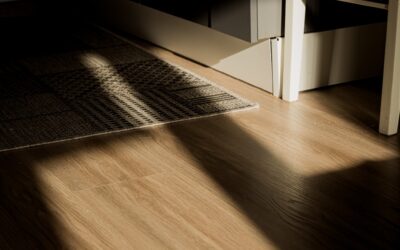
Two LVP samples on the showroom wall can look identical and cost three times different — one priced at $1.79 per square foot, the other at $7.50. Knowing exactly what you get when you step up to high end LVP is the difference between a floor that still looks new in year 10 and a floor that hazes, scratches, and gaps within two seasons. The premium tier is built on five spec upgrades, and once you can read them, you can shop any showroom intelligently.
What Defines High End LVP
Premium LVP is defined by measurable specs, not marketing language. A wear layer of 20 mil minimum (the best products run 22-40 mil), an SPC or WPC rigid core 6-8 mm thick, a printed decor layer with EIR (Embossed In Register) texture that matches the visual, pre-attached IXPE or cork underlayment, and a wear warranty of 25 years residential or better. Hit those five and you are in high-end territory regardless of the brand name on the box.
Budget LVP cuts corners on each: 6-12 mil wear layer, flexible 4-5 mm core, generic embossing that does not match the grain, no underlayment, and 10-15 year warranties.
Why Wear Layer Matters Most
The wear layer is the clear urethane topcoat protecting the printed decor. Measured in mils (thousandths of an inch), it is the single best predictor of how the floor will look in five years. A 12 mil layer scratches visibly within a year in a household with two dogs. A 20 mil layer handles the same household for 5-7 years. A 28 mil layer (the contractor spec) handles 10+ years of similar use with only minor surface wear at pivot points.
Manufacturers also enhance the urethane with aluminum oxide or ceramic bead infusion. These additives push scratch resistance another 30-50 percent above plain urethane and are standard in premium SKUs.
Brand Spotlight: COREtec, Karndean, and Mannington
Three brands consistently lead the premium LVP segment. COREtec Pro Plus HD runs $3.50-$5.50 per square foot with a 20 mil wear layer, 7 mm SPC core, and lifetime residential warranty. The “HD” line uses higher-resolution decor printing than standard COREtec and the EIR texture is among the best in the category.
Karndean Designflooring’s Korlok Select and Da Vinci lines push higher — $5.50-$7.50 per square foot for Korlok with a 30 mil wear layer, $6.00-$8.00 for Da Vinci glue-down with 20 mil. Karndean’s strength is decor design (their wood and stone visuals are licensed from real lumber and quarried stone scans) and a lifetime residential warranty backed by a UK parent company with 50+ years in the category.
Mannington’s Adura Max and Adura Apex are American-made (Salem, NJ) and run $4.25-$6.75 per square foot. The Apex line uses a 22 mil wear layer and is FloorScore-certified for low VOC. Mannington’s HydroLoc waterproof edge sealing is among the best in the industry for full bathroom installs.
Cores: SPC, WPC, and What You Need
SPC (Stone Plastic Composite) cores are denser, harder, and more dent-resistant than WPC (Wood Plastic Composite). SPC handles 500+ lbs of point load without permanent indentation; WPC is softer and warmer underfoot but only handles 350-400 lbs. For households with heavy furniture, pianos, or commercial use, SPC is the right call. For bedrooms and living rooms with normal furniture, WPC’s slight warmth and quieter footfall is a real comfort benefit.
Core thickness of 6.5-8 mm is the high-end range. Anything under 5 mm flexes too much over subfloor imperfections and telegraphs every bump.
Decor Quality and EIR Texture
The visual layer on high end LVP uses 6-color or 8-color printing rather than the 4-color process used in budget product. More colors mean more grain variation and fewer “repeats” — the eye picks up identical planks within a 100 square foot area on cheap LVP, but premium product has 40-80 unique plank designs per SKU so no two adjacent planks look alike.
EIR (Embossed In Register) means the surface texture aligns with the printed grain. Run your finger across an oak knot on a high-end plank and you feel the dip. Run across the same visual on budget LVP and the surface is uniformly smooth. The difference is night-and-day in raking light.
Installation Specs and Subfloor Prep
High end LVP demands a flatter subfloor than budget product because the rigid core does not forgive bumps. NWFA-style flatness of 3/16 inch over 10 feet is the spec to hit. Use Mapei Novoplan 2 self-leveler for low spots ($35 per 50 lb bag, covers ~50 sq ft at 1/8 inch). Sand high spots with a belt sander.
Most premium SKUs are click-lock floating installs. Acclimate 48 hours in the room at 65-85 degrees Fahrenheit. Leave 1/4 to 3/8 inch expansion gap at walls and verticals. Use a white rubber mallet — black mallets leave marks the EIR texture cannot hide.
Total Cost on a Real Project
For a 1,000 square foot main-floor install, expect $4,000-$7,500 in premium LVP material, $2,500-$4,500 in installation labor, $500-$1,000 in trim and transitions, and $300-$800 in subfloor prep. Total: $7,300-$13,800 installed, versus $3,500-$6,000 for the equivalent budget LVP install.
The premium delta works out to roughly $5 per square foot. Over a 15-20 year service life, that is $0.25-$0.33 per square foot per year — less than the cost of one mid-grade dinner out, amortized across the floor that defines every room in the house.
When Premium Pays Off and When It Does Not
High end LVP makes financial sense for primary residences you plan to keep 7+ years, households with kids or pets, kitchens and entryways that take daily abuse, and rentals where tenant turnover wears floors fast. It also makes design sense in open-plan homes where the floor is visible from every angle and showroom-grade visuals are worth seeing.
Premium is overkill for flip houses sold within two years, low-traffic guest rooms, and rentals where the lease includes a flooring allowance and tenant responsibility for damage. In those cases, mid-tier 12-mil wear-layer LVP at $2.50-$3.50 per square foot delivers acceptable performance for the duration.
Prefer to explore on your own?
See how new flooring looks in your actual room in seconds — free, no signup.
Try the free Floor Studio →