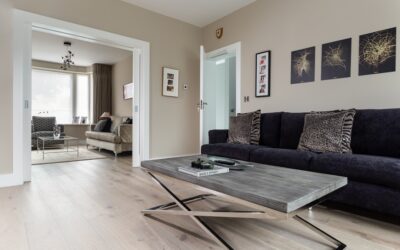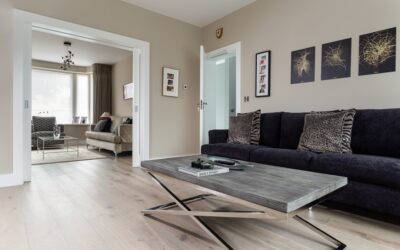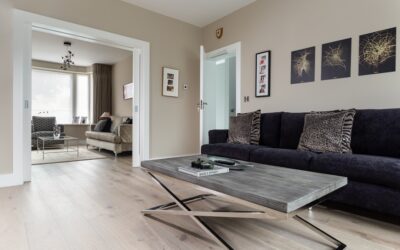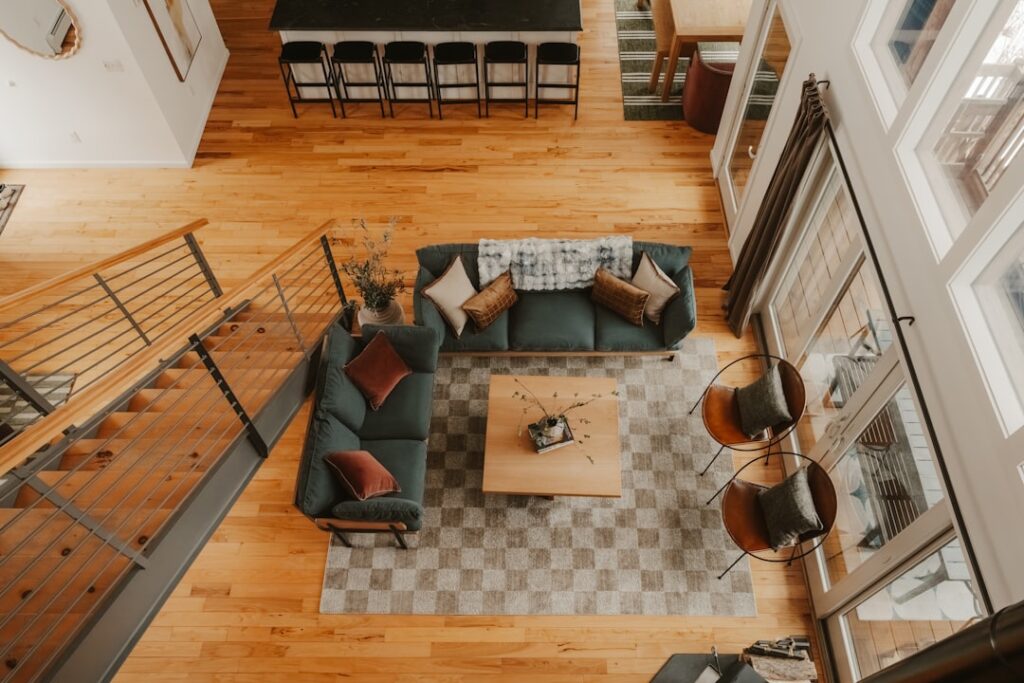
Not all laminate is created equal, and the gap between budget and high quality laminate flooring is enormous. Premium laminate at the top of the market — 12 mm thick, AC4 or AC5 rated, with embossed-in-register textures — looks so much like real hardwood that you have to get on your knees to tell the difference. It handles heavy foot traffic, resists scratches from pets, and lasts decades in homes where cheap laminate would fail in a few years.
- What Makes Laminate “High Quality”?
- AC Ratings Explained
- Why Thickness Matters
- EIR Texture: The Realism Factor
- Core Quality and Water Resistance
- Locking Systems
- Top Premium Laminate Brands
- Pricing Guide
- High Quality Laminate vs Engineered Hardwood
- Best Rooms for Premium Laminate
- Installation Considerations
- Frequently Asked Questions
- What is the best quality laminate flooring you can buy?
- Is high quality laminate better than cheap hardwood?
- How long does premium laminate last?
- Can you tell the difference between premium laminate and real hardwood?
- Is premium laminate worth the extra cost over budget laminate?
- Can you put premium laminate in a bathroom?
This guide explains exactly what makes laminate “high quality,” which specs matter most, the top brands worth your money, realistic pricing, and how premium laminate compares to engineered hardwood.
What Makes Laminate “High Quality”?
High quality laminate flooring differs from budget laminate in six measurable ways. Each of these specs directly impacts how the floor looks, feels, sounds, and lasts.
- AC rating: AC4 or AC5 (vs AC3 for budget)
- Thickness: 10 mm to 14 mm (vs 6 mm to 8 mm for budget)
- Texture: Embossed-in-register (EIR) that matches the printed grain pattern
- Core: High-density HDF (900+ kg/m³) with water-resistant treatment
- Locking system: Precision-engineered click-lock (Uniclic, Valinge, Megaloc)
- Visual variety: 15 to 30+ unique plank designs per box, reducing visible pattern repetition
When someone says their laminate floor “looks fake” or “sounds hollow,” they are almost always describing budget laminate. High quality laminate flooring addresses every one of those complaints.
AC Ratings Explained
The AC (Abrasion Class) rating is the most important durability spec for laminate flooring. It is tested by the European Producers of Laminate Flooring (EPLF) and measures resistance to abrasion, impact, staining, cigarette burns, and castor wheel rolling.
AC Rating Scale
- AC1: Moderate residential — closets, bedrooms with very light use. Rarely sold.
- AC2: General residential — bedrooms, guest rooms. Budget tier.
- AC3: Heavy residential / light commercial — living rooms, dining rooms, home offices. The minimum acceptable rating for most homeowners.
- AC4: General commercial / heavy residential — kitchens, hallways, entryways, busy family homes, home gyms, offices. This is the entry point for high quality laminate flooring.
- AC5: Heavy commercial — retail stores, restaurants, public buildings. Also suitable for the most demanding residential applications (families with large dogs, homes with heavy foot traffic on hard surface floors).
Why AC4/AC5 Matters
The difference between AC3 and AC4 is not subtle. In a standardized Taber abrasion test, AC4 laminate withstands roughly twice the number of rotations before showing wear compared to AC3. In real-world terms, AC4 laminate in a busy hallway looks like new after five years, while AC3 laminate shows visible traffic patterns.
AC5 is overkill for most homes but worth considering for pet owners with large, active dogs. The impact resistance and scratch resistance at AC5 level handles claw traffic that would eventually damage AC3 or even AC4 surfaces.
Why Thickness Matters
Thickness affects how high quality laminate flooring sounds, feels, and performs over imperfect subfloors.
Sound
The number-one complaint about laminate flooring is the hollow, clicky sound. Thicker planks (12 mm+) produce a deeper, more solid sound that is closer to real hardwood. Combined with quality underlayment, 12 mm laminate sounds dramatically better than 7 mm or 8 mm products.
Stability and Feel
Thicker planks feel more substantial underfoot. They bridge minor subfloor imperfections better, reducing that “flexing” feeling you get with thin laminate over slightly uneven floors. Walking on 12 mm laminate feels like walking on a real wood floor. Walking on 6 mm laminate feels like walking on a photograph glued to cardboard.
Thickness Tiers
- 6 – 7 mm: Budget tier. Functional but sounds hollow and feels thin.
- 8 – 10 mm: Mid-range. Noticeable improvement in sound and feel over budget products.
- 10 – 12 mm: Premium residential. This is the sweet spot for homeowners who want a quality floor without commercial-grade overkill.
- 12 – 14 mm: Top tier. Maximum sound dampening, the most solid feel, and the best performance over imperfect subfloors. Some 14 mm products include attached underlayment in the total thickness measurement.
EIR Texture: The Realism Factor
Embossed-in-register (EIR) is the single biggest advancement in laminate flooring technology and the primary reason premium laminate can fool people into thinking it is real hardwood.
What Is EIR?
In standard laminate, the surface texture is a generic pattern stamped across every plank, regardless of the printed wood grain underneath. In EIR laminate, the surface texture is precisely aligned with the printed grain — every knot, every grain line, every cathedral pattern has corresponding tactile texture. When you run your fingers across an EIR plank, you feel the grain you see.
Why It Matters
Visual realism is only half the equation. Your brain processes flooring through both sight and touch (especially barefoot). When the texture matches the visual, the floor reads as “real.” When it does not, something feels off even if you cannot consciously identify why. EIR bridges that gap.
EIR Variations
- Wire-brushed EIR: Simulates the subtle linear texture of wire-brushed hardwood. Popular in oak and European wood styles.
- Hand-scraped EIR: Deeper, more irregular texture that replicates hand-scraped artisan hardwood.
- Saw-cut EIR: Mimics the texture of rough-sawn or band-sawn lumber. Popular in rustic and farmhouse styles.
- Smooth/matte EIR: Subtle texture with a low sheen, replicating the look of finished natural hardwood.
Core Quality and Water Resistance
The core is the structural backbone of laminate flooring. In high quality laminate flooring, the core is noticeably denser and often treated for water resistance.
HDF Density
High-density fiberboard (HDF) is the standard core material. Quality varies by density:
- Standard HDF (800 – 850 kg/m³): Adequate for most residential use. Found in mid-range products.
- High-density HDF (900 – 950 kg/m³): More stable, better locking system retention, superior sound dampening. Found in premium products.
- Ultra-high-density HDF (950+ kg/m³): Commercial-grade. Maximum durability and moisture resistance.
Water Resistance
Traditional laminate and water are enemies. However, premium laminate brands have made significant advances in water resistance:
- Wax-sealed edges: Most quality laminate now includes wax or hydrophobic coating on the tongue-and-groove edges to prevent water from seeping into seams
- Water-resistant core treatment: Some brands treat the HDF core with moisture-resistant resin (Pergo’s AquaSafe, Quick-Step’s HydroSeal)
- Waterproof laminate: A new category in 2026 where the core is fully water-resistant plastic or hybrid material (RevWood by Mohawk, AquaGuard by Floor & Decor)
Important distinction: Water-resistant laminate handles splashes and spills if wiped up promptly. It is not waterproof. Standing water will still cause damage. For truly wet areas, waterproof flooring like LVP or tile is the safer choice.
Locking Systems
The click-lock mechanism determines how easily high quality laminate flooring installs and how tightly the planks stay together over time.
Premium Locking Systems
- Uniclic (Quick-Step): One of the original and most reliable systems. Planks click together with a simple angle-and-press motion. Tight seams, easy to separate for repairs.
- Valinge (used by many brands): A precision fold-down system that locks on both long and short sides simultaneously. Extremely tight joints.
- Megaloc (Kaindl): A wide-plank system designed specifically for large-format laminate. Drop-lock on the short side, angle-click on the long side.
- Unilin (Mohawk/Pergo): Drop-lock system that is fast and forgiving. Good for DIY installation.
Why It Matters
Cheap locking systems loosen over time, creating micro-gaps between planks where moisture enters and edges chip. Premium locking systems maintain tight, flush joints for the life of the floor. They also make installation faster and less frustrating — planks click together on the first try instead of requiring repeated attempts and tapping.
Top Premium Laminate Brands
These brands consistently produce high quality laminate flooring that meets or exceeds AC4 standards.
Quick-Step
A Belgian brand widely regarded as the quality leader in laminate. Quick-Step’s NatureTEK and Impressive collections feature 12 mm thickness, EIR textures, HydroSeal water-resistant edges, and the Uniclic locking system. Their pattern variety is among the best in the industry.
Price range: $2.50 – $5.00/sq ft
Pergo
The company that invented laminate flooring in 1977. Pergo’s TimberCraft and Outlast+ lines deliver AC4 ratings, 12 mm thickness, and the AquaSafe water-resistant core. Pergo Outlast+ includes an attached SpillProtect surface that gives up to 24 hours of spill protection.
Price range: $2.50 – $4.50/sq ft
Mohawk RevWood
Mohawk’s RevWood line represents the new generation of waterproof laminate. It combines a water-resistant core with sealed edges and realistic EIR textures. RevWood Plus and RevWood Premier are the premium tiers, offering wide planks, AC4 ratings, and lifetime residential warranties.
Price range: $3.00 – $5.50/sq ft
Kaindl
An Austrian manufacturer known for ultra-thick (12 mm to 14 mm) laminate with natural wood-fiber cores. Kaindl products feel exceptionally solid underfoot and produce very little hollow sound. Their AQUApro technology provides strong water resistance.
Price range: $3.00 – $5.00/sq ft
Swiss Krono
A European manufacturer producing laminate under multiple brand names (including some private-label products for US retailers). Known for consistent quality, AC5-rated options, and competitive pricing for the quality level delivered.
Price range: $2.00 – $4.00/sq ft
For a full overview of laminate options at every price point, see our laminate flooring guide.
Pricing Guide
Here is what high quality laminate flooring costs compared to mid-range and budget options in 2026.
Material Cost per Square Foot
- Budget laminate (AC3, 7mm): $0.49 – $1.49/sq ft
- Mid-range laminate (AC3, 8–10mm): $1.50 – $2.49/sq ft
- Premium laminate (AC4, 10–12mm, EIR): $2.50 – $4.50/sq ft
- Ultra-premium laminate (AC5, 12mm+, waterproof): $4.00 – $6.00/sq ft
Total Installed Cost
| Room Size | Premium DIY | Premium Professional |
|---|---|---|
| 200 sq ft (bedroom) | $600 – $1,100 | $1,000 – $1,800 |
| 500 sq ft (living area) | $1,500 – $2,750 | $2,500 – $4,500 |
| 1,200 sq ft (main level) | $3,600 – $6,600 | $6,000 – $10,800 |
Includes material, underlayment, transitions, and 10% waste factor. Professional costs include labor at $2 – $3.50/sq ft.
High Quality Laminate vs Engineered Hardwood
This is the comparison that matters most at the premium end of the laminate market. When laminate costs $3 to $5 per square foot and engineered hardwood starts at $4 to $6, the price gap narrows and the decision gets harder.
| Factor | Premium Laminate | Engineered Hardwood |
|---|---|---|
| Surface material | Printed image + EIR texture | Real hardwood veneer |
| Visual realism | 95% (excellent EIR) | 100% (it is real wood) |
| Scratch resistance | Superior (aluminum oxide layer) | Lower (wood scratches) |
| Water resistance | Good to excellent (sealed edges) | Poor to moderate |
| Refinishing | Not possible | 1 – 3 times |
| Installation | Easy DIY (floating) | Easy to moderate (float, glue, nail) |
| Sound underfoot | Good at 12mm with underlayment | Very good (real wood tone) |
| Feel underfoot | Solid at 12mm | Genuine wood warmth |
| Resale value impact | Neutral to positive | Positive (real wood preferred) |
| Cost | $2.50 – $5.00/sq ft | $4.00 – $12.00/sq ft |
Choose premium laminate when: Budget is a priority, you have pets, you want maximum scratch and water resistance, or you plan to DIY the installation.
Choose engineered hardwood when: Visual authenticity matters above all else, you want the ability to refinish, or resale value is a primary concern.
For more on engineered options, see our engineered wood flooring guide.
Best Rooms for Premium Laminate
Premium laminate works well throughout the home, but some rooms benefit more from its specific strengths.
Kitchens
AC4/AC5 rated laminate with water-resistant edges handles kitchen traffic and occasional spills. Clean up liquid promptly and use mats at the sink and dishwasher.
Hallways and Entryways
These high-traffic zones demand AC4 or higher. The superior scratch resistance of premium laminate handles shoes, boots, and grit better than hardwood.
Living Rooms and Family Rooms
The combination of realistic visuals, durability, and easy maintenance makes premium laminate ideal for main living spaces.
Home Offices
Rolling office chair casters are brutal on flooring. AC4/AC5 laminate handles castor traffic without denting or scratching, unlike vinyl or hardwood.
Installation Considerations
Premium laminate installs the same way as budget laminate — it is a floating floor with click-lock joints. However, the better locking systems on premium products make installation faster and produce tighter joints.
- Acclimate planks in the room for 48 hours before installation
- Use a quality underlayment (2 mm to 3 mm foam with moisture barrier) unless the product has an attached pad
- Ensure the subfloor is flat to within 3/16 inch over 10 feet
- Leave 1/4-inch expansion gaps at all walls and fixed objects
- Stagger end joints by at least 8 inches (12+ inches preferred) between adjacent rows
- Mix planks from multiple boxes to randomize patterns
Frequently Asked Questions
What is the best quality laminate flooring you can buy?
Quick-Step NatureTEK, Pergo Outlast+, and Mohawk RevWood Premier are widely considered the best consumer-grade laminate flooring in 2026. They feature AC4/AC5 ratings, 12 mm thickness, EIR textures, and advanced water resistance. Kaindl and Swiss Krono offer comparable European-made quality at similar price points.
Is high quality laminate better than cheap hardwood?
In many practical ways, yes. Premium laminate (AC4, 12 mm, EIR) is more scratch-resistant, more water-resistant, easier to maintain, and easier to install than budget solid hardwood. Where cheap hardwood wins is in refinishing potential and perceived resale value. For daily living, premium laminate often outperforms entry-level hardwood.
How long does premium laminate last?
AC4-rated laminate in a residential setting typically lasts 20 to 30 years with proper maintenance. AC5-rated laminate can last even longer. Most premium brands offer 25-year to lifetime residential warranties.
Can you tell the difference between premium laminate and real hardwood?
From standing height and in normal lighting, high-quality EIR laminate is very difficult to distinguish from real hardwood. On hands and knees with close inspection, differences become visible — the print repeats, the texture is uniform per-plank, and knots do not have true depth. Most visitors to your home will not notice.
Is premium laminate worth the extra cost over budget laminate?
For primary residences where you plan to live for five or more years, absolutely. The difference in sound, feel, visual realism, and durability is dramatic. For rental properties or temporary flooring, budget laminate is fine.
Can you put premium laminate in a bathroom?
Water-resistant laminate (like Mohawk RevWood or Pergo Outlast+) can handle bathroom use better than standard laminate, but it is still not truly waterproof. For bathrooms, LVP or tile remain the safer choices. If you strongly prefer the laminate look, RevWood with its water-resistant core is the closest option to waterproof laminate.
Prefer to explore on your own?
See how new flooring looks in your actual room in seconds — free, no signup.
Try the free Floor Studio →