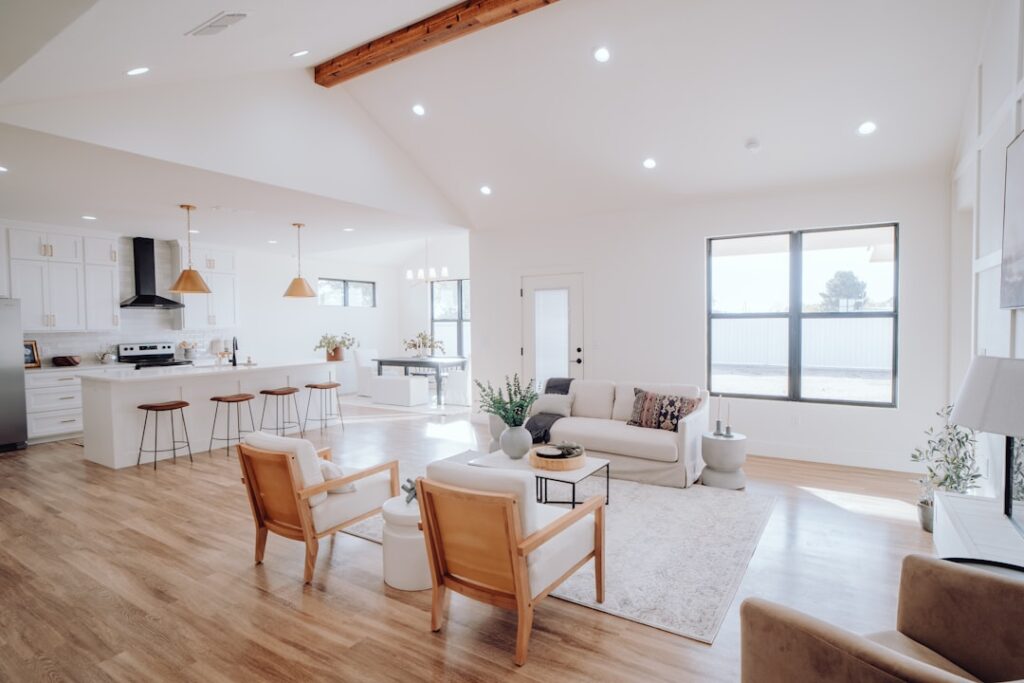
Most flooring buyers comparing budget LVP brands eventually run into Holland in the mix at smaller distributors or online wholesale outlets. The line shows up at prices around $1.50 to $2.50 per square foot, which feels suspicious next to COREtec at $4.50 or Shaw at $3.80. Understanding what Holland flooring actually delivers, what corners it cuts, and where it fits in the market helps you decide whether the savings are real or just deferred costs. Cheap flooring that fails in three years is never a bargain.
What Is Holland Flooring
Holland is a budget LVP brand sourced through several different importers, with no single manufacturer behind the name. The product is typically made in China or Vietnam to private-label specifications, which means the same name covers different actual products depending on which distributor stocks it. This is the first warning sign for buyers expecting consistent quality.
Common Holland LVP planks measure 6 to 7 inches wide by 48 inches long, with wear layers ranging from 6 mil to 20 mil depending on the SKU. The core is usually SPC (stone plastic composite), which provides decent dimensional stability but is significantly stiffer than higher-end products. Underlayment is sometimes pre-attached but often must be purchased separately.
Pricing Compared to Name Brands
Holland LVP runs $1.50 to $2.50 per square foot at retail, with installation adding $2 to $3.50 per square foot for a total installed cost of $3.50 to $6 per square foot. Compare that to Mohawk SolidTech Plus at $3.50 to $5 per square foot installed, Shaw Floorte Pro at $4 to $6, and COREtec Pro Plus at $5 to $7 installed.
The raw savings on Holland against name brands runs about $1 to $2 per square foot. On a 500 square foot project, that is $500 to $1,000. Whether that gap is meaningful depends on how long the floor needs to last. Holland’s effective lifespan is typically 8 to 12 years, while Mohawk and Shaw products commonly last 18 to 25 years under similar use.
Wear Layer Quality Concerns
The wear layer is the clear PVC top coat that protects the printed design layer from scratches and stains. Holland’s 6-mil wear layer is suitable only for low-traffic rooms like guest bedrooms. The 12-mil version handles family rooms and hallways. The 20-mil top tier matches name-brand commercial-grade ratings, though it costs more than the 6-mil and 12-mil options.
For comparison, Mohawk’s RevWood Plus uses a 16-mil wear layer with a ceramic bead infusion that resists scratches better than standard PVC. COREtec Pro Plus uses a 20-mil wear layer with diamond crystal technology. The Holland line lacks any proprietary wear-layer enhancement, so the protection is purely thickness-based.
Installation Compatibility and Locking System
Holland uses a generic angle-tap click-lock system that resembles Unilin but lacks the licensed Unilin certification that name-brand products carry. The locking edges work, but they are more prone to chipping during installation than Unilin systems. Skilled installers handle this fine. DIYers often crack edges and end up with visible gaps along seams.
Required subfloor flatness is the same as any LVP: 3/16 inch variance over 10 feet. The product floats over the subfloor and uses no glue, which keeps installation simple. Expansion gaps of 1/4 inch around all walls and fixed objects are critical because SPC cores expand more than typical LVP when temperatures swing.
Where Holland Flooring Actually Makes Sense
Rental properties are the strongest use case. A landlord refreshing a unit between tenants needs durable flooring that does not eat the entire turnover budget. Holland delivers an acceptable look at a price point that lets a landlord update flooring every 8 to 10 years rather than every 15 to 20.
Flip houses are the second strong use case. A buyer who plans to sell within 12 months benefits from any flooring that looks fresh in listing photos and survives the open-house period. Holland’s surface appearance, especially in the higher wear-layer SKUs, photographs well and reads as updated flooring in real estate listings.
Where to Skip Holland for Better Options
Long-term family homes deserve better flooring. The $1,000 in savings over a 25-year horizon works out to $40 per year, which is not worth the early replacement headache. Mohawk RevWood Plus or Shaw Floorte Pro both deliver substantially longer lifespans for marginal extra cost.
Households with pets, especially large dogs with claws, should avoid the 6-mil and 12-mil Holland wear layers. Claw scratches show through to the design layer within months. Spend the extra $1.50 per square foot for COREtec Pro Plus or LL Flooring AquaSeal, both of which carry pet warranties that Holland does not match.
Warranty Reality Check
Holland markets a “lifetime residential” warranty on premium SKUs, but the fine print limits coverage to manufacturing defects only and excludes installation, water damage, and gradual wear. Filing a claim typically requires the original receipt, photos of the damage, and the installer’s documentation, which most homeowners cannot produce.
Mohawk and Shaw warranties are similarly worded but the brands honor them more reliably because they have established service networks and inspectors. Holland warranty claims often go unanswered or stall in indefinite processing. Treat the warranty as effectively non-existent when comparing total cost of ownership.
The Final Cost Analysis
For a 500 square foot installation, Holland LVP installed runs about $1,750 to $3,000. The same project with Shaw Floorte Pro runs $2,000 to $3,000, and Mohawk SolidTech Plus runs $1,750 to $2,500. The gap between Holland and the established brands is often smaller than buyers expect once installation, underlayment, and trim are included.
If you are choosing flooring for a property you plan to live in for more than five years, the case for Holland weakens significantly. If you are flipping or running rental property, the brand earns a place in the conversation. Either way, ask the dealer for a physical sample, scratch-test it yourself with a coin, and check the wear-layer thickness on the spec sheet before committing.
Prefer to explore on your own?
See how new flooring looks in your actual room in seconds — free, no signup.
Try the free Floor Studio →