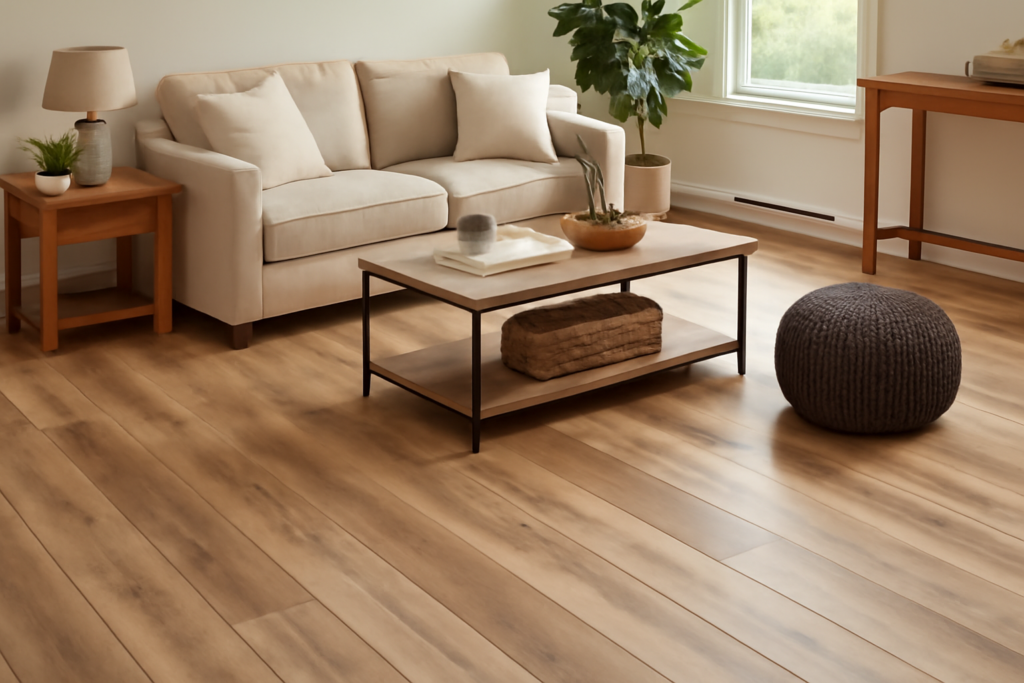
Shoppers run into the name in showroom displays, regional listings, and online searches, yet finding solid details can be frustrating. Homecrest flooring is one of those labels where doing your homework matters more than trusting a single sales pitch. Whether the name points to a private-label product line, a regional retailer, or a specific dealer near you, the smart move is to evaluate the actual product in your hands rather than the brand on the box. This guide walks you through how to vet it, what questions to ask, and how to compare it against established alternatives.
What “Homecrest Flooring” Usually Refers To
Many flooring names you encounter at the local level are private-label or house brands. A retailer buys planks or boxes from a manufacturer and sells them under its own name. That is not a red flag by itself. It does mean specifications, warranties, and availability can vary from store to store. Before assuming you know what you are buying, ask the seller a direct question: who manufactures this product, and what is the exact product line?
If the answer is vague, treat that as useful information. A confident dealer will hand you a spec sheet listing wear-layer thickness, total plank thickness, the AC rating for laminate, or the species and finish for hardwood. When a brand name has thin documentation online, the documentation in the showroom becomes your primary source of truth.
The Pros of Buying a Lesser-Known Brand
House brands and regional labels are not automatically inferior. There are real advantages worth weighing.
- Price: Cutting out a national marketing budget can lower the shelf cost. You sometimes get comparable specs for less per square foot.
- Local stock: A regional brand may keep inventory on hand, which means no two-week freight wait for a reorder mid-project.
- Direct accountability: When the seller and the brand are effectively the same business, a single phone call can resolve a warranty question instead of a manufacturer hotline maze.
The catch is that these benefits only matter if the underlying product is sound. A low price on a thin wear layer is no bargain when the floor shows traffic lanes in three years.
The Cons and Risks to Watch
Unfamiliar brands carry a few predictable risks. The biggest is documentation. If you cannot find a written warranty, an installation guide, or published specs, you are buying partly on faith. Resale and repair are the second concern. If you damage a few planks in year four and the line has been discontinued, finding a color match becomes a scavenger hunt.
Warranty enforceability is the third. A 25-year warranty is only as good as the company standing behind it. Ask how long the seller has operated under that name and whether claims are handled in-store or routed to a manufacturer you can identify and contact independently.
How to Evaluate the Actual Product
Set the brand aside and inspect the floor on its own merits. The specs tell the story regardless of the label.
- Wear layer (vinyl): Look for 12 mil for light residential use and 20 mil or more for busy households and pets.
- Total thickness (vinyl/laminate): Rigid-core vinyl in the 5mm to 8mm range and laminate at 10mm to 12mm generally feel more substantial underfoot.
- AC rating (laminate): AC3 for normal home use, AC4 or AC5 for heavy traffic.
- Hardwood specifics: Confirm species, whether it is solid or engineered, the veneer thickness on engineered boards, and the finish type.
- Water resistance: Ask for “waterproof” claims in writing, with the conditions and time limits spelled out.
Questions to Ask the Dealer
A short, pointed conversation reveals more than any brochure. Bring these questions:
- Who manufactures this, and what is the exact product line and SKU?
- Can I see the full written warranty and the installation instructions?
- What is the wear-layer or veneer thickness?
- How long has this exact product been in your catalog, and how likely is it to be available for reorder in two to three years?
- What is the return and remake policy if a box arrives damaged or off-color?
If you sense hesitation on basic specs, that tells you how a future warranty conversation might go.
Smart Comparison Shopping
Never buy a single-source brand without a baseline. Take the spec sheet for the Homecrest product and line it up against a nationally available floor at a similar price. If a name-brand vinyl with a 20 mil wear layer costs the same per square foot, the established product with searchable reviews and predictable reorder stock may be the safer pick. If the local option genuinely beats it on specs or price, you have found a real deal.
Order samples and live with them for a week. Look at the planks in daylight and under your evening lighting. Drag a key across a corner to gauge scratch resistance, and set a sample in a tray of water overnight if water resistance matters to your room.
Installation and Long-Term Cost
The plank price is only part of the picture. Factor in underlayment, transition strips, trim, and labor if you are hiring out. Professional installation commonly runs $2 to $6 per square foot on top of materials, depending on your region and subfloor condition. A floating click-lock floor is the most DIY-friendly format, while glue-down and nail-down hardwood reward experience.
Budget a little extra material — order roughly 10 percent over your measured square footage to cover cuts, mistakes, and future repairs. For a lesser-known brand, stashing a spare box is especially wise, since a matching reorder may not exist down the road.
The Bottom Line
Treat homecrest flooring the way you would any unfamiliar label: judge the product, not the name on the carton. Get the specs in writing, identify the manufacturer, confirm the warranty is enforceable, and compare it head-to-head with a known alternative at the same price point. Do that homework and a regional or house brand can be a genuine value. Skip it, and you are gambling on a floor you will walk across every day for the next decade.
Prefer to explore on your own?
See how new flooring looks in your actual room in seconds — free, no signup.
Try the free Floor Studio →