
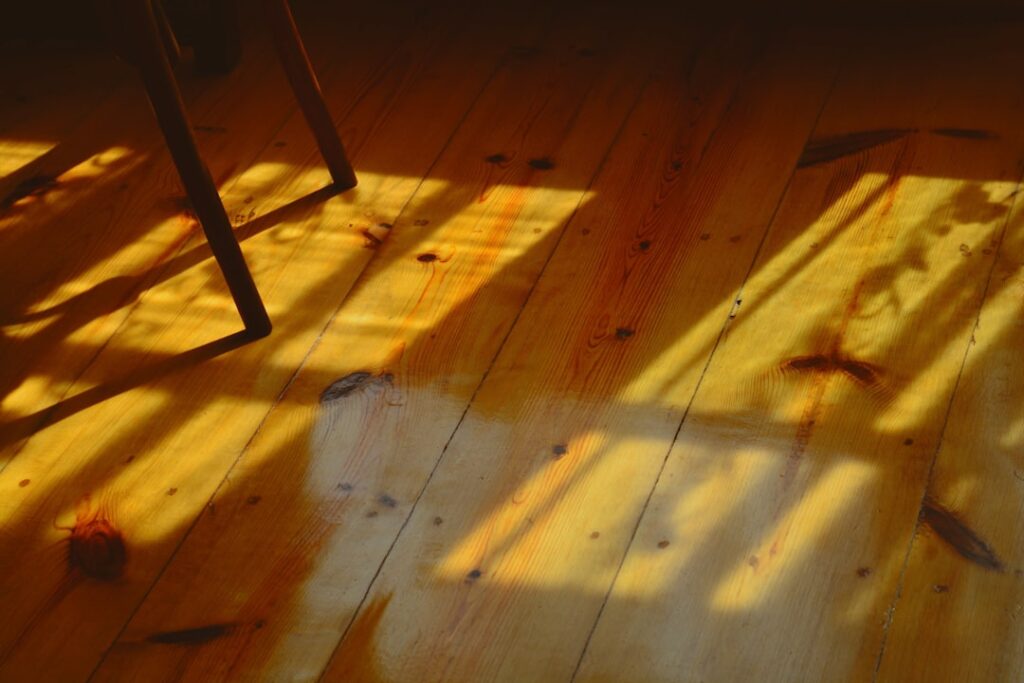
Hardwood flooring is the only major flooring category that often increases home value rather than depreciating, which is why a well-stocked house of hardwood remains a destination for serious renovators. Picking the right species, grade, and finish involves understanding tradeoffs that the showroom rarely explains in plain English. After 18 years selling, installing, and refinishing hardwood across hundreds of homes, here is the framework I give every client before they sign a quote.
Hardwood Species: The Big Picture
The Janka hardness scale measures how much force is needed to embed a steel ball halfway into the wood. It is the single most important spec when matching species to traffic. Generally, Janka above 1,200 lbf handles dogs and kids without excessive denting; below 900 lbf is for low-traffic rooms only.
- Red oak: 1,290 Janka, the American workhorse
- White oak: 1,360 Janka, the dominant choice in 2026
- Hickory: 1,820 Janka, ideal for active families
- Maple: 1,450 Janka, light and contemporary
- Walnut: 1,010 Janka, dark and luxurious but softer
- Hard maple: 1,450 Janka, used for sport floors and high traffic
- Brazilian cherry (Jatoba): 2,820 Janka, extreme durability
Solid vs Engineered Hardwood
Solid hardwood is one piece of wood, typically 3/4 inch thick, that nails into a wood subfloor. It can be sanded and refinished 6 to 10 times and lasts 100+ years. The downside is sensitivity to humidity changes; solid wood expands and contracts seasonally and cannot be installed below grade.
Engineered hardwood layers a 2mm to 6mm wear layer of solid wood over a plywood base. It floats, glues, or nails over almost any subfloor including concrete. Engineered handles humidity swings better and works with radiant heat.
For most homes built after 1990, engineered hardwood is the smarter choice. Solid wood remains the gold standard for restoration work in older homes with existing solid wood subfloors.
Wood Grades Explained
Grading refers to the visual appearance of the wood, not its quality. The grade you choose affects both price and the look of the finished floor:
- Clear (or Select): Almost no knots, uniform color, premium price
- #1 Common (Character): Some knots and color variation, mid-price
- #2 Common (Rustic): Significant knots, mineral streaks, sapwood, lowest price
- Mill Run: A mix of all grades, common in builder-grade installations
Higher grades cost more but waste less during install. Rustic grades are 30% to 50% cheaper but generate more cutting waste, narrowing the actual savings.
Plank Width and Length
Wider and longer planks read as more luxurious and contemporary. Strip flooring (under 3 inches wide) reads traditional. Wide-plank flooring (5 inches and wider) reads modern and high-end. Random length boards (12 inches to 84 inches) look more authentic than uniform-length stock.
- Strip: 1.5 to 2.25 inches wide (traditional, narrow rooms)
- Plank: 3 to 4.5 inches wide (transitional)
- Wide plank: 5 to 7 inches wide (modern, contemporary)
- Extra wide: 8 inches and wider (loft-style, modern luxury)
Finishes and Sheens
The finish determines the floor’s appearance and maintenance profile. Site-finished floors are sanded smooth then sealed with polyurethane in the home; pre-finished floors arrive sealed at the factory with multiple coats of aluminum oxide UV-cured urethane.
Pre-finished is now standard (90% of new installations) because the factory finish is harder, more durable, and faster to install. Site-finished still wins for seamless looks in herringbone patterns and large open spaces.
- Matte (10% sheen): Hides scratches, looks contemporary
- Satin (25% sheen): Most popular, balances looks and easy cleaning
- Semi-gloss (55% sheen): Traditional, shows every speck of dust
- High-gloss (75%+ sheen): Rare in residential, shows wear instantly
Pricing Breakdown
Hardwood pricing in 2026:
- Builder-grade engineered oak: $3 to $5 per sq ft material
- Premium engineered oak: $6 to $12 per sq ft material
- Solid red or white oak: $4 to $8 per sq ft material
- Premium solid (walnut, hickory, exotics): $7 to $15 per sq ft material
- Wide-plank European oak: $10 to $25 per sq ft material
- Installation labor: $3 to $7 per sq ft
- Site finishing (sand and seal): $3 to $6 per sq ft
Where to Buy
National retailers vs specialty stores tradeoffs:
- Lumber Liquidators (LL Flooring): Best value on mid-grade engineered hardwood
- Floor & Decor: Strong selection at competitive pricing
- Hardwood Bargains and Mirage: Direct-from-mill pricing on premium engineered
- Local hardwood specialty stores: Best for solid hardwood, refinishing services, and custom orders
- Carlisle Wide Plank: Premium wide-plank specialist with custom mill capability
Installation Considerations
Always acclimate hardwood in the room where it will be installed for at least 5 days, ideally 14 days for solid wood. Stack the boxes opened, not sealed. Indoor humidity must be in the 35% to 55% range during and after installation.
Subfloor moisture content must be tested before installation. Concrete needs to test below 4 lbs/1000 sq ft using a calcium chloride test, or use a Class I vapor retarder underlayment.
Hardwood Maintenance
Daily and weekly:
- Sweep or vacuum (soft attachment) every 2 to 3 days in heavy-traffic homes
- Damp mop with a microfiber pad and Bona Hardwood Floor Cleaner monthly
- Wipe spills immediately, never let water sit
Annual:
- Inspect finish wear in high-traffic lanes
- Apply a polyurethane recoat every 5 to 10 years before wear-through
- Plan a full sand-and-finish every 15 to 25 years
FAQ: House of Hardwood
What is the best hardwood for kitchens? White oak engineered with a wire-brushed matte finish balances looks, durability, and water resistance.
How long does hardwood flooring last? Solid hardwood: 100+ years with refinishing. Engineered: 25 to 75 years depending on wear layer.
Is hardwood worth the cost? Yes. Hardwood typically returns 70% to 80% of cost at resale and lasts decades longer than alternatives.
Can I install hardwood in a basement? Engineered hardwood with a moisture barrier underlayment, yes. Solid hardwood, no.
What is the most popular hardwood color in 2026? White oak in natural to medium tones with matte finishes. Dark stains have been declining since 2020.
Prefer to explore on your own?
See how new flooring looks in your actual room in seconds — free, no signup.
Try the free Floor Studio →

