
Knowing how to clean laminate floors correctly is the single most important thing you can do to protect your investment. Laminate looks beautiful and holds up well to foot traffic, but it has a critical vulnerability — its HDF (high-density fiberboard) core swells and warps when exposed to excess moisture. The wrong cleaning method can do more damage than years of normal wear.
This guide covers the daily care routine, best cleaning products, proper mopping technique, stain removal methods, and the common mistakes that ruin laminate floors prematurely. Follow these steps and your laminate flooring will look great for its full 15- to 25-year lifespan.
Daily Care Routine
The best way to keep laminate floors clean is to prevent dirt from accumulating in the first place. Grit and sand particles act like fine sandpaper — every footstep grinds them against the wear layer, gradually dulling the finish and creating micro-scratches that make the floor look worn.
Dry dust daily (or as needed). Use a microfiber dust mop or a vacuum with a hard-floor setting (beater bar off or retracted). Microfiber attracts and holds dust particles rather than pushing them around the way traditional brooms do. In high-traffic areas — entryways, kitchen, hallways — a quick daily pass with a microfiber mop takes under five minutes and prevents 90% of surface damage.
Place mats at every entrance. Exterior doors are the primary source of grit that damages laminate. Use coarse-fiber mats outside the door to scrape shoes and soft microfiber mats inside to capture remaining particles. In households where shoes are worn indoors, entrance mats are especially critical.
Wipe spills immediately. Laminate’s wear layer is water-resistant, but the seams between planks are not fully sealed on most products. Standing liquid can seep into joints and reach the HDF core, causing edge swelling that is visible and irreversible. Keep a dry cloth or paper towels handy and wipe spills the moment they happen.
Best Laminate Floor Cleaners
Not all floor cleaners are safe for laminate. Products designed for hardwood, tile, or general-purpose cleaning often contain ingredients that damage laminate’s wear layer, leave residue, or introduce excess moisture.
Bona Hard-Surface Floor Cleaner
Bona’s hard-surface formula is one of the most widely recommended laminate floor cleaners. It is water-based, leaves no dulling residue, dries quickly, and is Greenguard Gold certified for low chemical emissions. The ready-to-use spray bottle works with Bona’s microfiber mop system for efficient damp cleaning. At approximately $8 for a 36-ounce bottle, it is affordable for regular use.
Black Diamond Stoneworks Wood & Laminate Cleaner
Black Diamond’s formula is a concentrated cleaner that can be diluted to different strengths depending on the cleaning task. It leaves no streaks or residue, works on both laminate and hardwood, and is free of harsh chemicals. The concentrate formula offers excellent value — a single 32-ounce bottle makes approximately 4 gallons of cleaning solution.
Swiffer WetJet (Wood-Specific Formula)
Swiffer’s wood-specific WetJet solution is safe for laminate floors. The WetJet system delivers a controlled mist rather than a stream or puddle, which limits moisture exposure. However, the disposable pad system generates ongoing waste and cost that reusable microfiber systems avoid.
DIY Laminate Floor Cleaner
A simple homemade cleaner works well for routine cleaning: mix one gallon of warm water with one tablespoon of dish soap (non-antibacterial, no lotion additives) and one-third cup of white vinegar. The vinegar cuts grease, the soap lifts dirt, and the water ratio keeps moisture levels safe. Wring your mop thoroughly — this is essential regardless of which cleaner you use.
| Cleaner | Type | Residue-Free | Cost per Use | Best For |
|---|---|---|---|---|
| Bona Hard-Surface | Ready-to-use spray | Yes | $0.15 – $0.25 | Regular maintenance |
| Black Diamond | Concentrate | Yes | $0.05 – $0.10 | Value, heavy cleaning |
| Swiffer WetJet (Wood) | Spray mop system | Yes | $0.40 – $0.60 | Convenience |
| DIY vinegar mix | Homemade | Yes (if mixed correctly) | $0.02 – $0.05 | Budget, eco-conscious |
Proper Mopping Technique
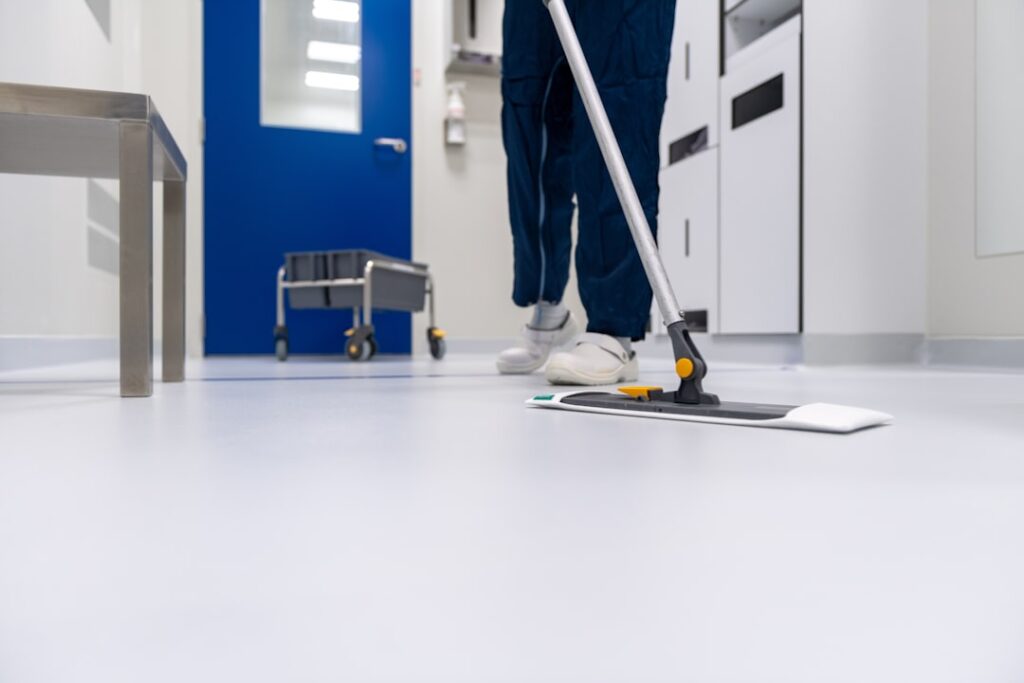
The golden rule for mopping laminate floors: damp, not wet. A mop that drips water onto the floor is too wet for laminate. Here is the correct technique.
- Dust first. Always remove loose dirt and grit with a dry microfiber mop or vacuum before wet mopping. Mopping over grit grinds it into the surface.
- Spray or dip and wring. If using a spray mop, apply a light mist to a 3- to 4-foot section at a time. If using a bucket and mop, dip the mop, then wring it until it is barely damp — you should not be able to squeeze any drips from the mop head.
- Mop with the grain. Move the mop in the direction of the plank pattern. This pushes cleaner into the grain-textured surface and produces fewer visible streaks.
- Dry immediately if needed. In humid environments or if you notice any standing moisture, follow behind your damp mop with a dry microfiber cloth. No puddles should remain on the surface for more than a few seconds.
- Work in sections. Clean one area completely before moving to the next. This prevents you from walking on wet sections and tracking dirt back onto the clean floor.
Microfiber flat mops are the best tool for laminate floors. They hold the right amount of moisture, glide smoothly without scratching, and are machine-washable for hundreds of uses. Avoid string mops and sponge mops — both hold too much water and leave excess moisture on the floor.
Stain Removal Guide
Most stains on laminate floors can be removed without harsh chemicals. The key is to identify the stain type and use the appropriate treatment.
| Stain Type | Removal Method | Notes |
|---|---|---|
| Food and drink spills | Damp microfiber cloth with laminate cleaner | Wipe promptly; most food stains lift easily |
| Grease and oil | Small amount of rubbing alcohol on a cloth | Rub gently; avoid saturating the area |
| Scuff marks (shoes) | Tennis ball or pencil eraser, rub gently | Melamine sponge (Mr. Clean Magic Eraser) also works |
| Ink and marker | Rubbing alcohol or nail polish remover (acetone-free) | Apply to cloth first, not directly to floor |
| Nail polish | Acetone-free nail polish remover | Test in an inconspicuous area first |
| Candle wax | Let harden, then gently scrape with plastic scraper | Use a credit card edge; never use metal scrapers |
| Blood | Cold water and a damp cloth | Never use hot water (sets the stain) |
| Pet accidents | Enzyme cleaner (like Nature’s Miracle), then damp mop | Blot first; wipe toward the center to prevent spreading |
| Chewing gum | Ice to harden, then plastic scraper | Rubbing alcohol removes residue |
For any stain, always apply cleaning solution to a cloth first rather than directly to the floor. This prevents liquid from pooling in seams. Work from the outside of the stain inward to prevent spreading.
What to Avoid on Laminate Floors
Understanding what damages laminate is just as important as knowing how to clean laminate floors correctly. These common mistakes cause the most damage.
Steam Mops
Steam mops are the single worst cleaning tool for laminate floors. They force hot steam into the seams between planks, saturating the HDF core and causing irreversible swelling, warping, and delamination. Every major laminate manufacturer explicitly warns against steam mops in their care guides — and using one typically voids your warranty.
Excess Water
Wet mopping with a sopping mop, using a bucket of water poured directly onto the floor, or allowing any standing water to remain on the surface damages laminate. The HDF core absorbs moisture through seams and edges, swelling by up to 15% of its thickness — enough to create visible bumps and separations.
Abrasive Cleaners and Tools
Scouring powders (Comet, Ajax), steel wool, stiff-bristled brushes, and abrasive scrub pads scratch and dull laminate’s wear layer. Once the wear layer is compromised, the photographic design layer beneath is exposed and will quickly deteriorate.
Wax, Polish, and Oil-Based Products
Laminate floors do not benefit from wax or polish. These products build up on the surface, creating a hazy, streaky film that actually makes the floor look worse. They can also make the floor dangerously slippery. If a buildup has already occurred, remove it with a laminate-specific cleaner or a solution of rubbing alcohol and water.
Vinegar in High Concentration
While diluted vinegar (one-third cup per gallon of water) is safe for laminate, undiluted vinegar or strong vinegar solutions can damage the wear layer over time due to acidity. Always dilute properly and never use undiluted vinegar on laminate.
Bleach and Ammonia
Both bleach and ammonia-based cleaners can discolor laminate and break down the wear layer. Avoid all-purpose cleaners that contain these ingredients, including many popular bathroom and kitchen cleaning sprays.
Scratch Prevention
Preventing scratches extends the life and appearance of your laminate floors significantly.
Felt pads on all furniture legs. Apply adhesive felt pads to the bottom of every chair, table, sofa, and cabinet leg. Check and replace pads every 3 to 6 months — they compress and collect grit over time, turning from protectors into sandpaper. Self-adhesive felt pads cost less than $10 for a multi-pack and are the single cheapest way to protect any hard-surface floor.
Use furniture sliders when moving heavy items. Never drag furniture, appliances, or heavy objects across laminate. Even with felt pads, the force and grit can gouge the surface. Place furniture sliders (available in felt and plastic) under heavy items before moving them.
Keep pet nails trimmed. Dog nails — especially on larger breeds — can scratch laminate. Regular trimming or grinding keeps nails short enough to avoid contact with the floor surface. A nail grinder produces smoother, rounder nail tips than clippers.
Area rugs in high-traffic zones. Place area rugs (with non-slip, non-staining rug pads) in areas that receive the heaviest traffic — entryways, hallways, in front of the kitchen sink. The rug absorbs the brunt of daily wear and can be replaced inexpensively when it shows age.
No high heels on laminate. Stiletto heels concentrate body weight onto a tiny point, generating up to 2,000 psi of pressure — enough to dent hardwood and damage laminate. Encourage a shoes-off policy or provide soft slippers at the door.
Maintenance Schedule
| Frequency | Task | Time Required |
|---|---|---|
| Daily | Dry dust mop or vacuum high-traffic areas | 5 minutes |
| Weekly | Damp mop entire floor with laminate cleaner | 15 – 20 minutes |
| Monthly | Check and replace furniture felt pads | 10 minutes |
| Quarterly | Move furniture and clean underneath; inspect for damage | 30 minutes |
| Annually | Deep clean all rooms, check transition strips and edges | 1 – 2 hours |
| As needed | Spot-treat stains immediately | 2 – 5 minutes |
This schedule keeps your laminate floors in excellent condition with minimal effort. The daily dusting is the most important habit — if you only adopt one cleaning practice from this guide, make it that one.
For similar cleaning guidance on other flooring types, see our guide on how to clean vinyl flooring.
Frequently Asked Questions
Can I use a Swiffer on laminate floors?
Yes — both the dry Swiffer Sweeper and the Swiffer WetJet with the wood-specific solution are safe for laminate floors. The dry cloths work well for daily dust pickup. The WetJet delivers a controlled mist that keeps moisture levels safe. Avoid the standard WetJet solution (designed for tile) on laminate; use only the wood or hard-surface formula.
Can I use vinegar on laminate floors?
Diluted white vinegar (one-third cup per gallon of water) is safe for occasional use on laminate floors. It cuts grease and disinfects mildly without leaving residue. Do not use undiluted vinegar or apple cider vinegar — both are too acidic and can damage the wear layer over time.
Why do my laminate floors look cloudy after mopping?
Cloudy laminate floors after mopping are almost always caused by product buildup — from using too much cleaner, using a cleaner not designed for laminate, or from wax-based products. To remove the haze, mop with a solution of one cup rubbing alcohol to one gallon of warm water, then dry buff with a clean microfiber cloth.
How often should I mop laminate floors?
Damp mop laminate floors once per week in most households. Homes with pets, children, or heavy traffic may benefit from twice-weekly mopping. Over-mopping is not a concern as long as you use the damp-not-wet technique — the issue is always moisture level, not frequency.
Can I use a robot vacuum on laminate floors?
Yes. Most robot vacuums work well on laminate floors. Models with rubber brush rolls (like the iRobot Roomba series) are gentler than those with stiff bristle brushes. Avoid robot mops that use excessive water — some models saturate the floor more than is safe for laminate.
How do I fix swollen laminate edges?
Unfortunately, swollen laminate edges caused by moisture damage are irreversible. The HDF core does not return to its original dimensions after swelling. The affected planks must be replaced. Most click-lock laminate systems allow individual planks to be removed and replaced without disturbing the surrounding floor — work from the nearest wall toward the damaged plank.
Prefer to explore on your own?
See how new flooring looks in your actual room in seconds — free, no signup.
Try the free Floor Studio →

