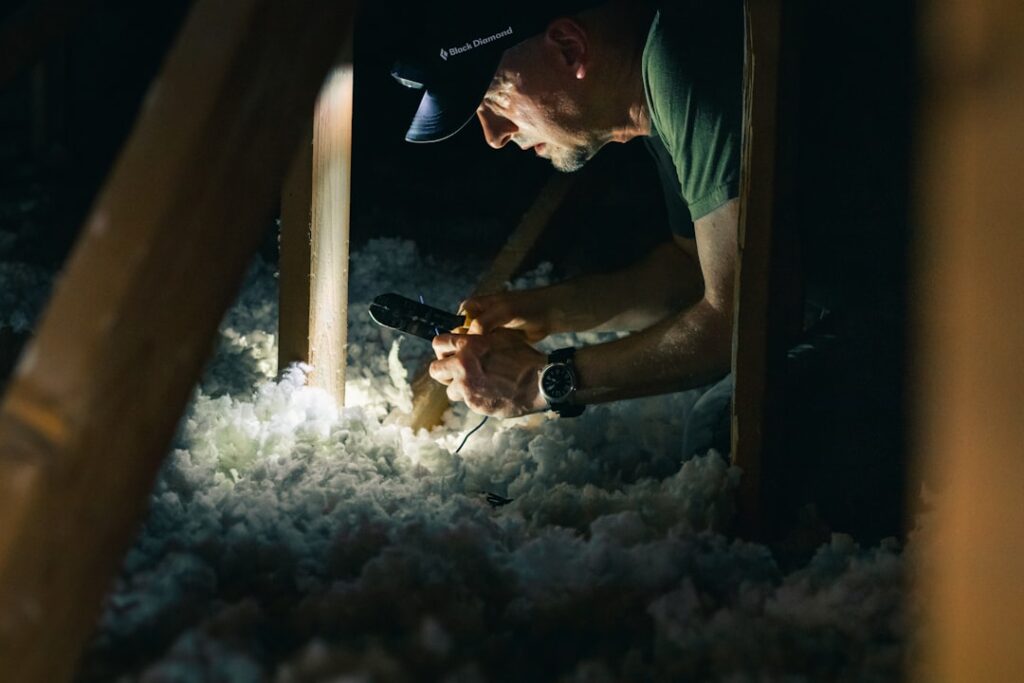
The scratching overhead at 2 a.m. is bad enough, but the real problem is what you cannot see: mice burrow through blown-in insulation like it is a snowbank, tunneling under the surface where traps and eyes never reach. Figuring out how to get rid of mice in attic under insulation is a different job from catching a mouse in a kitchen, because the insulation gives them cover, nesting material, and a highway system all at once. I have cleared plenty of these, and the ones that stay gone follow the same order every time: find the doors, remove the animals, then seal and restore. Skip the sealing and you are just feeding them.
- Confirm It Is Mice, Not Something Bigger
- Find and Map Every Entry Point
- Trap Aggressively — the Fastest Path to Zero
- When and How to Use Bait Safely
- Seal the Entries for Good
- Deal With the Contaminated Insulation
- Keep Them From Coming Back
- Why Mice Choose Attic Insulation in the First Place
- Natural Deterrents: What Works and What Doesn't
- When to Call a Professional
- The Bottom Line
Confirm It Is Mice, Not Something Bigger
Before you buy a single trap, read the evidence. Mouse droppings are dark, rice-grain sized, and scattered in trails — you will find them along the tops of joists and in the divots their tunnels leave in blown insulation. Squirrels leave larger, oval pellets and are loud in daylight; raccoons leave fist-sized damage and torn baffles. Look for the surface signs mice leave in the attic: shallow troughs winding through the insulation, greasy rub marks along rafters where their fur drags, and gnawed wire sheathing or cardboard. If you see tunnels dimpling the insulation surface, you are dealing with an established colony, not a stray.
Find and Map Every Entry Point
Mice get in through gaps as small as a quarter inch — the diameter of a pencil. You will never win the trapping battle while the door stays open, so map the entries first. From outside, inspect where the roofline meets the walls, around gable vents, at the fascia and soffit joints, and anywhere a utility line, cable, or vent pipe passes through the exterior. From inside the attic, wait for a bright day and look for pinpoints of daylight along the eaves and ridge. The usual suspects:
- Gaps where soffit meets the exterior wall or brick
- Torn or missing screen on gable and roof vents
- Utility penetrations — AC line sets, plumbing vents, electrical service
- Gaps under the drip edge and at roof-to-wall transitions
- Chimney chase gaps and unsealed ridge vents
Trap Aggressively — the Fastest Path to Zero
Trapping beats poison in an attic for one blunt reason: a poisoned mouse dies inside the insulation or a wall cavity, and then you own a smell you cannot find for weeks. Use classic wood or plastic snap traps, and use more than you think — a dozen for a moderate infestation, not two. Bait with a pea-sized dab of peanut butter pressed firmly into the trigger; loose bait gets stolen. Set traps perpendicular to the joist tops with the trigger against the wood, because mice run the joist edges, not the open insulation. Place them along the tunnel routes and rub marks you already found. Check and reset daily. A steady catch that drops to zero over 10 to 14 days tells you the colony is cleared.
When and How to Use Bait Safely
If the infestation is large or the attic is hard to access daily, tamper-resistant bait stations along the exterior perimeter reduce the population feeding the attic. Keep the poison outside and in locked stations only — never scatter loose pellets in insulation where pets, kids, or non-target wildlife can reach them, and where dying mice will stink up the space. Bait outside to intercept the supply, trap inside to clear what is already there. That split is the professional playbook.
Seal the Entries for Good
This is the step that turns a temporary win into a permanent one. Mice chew through foam and caulk alone, so use materials with teeth-proof backing. Stuff copper mesh or stainless steel wool into every gap, then lock it in place with a bead of exterior sealant or expanding foam over the top. For larger holes, cut hardware cloth (quarter-inch galvanized mesh) and screw or staple it over the opening. Re-screen gable and soffit vents with metal mesh, never plastic. Seal utility penetrations with an escutcheon plate plus sealant. A $12 roll of copper mesh and a $6 tube of sealant close most of the doors mice use.
Deal With the Contaminated Insulation
Mice foul insulation with urine and droppings, and heavy nesting spots lose their R-value where the fibers get matted and packed down. For a light problem, spot-remove the soiled sections, bag them, and top off with fresh blown-in or batts. For a heavy, long-standing infestation — pervasive droppings, ammonia smell, tunneling throughout — the honest answer is full removal and replacement, which for a typical attic runs $2 to $4 per square foot to remove and $1.50 to $3.50 per square foot to reinstall. Before you disturb anything, treat the area as a biohazard.
Cleanup Safety
Rodent droppings and urine can carry hantavirus and other pathogens, and sweeping or vacuuming dry droppings puts those particles into the air you breathe. Do it right: ventilate the attic for at least 30 minutes first, wear an N95 respirator and gloves, and mist droppings and nests with a 10-percent bleach solution or an EPA-registered disinfectant. Let it sit 5 minutes, then wipe or bag the material wet — never dry-sweep. Double-bag everything and wash up thoroughly afterward.
Keep Them From Coming Back
Once the attic is clear and sealed, close the outdoor supply lines. Trim tree limbs back at least 4 feet from the roof — squirrels and mice both use branches as bridges. Keep firewood, mulch piles, and bird seed away from the foundation. Store attic goods in sealed plastic bins, not cardboard, which mice shred for nests. Set a reminder to re-inspect the exterior every fall, when cooling weather drives rodents indoors and a single missed gap restarts the whole cycle.
Why Mice Choose Attic Insulation in the First Place
Understanding what draws them helps you keep them out for good. Attic insulation is, from a mouse’s point of view, a perfect habitat: warm, dark, quiet, and full of soft material to burrow through and shred into nests. Blown-in cellulose and fiberglass both tunnel easily, and the insulation muffles the sounds of predators and hides the mice from view. Add the attic’s proximity to warmth rising from the house below and its usual supply of stored cardboard boxes to chew, and you have prime real estate. Mice do not need much food up there — they will forage in your kitchen and walls and return to the attic to nest — which is why the nesting site and the feeding site are often in different parts of the house, and why sealing alone without trapping leaves a colony that simply relocates its entrance.
Natural Deterrents: What Works and What Doesn’t
Homeowners often reach for peppermint oil, ultrasonic repellers, and mothballs before traps, and it is worth being honest about these. Peppermint oil and other strong scents may briefly discourage mice, but they evaporate within days and do nothing to remove an established population — at best they are a minor supplement, never a solution. Ultrasonic plug-in devices have little reliable evidence behind them; mice habituate to the sound quickly and go right on nesting. Mothballs contain naphthalene, are toxic and unpleasant in living spaces, and are not an EPA-approved rodent control for attics. The blunt truth is that no scent or sound device substitutes for the three-step process of sealing entries, trapping the animals, and removing the food supply. Spend your money on copper mesh, sealant, and traps, not gadgets.
When to Call a Professional
Some situations call for a pro rather than a weekend of trapping. If you have set traps for two weeks and are still catching mice, the entry points are winning and you need someone who can find the gaps you missed. If the infestation is large enough that the attic reeks of ammonia, or droppings blanket the insulation, professional removal and remediation protects your health and does the sealing correctly. Pest control companies also carry the equipment to inspect areas you cannot safely reach and can exclude the whole home under warranty. A typical professional exclusion-and-cleanout runs a few hundred to a couple thousand dollars depending on severity, and for a persistent or heavy infestation it is money well spent against the alternative of a problem that never fully clears.
The Bottom Line
Getting rid of mice in attic insulation is a sequence, not a single product. Read the signs to confirm the culprit, map and seal every entry with chew-proof metal, trap aggressively inside while baiting outside, and then decide honestly whether the insulation needs a top-off or a full replacement. Handle the contaminated material with a respirator and wet cleanup, never a dry broom. Do the sealing thoroughly and the scratching overhead goes quiet for good; cut that corner and you will be back in the attic next winter setting traps all over again.