
Few household smells are as stubborn as a freezer full of meat that thawed during a long power outage. The odor soaks into plastic liners, insulation seams and every cube of ice, and a quick wipe does almost nothing. Knowing how to get smell out of freezer compartments comes down to three stages: get every trace of spoiled food and liquid out, defrost and deep clean the entire interior, then give odor absorbers several days to pull out what remains. Most freezers recover. A few, usually chest freezers where rotten juices reached the insulation, do not.
The short version: unplug the freezer, bag and discard all spoiled food, and remove every shelf, basket and drawer. Let the unit defrost fully with the door open, then wash every surface with warm water and dish soap, follow with a baking soda solution, and dry completely. Leave the door propped open for a day. Then close it with an open container of baking soda, activated charcoal or fresh coffee grounds inside for two to four days before restocking. Repeat if needed.
- Why Odors Cling: How to Get Smell Out of Freezer Surfaces
- Safety Before You Start
- Tools and Supplies
- Step-by-Step: How to Get Smell Out of Freezer Compartments
- Choosing a Freezer Odour Remover
- How Do You Get Rotten Meat Smell Out of Freezer Insulation?
- When a Chest Freezer Is Beyond Saving
- Preventing Freezer Odors
- Costs and When to Call a Pro
- Frequently Asked Questions
Above all, resist the urge to mask the smell with air fresheners or to combine cleaners hoping for a stronger effect. Fragrance only layers over the rot, and mixed chemicals can be dangerous.
Why Odors Cling: How to Get Smell Out of Freezer Surfaces
Freezer odors behave differently from refrigerator odors. Cold slows the bacteria that cause rot, so a working freezer rarely develops a smell on its own. The trouble starts when the unit warms up during an outage, a tripped breaker or a door left ajar. Meat juices thaw, leak out of packaging and pool on the floor or in the seams of the liner, and bacteria multiply quickly at room temperature. When the power returns, those juices refreeze into a sticky, smelly film that keeps releasing odor every time the door opens.
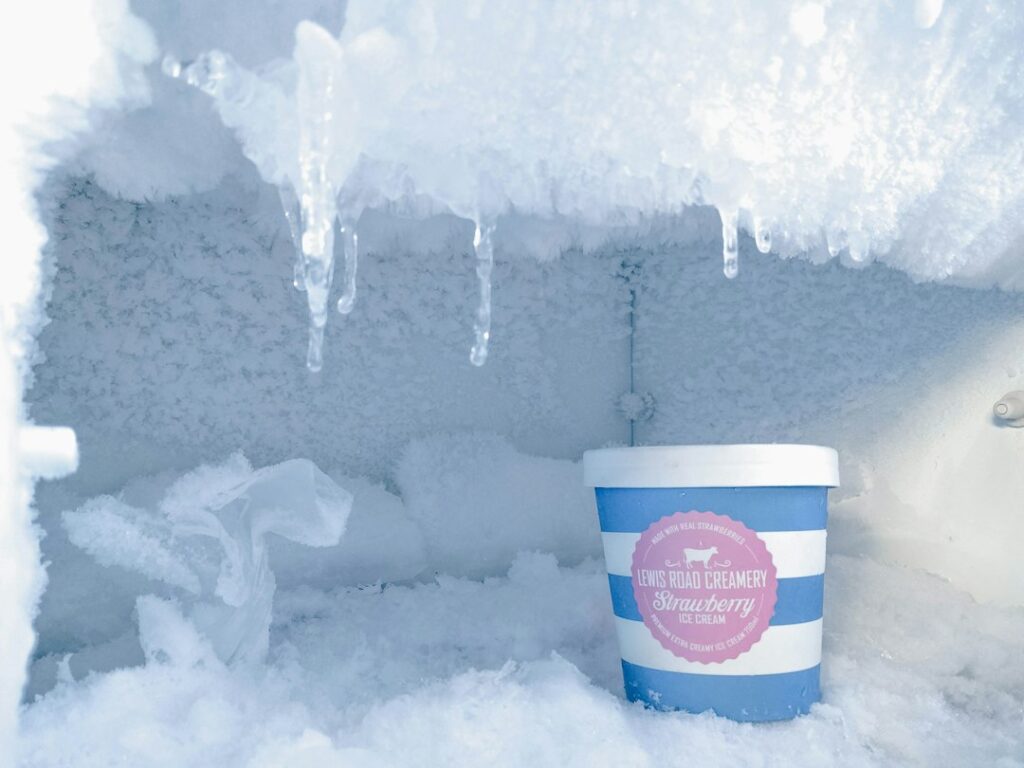
Frost and ice make it worse. Both are porous and act like sponges for odor molecules, which is why ice cubes from a smelly freezer taste terrible. Plastic liners and door gaskets also absorb some odor. That is why a full defrost and a patient airing out matter as much as the scrubbing itself.
Safety Before You Start
- Unplug the freezer or switch off its breaker before reaching inside, removing shelves or chipping at ice.
- Never mix cleaners. Bleach combined with vinegar or ammonia releases toxic gas. If you use a diluted bleach sanitizer, use it alone and rinse well before trying anything else.
- Wear disposable or rubber gloves, and consider a mask; rotten meat liquid can carry bacteria. Keep children and pets away.
- Ventilate the area. Open windows or move a chest freezer to a garage or outdoors if practical.
- Do not use knives, screwdrivers or ice picks to chip ice. Puncturing the inner wall can hit a refrigerant line, which ruins the freezer and releases refrigerant. Let ice melt naturally.
- If you notice a sharp chemical smell or hear hissing, that can be a refrigerant leak. Unplug the unit, ventilate and call a licensed appliance technician.
- If you smell gas near any appliance, leave the home and call the gas utility from outside.
Tools and Supplies
- Heavy-duty trash bags (double-bag spoiled meat)
- Gloves, a mask and old towels
- A cooler or second freezer for any food still safely frozen
- Dish soap and warm water
- Baking soda (several boxes for a big chest freezer)
- Optional: unscented diluted bleach sanitizer, about 1 tablespoon per gallon of water, used alone
- Activated charcoal, fresh coffee grounds or plain clay cat litter as odor absorbers
- Soft sponges and microfiber cloths, plus a soft brush for gaskets
- Shallow pans and towels to catch meltwater
Step-by-Step: How to Get Smell Out of Freezer Compartments
1. Remove and Discard Spoiled Food
Unplug the freezer. Bag anything that thawed above 40°F for more than two hours, any meat with off odors or slime, and anything you are unsure about. Food safety guidance is clear: when in doubt, throw it out. Double-bag meat and take it to an outdoor trash bin right away. If trash pickup is days off, keep the bags in a sealed bin in a shady spot.
2. Remove Shelves, Baskets and Drawers
Pull out everything removable and set it in a laundry tub or bathtub. Let glass shelves reach room temperature before washing in warm water, since hot water on cold glass can crack it.
3. Defrost Completely
Leave the door open with towels and shallow pans underneath. Ice and frost are porous and absorb odor, so all of it has to go. A bowl of hot water set inside with the door closed for 15 minutes speeds things up, as does a fan blowing room air into the cavity. Many chest freezers have a drain plug at the bottom; open it into a pan. Full defrosting usually takes a few hours to overnight.
4. Wash Every Surface
Wipe all interior walls, the ceiling, corners and the door liner with warm soapy water. Pay close attention to seams, the drain channel and under any removable floor panels where liquid pools. Clean the door gasket by gently pulling back each fold with a soft brush. Rinse with clean water.
5. Deodorize With Baking Soda
Mix about 2 tablespoons of baking soda per quart of warm water and wipe everything again. Baking soda neutralizes acidic odor compounds without leaving a scent. For heavy bacterial contamination, you can sanitize with the diluted bleach solution instead, used on its own, then rinse with clean water. Do not use vinegar in the same session as bleach.
6. Dry and Air Out
Towel-dry everything and leave the door propped open for 24 hours or longer. Fresh air does a surprising amount of work on lingering odor.
7. Absorb What Remains
Close the door with odor absorbers inside: an open box or shallow tray of baking soda, a bowl of activated charcoal, fresh dry coffee grounds or plain unscented cat litter. Leave the unit unplugged for two to four days with the absorbers working, or plug it in and let it run empty. Check and replace absorbers daily for strong odors. Some people place crumpled newspaper inside to soak up smell, which also helps.
Choosing a Freezer Odour Remover
Baking soda is cheap and gentle but slow. Activated charcoal is the strongest common absorber and works well for a stubborn rotten meat smell. Coffee grounds absorb odor and leave a coffee scent, which some people like and others do not. Commercial freezer odour remover packets typically use charcoal, zeolite or baking soda and are convenient but not magic. Ozone generators are sometimes recommended online; ozone is a lung irritant and should only be used, if at all, per the product label with the space empty of people and pets. Most homes never need one.
How Do You Get Rotten Meat Smell Out of Freezer Insulation?
When thawed meat juices sat for days, liquid can seep through seams in the liner or past the drain into the foam insulation. You will know because the smell returns every time the freezer warms up or after you think it is clean. Try two more full cycles of washing, airing and absorbing, focusing on seams. Run a bead of food-safe silicone along any open liner seams once fully dry, which can trap residual odor behind it.
If the smell persists after a week or two of effort, the insulation is likely contaminated. Insulation cannot be replaced practically, and that is when a freezer is beyond saving.
When a Chest Freezer Is Beyond Saving
Chest freezers are more vulnerable than upright units because liquid pools at the bottom and sits there. Consider replacement when:
- The smell returns strongly after two or three thorough cleaning cycles.
- Liquid has visibly seeped into insulation or under the liner.
- Rust or corrosion has developed on the interior floor.
- The unit is old and inefficient anyway, and a replacement would cut energy costs.
A new chest freezer typically costs $200 to $600 for common sizes. Check with your homeowner’s or renter’s insurance, since some policies cover food spoilage and occasionally appliance damage after an outage. When you dispose of the old unit, use a program that recovers the refrigerant properly; many utilities and municipalities offer pickup.
Preventing Freezer Odors
- Keep a thermometer inside and aim for 0°F or colder.
- Wrap meat tightly or vacuum-seal it to prevent leaks.
- Keep an open box of baking soda in the freezer and replace it every three months.
- During an outage, keep the door closed. A full freezer holds a safe temperature for about 48 hours, a half-full one for about 24.
- Consider a freezer alarm or smart temperature sensor that alerts you when the temperature climbs.
- Defrost manual-defrost models when frost reaches about 1/4 inch thick.
Costs and When to Call a Pro
DIY cleanup costs $10 to $40 for baking soda, charcoal and cleaners. Professional odor removal is rarely worth it for a freezer. A licensed appliance technician is worth calling if the freezer will not get cold after cleaning, if you suspect a refrigerant leak or electrical problem, or if you damaged the liner while removing ice.
Frequently Asked Questions
How do you get rotten meat smell out of a freezer?
Remove all spoiled food, defrost fully, wash with soapy water and a baking soda solution, air it out for a day, then leave activated charcoal or baking soda inside for several days.
What absorbs odors in a freezer best?
Activated charcoal is the strongest common absorber. Baking soda, dry coffee grounds and plain clay cat litter also work, more slowly.
Can I use bleach to clean a smelly freezer?
Yes, a diluted solution of about 1 tablespoon per gallon used on its own, followed by a clean-water rinse. Never mix bleach with vinegar or ammonia.
How long does it take to get the smell out of a freezer?
Mild odors clear in a day or two. Rotten meat smells often take several days to a week of cleaning, airing and absorbing.
When should I throw out a smelly freezer?
If the smell keeps returning after several thorough cleanings, or liquid soaked into the insulation, replacement is usually the only fix.


