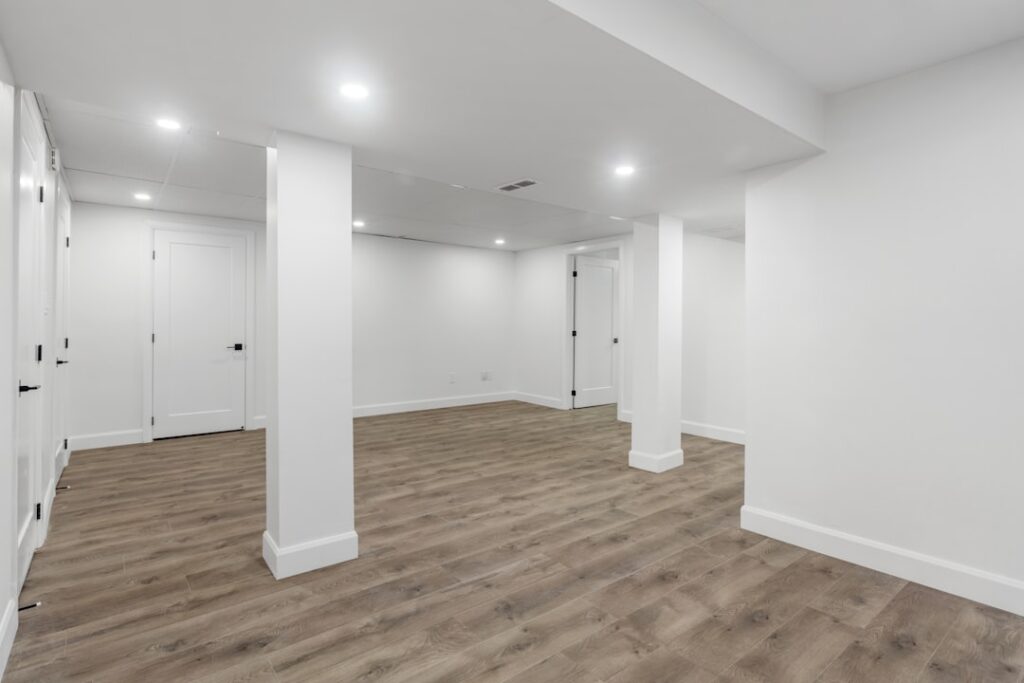
A basement is the perfect spider habitat — dark, slightly damp, full of hiding spots, and full of insects that wandered in through the same gaps. Most homeowners react with a can of bug spray and a flashlight, which kills what is already inside but does nothing to stop the next wave. Real solutions for how to keep spiders out of basement spaces are structural, environmental, and ongoing. Done correctly, you can take a spider-heavy basement and reduce activity by 90 percent or more in a single weekend, with maintenance that takes less than 30 minutes a month afterward.
- Why Basements Attract Spiders
- Step 1: Seal the Entry Points
- Step 2: Drop the Humidity
- Step 3: Reduce the Prey Population
- Step 4: Targeted Spider Treatments
- Step 5: Sticky Trap Monitoring
- Step 6: Lighting Strategy Inside
- Long-Term Habits That Keep Working
- When to Call a Pro
- What Not to Bother With
- Putting the Plan Together
Why Basements Attract Spiders
Spiders are hunters. They go where prey is. Most basements have a steady population of silverfish, sowbugs, springtails, ants, and small flies that breed in damp corners. Eliminate the prey base and the spider population follows within weeks.
Basements also offer the right climate. Spider species like cellar spiders and hobo spiders prefer 65 to 75°F and 50 to 70 percent humidity — almost exactly the conditions in an unfinished basement. Drop the humidity below 50 percent and the basement becomes inhospitable.
Step 1: Seal the Entry Points
Spiders walk in through gaps you can probably feel with your hand on a windy day. The most common entry points include:
- Foundation cracks above and below grade
- Gaps where utility lines (gas, water, electrical) penetrate the foundation
- Window frames and basement window wells
- The threshold under exterior basement doors
- Dryer vents and sump pump discharge lines
- Sill plate gap (between the foundation and the framing above)
Use silicone caulk for gaps under 1/4 inch ($6 a tube). For larger gaps, use expanding foam (Great Stuff at $7 a can) to fill the void, then caulk over the surface. The sill plate gap often requires foam followed by foam-board insulation strips.
Step 2: Drop the Humidity
A dehumidifier is the most underrated spider-control tool in a basement. Run a 50-pint unit (about $230 for a Frigidaire FFAD5033W1) until the basement holds steady at 40 to 45 percent relative humidity. At that level, silverfish, sowbugs, and many spider species cannot complete their life cycles.
Buy a basic hygrometer for $15 and check humidity weekly. Empty the dehumidifier daily during peak summer or run a hose to a floor drain or sump pit. The electricity bill is real (around $30 a month in a typical basement) but the pest reduction is dramatic.
Step 3: Reduce the Prey Population
Spiders eat insects. No insects, fewer spiders. Tactics that work:
Yellow porch lights: Replace any white outdoor LEDs near basement windows with 2200K bug-resistant amber LEDs. Insects do not see those wavelengths well, so they do not gather around the windows.
Sealed storage: Replace cardboard boxes with clear plastic totes. Cardboard hides silverfish, roaches, and the eggs of nearly every basement insect. Clear totes also let you see if anything moves inside.
Vacuum monthly: Run a vacuum along baseboards, in corners, and behind stored items once a month. The HEPA filter captures spider eggs, dust mites, and the small insects spiders feed on. Discard the bag or empty the canister outside immediately.
Step 4: Targeted Spider Treatments
For active spider control beyond environmental measures, two products earn their cost:
Diatomaceous Earth
Food-grade diatomaceous earth (DE) sprinkled along baseboards, around utility penetrations, and in corners damages the exoskeletons of crawling insects, including spiders. A 4-pound bag of Harris DE runs $12 and treats an entire basement. Reapply if it gets wet or after vacuuming.
Residual Perimeter Spray
For exterior treatment around the foundation, a residual insecticide containing bifenthrin or permethrin lasts 30 to 60 days. Bayer Polyzone Home Pest Control or Ortho Home Defense at $20 to $25 covers a perimeter for the full season. Apply in a 2-foot-wide band along the foundation in early spring and again in late summer.
Step 5: Sticky Trap Monitoring
Place sticky traps (Catchmaster glue boards, $15 for 24) along basement walls and in corners. After a week, check what you caught. The species mix tells you a lot:
- Cellar spiders: Nuisance only, indicates damp corners
- Hobo spiders: Western US concern, mildly venomous
- Brown recluse: Treat the basement professionally if you find these
- Black widow: Same — call a pro
- Wolf spiders: Outdoor spiders that wandered in, indicates entry gaps
Step 6: Lighting Strategy Inside
Permanent overhead lighting reduces hiding spots. Replace any bare-bulb basement fixtures with bright LED fixtures (4000K, 800+ lumens) and consider motion sensors so the lights cycle on regularly. Spiders prefer undisturbed darkness — lighting up the space, even briefly, encourages relocation.
Avoid leaving boxes, tarps, or stacked items pushed up against exterior walls. Spiders use the gap behind stored items as a corridor between hiding spots. Pull storage 4 inches off the wall to break up the runways.
Long-Term Habits That Keep Working
Re-caulk visible gaps every spring as the foundation moves with seasonal soil shifts. Run the dehumidifier from May through September in most US climates. Replace sticky traps quarterly. Treat the exterior perimeter twice a year.
Inspect the basement once a month. Walk through with a flashlight, looking at corners, joist bays, and the back of utility shelves. Spotting a small problem at 5 spiders is much easier than dealing with 50.
When to Call a Pro
If you find dangerous species (brown recluse, black widow, hobo spider) or if the spider population stays high after thorough sealing and humidity control, hire a licensed pest professional. A typical interior treatment runs $200 to $400 with a 30-day guarantee. Many companies also offer quarterly contracts for $300 to $600 a year that include perimeter sprays and inspections.
What Not to Bother With
Ultrasonic plug-in repellers do not work. Multiple peer-reviewed studies have shown no measurable effect on spider behavior. Save the $25.
Chestnuts on windowsills is a folk remedy with no evidence behind it. Same with horse chestnuts and various essential-oil sachets — they smell nice but do not affect spider populations meaningfully.
Putting the Plan Together
Seal the entry points, drop the humidity, eliminate the prey, treat strategically, monitor with traps, and inspect monthly. That sequence is how to keep spiders out of basement spaces permanently rather than constantly fighting the same battle. The work is mostly front-loaded — a single weekend of sealing and a dehumidifier purchase — followed by light maintenance forever.