That sour, funky smell drifting up from your sink is not coming from the drain pipe, and no amount of air freshener will fix it. Learning how to make garbage disposal smell better starts with understanding the real source: a hidden film of food sludge coating the grinding chamber, the underside of the rubber splash guard, and the crevices your eye never reaches. Rinsing with water does nothing to this greasy layer, which is exactly why the odor keeps returning day after day.
The fix is a combination of removing the buildup you can reach and dissolving the film you cannot. This guide walks through the quick fresheners that give fast relief and the deep-cleaning steps that eliminate the smell at its root, so your kitchen stops greeting you with that unmistakable garbage-disposal funk.
Why Your Disposal Smells in the First Place
The odor is caused by decomposing food particles that cling to surfaces inside and around the disposal. Every time you grind waste, a fine slurry of grease, starch, and organic matter coats the grinding ring, the chamber walls, and especially the rubber splash guard, that flexible flap at the sink opening. Bacteria feast on this residue, and their byproduct is the sour smell you notice.
The splash guard is the worst offender because its ribbed underside traps debris and stays perpetually damp, creating a perfect breeding ground you rarely think to clean. Understanding this changes your whole approach: masking the smell with a lemon scent is temporary, but scrubbing away the film that feeds the bacteria is what actually solves the problem.
Quick Fresheners for Fast Relief
When you need to knock down the odor quickly, a few simple methods work in minutes. These do not deep-clean, but they help between thorough cleanings and give immediate improvement.
- Citrus peels: drop a handful of lemon, lime, or orange peels into the running disposal with cold water; the oils cut grease and leave a fresh scent
- Ice cubes: grinding a cup of ice scours loose debris off the grinding components with a scraping action water cannot match
- Ice and salt: add a quarter cup of coarse salt to the ice for extra abrasion against stubborn buildup
- Frozen vinegar cubes: freeze white vinegar in an ice tray and grind a few; they combine the scouring of ice with the deodorizing acidity of vinegar
Always run cold water throughout, never hot, because cold keeps grease solid so it grinds and flushes away instead of smearing around the chamber. Run the water for a good fifteen seconds after grinding to flush everything through the trap.
The Baking Soda and Vinegar Method
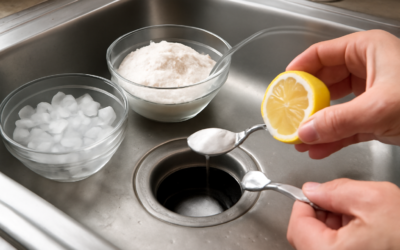
For a stronger clean that reaches the film, the classic baking soda and vinegar treatment works well and uses ingredients you already have. Pour about half a cup of baking soda into the disposal and let it sit for several minutes so it settles onto the surfaces. Then slowly add one cup of white vinegar.
The mixture will fizz and foam energetically, and that reaction is what lifts grime from the chamber walls and the splash guard. Let it bubble for five to ten minutes, then flush thoroughly with cold running water while the disposal runs. The baking soda neutralizes odors while the vinegar’s acidity breaks down grease and kills bacteria, making this the best no-tools deep freshener you can do.
Deep Cleaning the Splash Guard
This is the step almost everyone skips, and it is the most important one for a persistent smell. The underside of the rubber splash guard harbors the thickest layer of trapped food, and no amount of grinding citrus or ice reaches it. You have to clean it by hand.
Turn off and unplug the disposal or flip its breaker for safety, then lift the flexible flaps of the splash guard with your fingers and shine a flashlight underneath. You will almost certainly see a dark, greasy buildup coating the ribs. Using an old toothbrush or a dedicated dish brush dipped in warm soapy water, scrub the underside of each flap thoroughly, rinsing frequently. Some splash guards pull out entirely for easier cleaning, so check whether yours lifts free.
The transformation is often dramatic. Homeowners who have battled a smell for weeks are frequently shocked to find the entire problem was living on the two square inches of rubber they never thought to scrub.
Scrubbing the Grinding Chamber
With the splash guard clean, address the chamber walls the grinding action does not fully reach. With the power still off for safety, reach in carefully, never near the blades with bare fingers, or use a long-handled brush to scrub the visible interior walls just below the splash guard. A mixture of dish soap and warm water on the brush cuts the grease effectively.
For the grinding surfaces themselves, the ice-and-salt method covered earlier does the mechanical scouring safely without putting your hands near the impellers. Between the hand-scrubbed upper chamber and the ice-scoured lower grinding ring, you reach essentially every surface where odor-causing residue accumulates.
Tackling Stubborn Odors
If the smell persists after a full cleaning, a couple of stronger approaches usually finish the job. Boiling water flushed through the disposal, followed immediately by cold water and dish soap while running the unit, helps dissolve remaining grease. Some people use a diluted bleach solution, a tablespoon of bleach in a gallon of water poured through slowly, but use it sparingly since bleach can harden grease and is harsh on some seals.
Commercial disposal cleaning packets are another option, foaming cleaners designed specifically to scour the chamber. They cost a few dollars and work well as a monthly maintenance treatment, though the homemade methods above are just as effective for far less money.
Preventing the Smell From Coming Back
Once your disposal is fresh, a few habits keep it that way and spare you the deep clean every few weeks. Prevention is far easier than remediation, and most of it costs nothing.
- Run cold water for fifteen seconds after every grinding session to flush residue fully through the trap
- Never pour grease or oil down the drain, as it congeals and coats every surface
- Grind a few citrus peels or ice cubes once a week as routine maintenance
- Avoid stuffing large amounts of fibrous or starchy waste, which clings and rots
- Leave the disposal and drain uncovered periodically so the chamber can dry out between uses
That weekly citrus-and-ice habit, combined with always flushing with cold water, prevents the film from ever building up thick enough to smell. It takes thirty seconds and saves you the deeper cleaning most of the time.
Ruling Out a Deeper Plumbing Problem
If you have deep-cleaned the chamber and splash guard and the smell still lingers, the source may be beyond the disposal itself. A persistent odor that returns within a day of a thorough cleaning sometimes originates in the P-trap, the curved pipe beneath the sink that holds a small pool of water to block sewer gas. If food debris has collected there, it rots and sends odor back up through the drain.
Cleaning the P-trap is straightforward: place a bucket underneath, unscrew the slip nuts on both ends of the curved pipe, and remove it. You will likely find trapped gunk and standing water, which you can flush out with a bottle brush and hot soapy water before reassembling. This clears a common odor source that no amount of disposal cleaning would ever reach.
Another overlooked culprit is the dishwasher drain hose, which connects to the disposal on many setups. Food particles can accumulate where the hose meets the disposal inlet, breeding the same bacteria that smell up the chamber. If your odor coincides with running the dishwasher, inspect and flush that connection. Ruling out these plumbing sources ensures you are not endlessly cleaning a disposal when the real problem sits an inch or two downstream in the pipes.
The Bottom Line
Knowing how to make garbage disposal smell better comes down to one insight: the odor lives in a greasy film on surfaces water cannot rinse, especially the underside of the splash guard. Quick fresheners like citrus and ice give fast relief, the baking soda and vinegar treatment lifts the buildup, and hand-scrubbing the splash guard eliminates the source most people never find.
Do a thorough cleaning now, then keep up the simple weekly maintenance, and that sour smell will stop returning for good. Your sink should smell like nothing at all, and with these steps, it finally will.