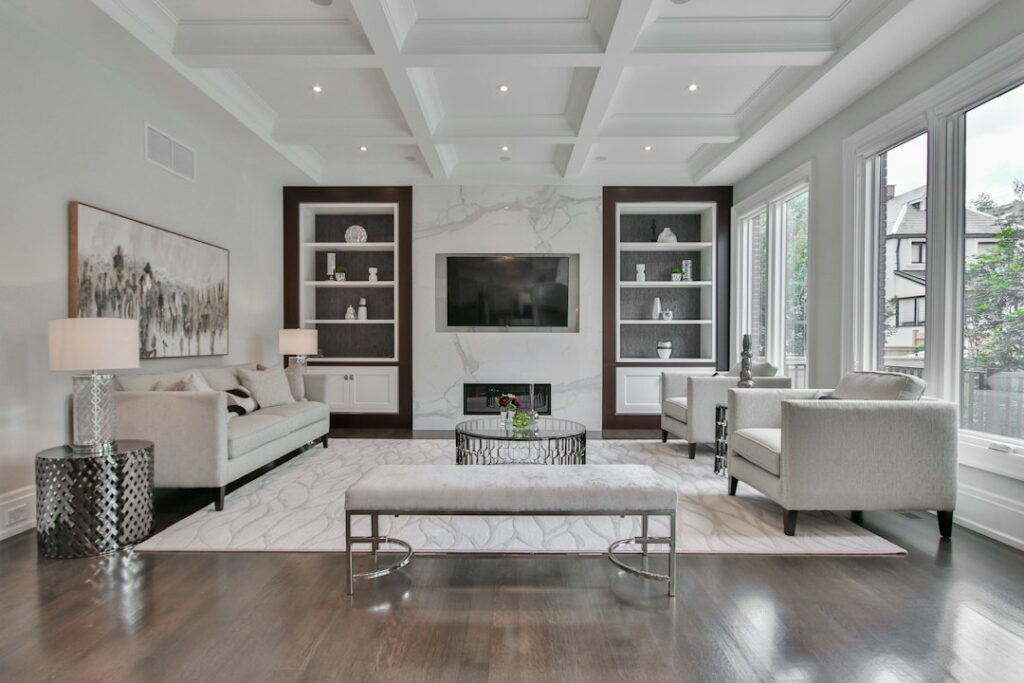
New hardwood floors, bare walls and a high ceiling look great in photos, then every footstep and voice bounces around the room like a gym. Echo is not a soundproofing problem. It happens when sound reflects off hard surfaces inside the room, so the fix is absorbing or scattering those reflections. If you want to know how to reduce echo in a room, start with soft furnishings like rugs, curtains and upholstered furniture, then add bookshelves and acoustic panels at the spots where sound bounces first.
Most rooms improve dramatically with fixes that cost little or nothing. A simple clap test tells you how bad the echo is, a mirror trick shows where reflections land, and a ranked list of upgrades lets you stop as soon as the room sounds right.
How to Reduce Echo in a Room: Echo vs. Soundproofing
Two different problems often get lumped together. Echo and reverberation describe sound bouncing around inside a room, which makes speech hard to understand, music muddy and video calls hollow. Soundproofing describes stopping sound from traveling between rooms or from outside, which requires mass, sealed air gaps and decoupled construction.
Acoustic foam and fabric panels reduce echo but do almost nothing to block a neighbor’s TV. Heavy drywall and sealed doors block sound transmission but can make echo worse. Knowing which problem you have saves money. If the room sounds hollow and loud from the inside, you are dealing with echo, and absorption is the answer.
Diagnose the Room First
The Clap Test
Stand in the middle of the room and clap sharply once. Listen to how the sound decays. A short, clean clap with little tail means the room is well damped. A ringing, metallic flutter means sound is bouncing between parallel hard surfaces (often two bare walls or a hard floor and ceiling). A long, washy tail that lingers for a second or more means the whole room is too reflective. Repeat in a few spots, especially where you sit or talk most.
Identify the Hard Surfaces
List every large hard surface: hardwood, tile or vinyl floors; bare drywall; windows and glass doors; high or vaulted ceilings; stone fireplaces; and minimal furniture. Rooms with most of these surfaces and little fabric are the echoiest. Open-concept living areas, new construction and freshly renovated rooms with hard flooring are classic culprits.
Find First-Reflection Points
First reflections are the spots on walls, ceiling and floor where sound bounces once between the source (a speaker, TV or person talking) and the listener. Sit in your usual seat and have a helper slide a mirror along the side wall. Wherever you can see the speaker or TV in the mirror is a first-reflection point. Do the same for the ceiling and the wall behind you. Treating these spots first gives the biggest improvement per dollar.
Low-Cost Fixes Ranked
1. Add a Large Area Rug
The floor is often the biggest hard surface. A thick area rug with a dense pad over hardwood, tile or vinyl absorbs a lot of mid and high frequency reflections. Size it to cover most of the open floor, at least under the front legs of the furniture. Wool and thick-pile rugs absorb more than thin flat weaves. Keep edges flat and use a non-slip pad to prevent trips.
2. Hang Heavy Curtains
Windows and glass doors are highly reflective. Floor-length, lined or velvet curtains hung with some fullness (fabric width about twice the window width) soak up reflections and also soften the look. Mount the rod wider than the window so curtains can cover wall too.
3. Bring in Upholstered Furniture
A fabric sofa, upholstered chairs, cushions and throws all absorb sound. Leather and hard plastic do much less. Even rearranging furniture away from walls breaks up parallel reflections.
4. Fill Bookshelves
A bookshelf full of books of varying depths acts as a diffuser, scattering sound in many directions instead of reflecting it straight back. Place it on a bare wall opposite the main listening position or on a wall that causes flutter echo.
5. Add Soft Wall Decor
Tapestries, quilts, fabric wall hangings and large canvas art with a gap behind it all help on bare walls. Plants with large leaves add a bit of scattering too.
6. Install Acoustic Panels
When soft furnishings are not enough, a fabric acoustic panel set placed at first-reflection points makes a clear difference. Panels 1 to 2 inches thick handle speech and high frequencies; 3 to 4 inch panels, or panels mounted with an air gap behind them, absorb lower frequencies too. Many rooms sound noticeably better with panels covering about 15 to 25 percent of the wall area. Choose panels with a Class A fire rating for residential use.
7. Treat the Ceiling
Tall and vaulted ceilings reflect a lot of sound. Ceiling clouds (panels suspended horizontally) over the main seating area tame reflections without crowding walls. Fabric-wrapped panels can also mount flush to drywall.
8. Add Bass Traps in Corners
Low frequencies build up in corners and cause boomy sound in media rooms and home studios. Thick corner bass traps help when music or movies sound muddy even after other treatment.
Room-by-Room Tips
- Living room: rug, curtains and a fabric sofa first; panels behind the TV and at side-wall reflection points if needed.
- Home office: panels behind and beside your desk position improve call audio, plus a rug under the chair (use a chair mat over the rug if wheels catch).
- Kitchen and dining: curtains, upholstered dining chairs, a washable rug under the table and a ceiling panel above it; avoid fabric near the cooktop.
- Bedroom: a fabric headboard, rugs on both sides of the bed and heavy drapes usually solve echo entirely.
- Hallways and stairs: runners and wall art; hallways often cause flutter echo between close parallel walls.
- Basements: carpet tiles or rugs over concrete, plus panels on bare concrete or drywall walls.
Tools and Materials
- Hand mirror and a helper for reflection points
- Area rugs with dense rug pads
- Lined or velvet curtains and wide curtain rods
- Fabric acoustic panels (Class A fire rated) and mounting hardware
- Stud finder, level, drill and appropriate wall anchors
- Bookshelves and soft wall hangings
Step-by-Step: Hanging Acoustic Panels
- Mark reflection points using the mirror method at seated ear height, typically 36 to 48 inches off the floor.
- Center a panel on each mark. Use painter’s tape to outline placement and check the look.
- Locate studs. Mount into studs or use anchors rated for the panel weight.
- Attach hardware. Use impaling clips, Z-clips or picture wire; leave a small air gap behind panels if possible.
- Hang and level. Mount the panel, check it is level, and confirm it is secure.
- Retest. Clap again and listen. Add panels only where echo remains.
Troubleshooting
Still ringing between two walls. That is flutter echo. Put a panel or bookshelf on one of the parallel walls.
Room sounds dead or muffled. Too much absorption. Remove a panel or two or swap some for diffusers like bookshelves.
Voices clear but bass is boomy. Add thick bass traps in corners.
Neighbors still hear you. Echo treatment does not block sound transmission. That needs soundproofing methods.
Cost Ranges
Area rugs with pads range from about $100 to $800 depending on size and fiber. Lined curtains typically cost $40 to $200 per window. Fabric acoustic panels usually run $20 to $80 each, with sets of six to twelve between $120 and $600. Ceiling clouds and bass traps often cost $60 to $250 each. Professional acoustic treatment for a media room can run $1,500 to $5,000 or more.
When to Call a Pro
Most homes never need professional help. Consider an acoustic consultant for a dedicated home theater, recording studio or a large open room where DIY treatment has not helped. A pro can measure reverberation time and recommend panel types and placement. Hire a contractor for heavy ceiling clouds or panels mounted high on vaulted ceilings, where ladder work gets risky. For everyday rooms, learning how to reduce echo in a room comes down to adding soft surfaces where sound bounces first and retesting as you go.
Frequently Asked Questions
How do I make a room less echoey cheaply?
Add a large rug with a thick pad, hang heavy curtains, bring in upholstered furniture and fill a bookshelf. These steps often fix echo without any acoustic panels.
Why does my room echo so much?
Hard surfaces like hardwood or tile floors, bare walls, large windows and high ceilings reflect sound. Sparse furniture leaves nothing to absorb it.
Do acoustic panels stop sound from leaving a room?
No. Panels absorb reflections inside the room to reduce echo. Blocking sound between rooms requires soundproofing methods such as added mass and sealed gaps.
How many acoustic panels do I need?
Many rooms sound noticeably better with panels covering about 15 to 25 percent of wall area, starting at first-reflection points and adding more only if needed.
Does a rug help with echo?
Yes. A thick rug with a dense pad is one of the most effective single fixes for a room with hard flooring.