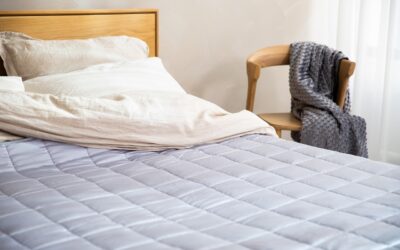
The smell hits you the moment you walk into the bedroom. You strip the sheets, find the wet circle, and realize the dog made it through the mattress protector — or there was no protector to begin with. Knowing how to remove dog pee from mattress in the first hour matters more than any product choice, because urine that soaks past the cover bonds with foam and fiber within four to six hours and gets harder to fully remove the longer it dwells. The right enzymatic cleaner, applied correctly, lifts both the stain and the scent that triggers dogs to mark the same spot again.
Why Speed Matters
Fresh urine sits on top before it absorbs. The first 30 to 60 minutes are critical — blot with old towels (white if possible so you can see absorption), pressing hard with weight on top. Stack two or three towels and stand on them with bare feet to push moisture out. Avoid rubbing, which spreads the stain.
Each towel you swap out should come up drier than the last. Keep going until a fresh white towel pressed on the spot for 30 seconds shows no transferred moisture. Only then move to cleaning the residual stain.


Why Regular Cleaners Fail
Dish soap and laundry detergent surfactants lift surface dirt but cannot break down the proteins and uric acid crystals in urine. The yellow stain may disappear visually, but the crystals remain bonded to mattress fibers. When humidity rises (a hot summer day or a sweaty sleeper), the crystals reactivate and release ammonia smell that humans can smell, and dogs can smell at concentrations 1,000 times lower.
This is why a mattress that seems clean after cleaning still attracts the dog back to mark again. Smell, not visible stain, drives repeat behavior.
Enzymatic Cleaners That Actually Work
- Nature’s Miracle Advanced Stain and Odor Eliminator — $15 for 32 oz, the household standard for pet urine
- Rocco and Roxie Professional Strength Stain and Odor Eliminator — $20 for 32 oz, stronger formulation
- Anti Icky Poo — $25 per quart, used by professional cleaners and rescue organizations
- Skout’s Honor Urine Destroyer — $20 for 35 oz, plant-based enzymatic formula
- Bubba’s Rowdy Friends Pet Supply Co Enzyme Cleaner — $18 for 32 oz, popular Amazon pick
Avoid ammonia-based cleaners. Ammonia mimics the chemical signature of urine and signals to the dog that the spot is a marking zone.
The Three-Step Mattress Treatment
After blotting, saturate the affected area with enzymatic cleaner — more than you think necessary. The enzymes need to reach every fiber the urine touched, including 1 to 2 inches deep into foam mattresses. Use a spray bottle or pour directly, soaking through the cover.
- Saturate the stain area, extending 4 to 6 inches beyond the visible edge
- Cover with plastic wrap or a damp towel to slow evaporation, allowing the enzymes 12 to 24 hours of contact time
- Remove the cover, blot up remaining moisture, then sprinkle baking soda generously over the area
Leave the baking soda for 8 to 12 hours, vacuum thoroughly with a HEPA-filtered vacuum like a Shark Navigator or Dyson V11, and check for residual smell. Repeat if needed.
The Baking Soda and Hydrogen Peroxide Method
For mattresses with no enzymatic cleaner on hand, mix 1 cup of 3 percent hydrogen peroxide, 3 tablespoons baking soda, and 1 teaspoon dish soap in a spray bottle. Apply to the stain, let dry completely (4 to 6 hours), and vacuum the baking soda residue.
This method works on fresh stains but is less effective on older urine. Test in a hidden corner first — hydrogen peroxide can lighten darker fabrics over time. Avoid using on memory foam, which can yellow with peroxide exposure.
Drying the Mattress Properly
A wet mattress that does not fully dry breeds mold within 48 hours. After treatment, place the mattress on its side or angle it against a wall to expose the soaked area to airflow. Run a box fan directly at the spot for 4 to 6 hours. In humid climates, point a dehumidifier set to 35 percent at the mattress for 24 hours.
For thick memory foam or pillow-top mattresses, drying can take 24 to 48 hours. Avoid placing the bedding back on a damp mattress — the trapped moisture creates conditions for mildew and a worse smell than the original urine.
Preventing Future Accidents
Once the mattress is clean, invest in a waterproof mattress protector. The SafeRest Premium Hypoallergenic protector ($30 to $50 depending on size) blocks all liquid penetration while remaining breathable. Coop Home Goods and SureGuard make similar products in the $40 to $70 range. A good protector lasts 4 to 6 years of weekly washing.
For households with new puppies or senior dogs prone to accidents, consider two protectors stacked or a protector plus a layer of Boppy or Brolly Sheets brand absorbent pads on top of the fitted sheet. Easier to wash a pad than the whole bedding setup at 3 AM.
When to Replace the Mattress
If urine has soaked through to the underside (visible yellow staining on the bottom side of the mattress), full remediation is difficult. Memory foam mattresses absorb fluid deep into the core, and once the bottom is stained, the smell rarely comes out fully. Coil mattresses fare better because the springs do not absorb liquid.
For a $1,500 Tempur-Pedic with deep urine penetration, professional cleaning ($150 to $300) is worth trying before replacement. For a $300 mattress with the same damage, replacement usually makes more financial sense. Knowing how to remove dog pee from mattress quickly, with the right enzymatic product, saves most mattresses from needing replacement at all.