That sticky haze left behind on a new picture frame, wine glass, or window can test anyone’s patience. Knowing how to remove sticker residue from glass saves you from clawing at adhesive with a fingernail and leaving scratches behind. The right method takes two minutes and uses things already in your kitchen.
- Why Sticker Residue Clings to Glass
- Method 1: Warm Water and Dish Soap
- Method 2: Cooking Oil Soak
- Method 3: White Vinegar
- Method 4: Rubbing Alcohol or Hand Sanitizer
- Method 5: Goo Gone or Citrus-Based Removers
- Method 6: Baking Soda and Coconut Oil Paste
- Method 7: A Plastic Razor Blade
- What to Avoid
- Preventing Residue in the First Place
- Quick Troubleshooting Chart
- Final Thoughts
Why Sticker Residue Clings to Glass
Most retail stickers use pressure-sensitive adhesive made from acrylic or rubber-based polymers. Glass is non-porous, so the adhesive bonds tightly without soaking in. Heat and age make the glue cure harder, which is why that price tag from a 2018 thrift-store find is twenty times more stubborn than yesterday’s Amazon label.
Good news — because the glue sits on top of the glass rather than penetrating it, almost any solvent that dissolves adhesive will clean it off cleanly.

Method 1: Warm Water and Dish Soap
Always start here. It is the gentlest approach and works on fresh stickers or water-soluble adhesives.
- Fill a basin or sink with warm water, around 110°F — hot tap water is usually perfect.
- Add two or three drops of Dawn Ultra.
- Submerge the glass item for 15 to 20 minutes.
- Rub the softened residue with the pad of your thumb or a microfiber cloth.
Expect this to handle about 40 percent of sticker residue jobs with zero fuss. If glue remains after a 20-minute soak, move on.
Method 2: Cooking Oil Soak
Any vegetable, canola, or olive oil breaks down acrylic adhesive by disrupting the bond chemistry. This trick is especially good for jars you want to reuse.
Saturate a paper towel with oil, press it against the residue, and leave it for 10 minutes. Peanut butter works the same way thanks to its oil content — not a joke, it actually works. Wipe away with soapy water and rinse.
Method 3: White Vinegar
Distilled white vinegar at 5 percent acidity dissolves many adhesives and is safe on glass. Heat a cup of vinegar in the microwave for 45 seconds. Soak a rag, press it onto the sticky spot, and wait 5 minutes. The residue usually wipes clean with a second pass of the rag.
This method works well on large glass surfaces like shower doors or windows where soaking the whole item is not practical.
Method 4: Rubbing Alcohol or Hand Sanitizer
Isopropyl alcohol at 70 percent or higher breaks down adhesive faster than almost anything else in a typical home. Clear hand sanitizer contains 60 to 70 percent alcohol plus a thickening agent that holds it in place on vertical surfaces.
Apply, wait 2 minutes, and scrub with a paper towel. On stubborn glue, repeat once. Alcohol evaporates clean so there is no film to rinse off, making it ideal for eyeglasses, camera lenses, and picture frames.
Method 5: Goo Gone or Citrus-Based Removers
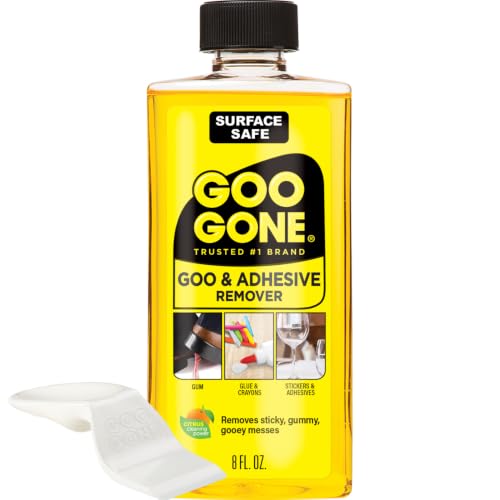
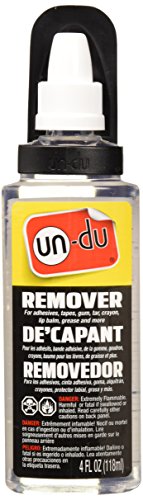
When DIY methods fail, reach for a commercial product. Goo Gone Original ($6 for an 8 oz bottle at most hardware stores) is a citrus-oil solvent designed for exactly this job. WD-40 and Un-Du also work well.
- Apply a small amount directly to the residue.
- Let it sit for 3 to 5 minutes.
- Wipe away with a paper towel.
- Follow up with soapy water to remove the oily film.
Skip this method on eyeglasses or coated optical surfaces — citrus oils can cloud anti-glare coatings.
Method 6: Baking Soda and Coconut Oil Paste
Mix one tablespoon of coconut oil with one tablespoon of baking soda into a paste. The oil dissolves the adhesive while the baking soda provides gentle abrasion without scratching glass.
Rub the paste in small circles with your fingertip or a soft cloth. Works especially well on old, yellowed residue that has cured for years. Rinse with warm soapy water.
Method 7: A Plastic Razor Blade
For windows and mirrors with large stuck-on labels, a plastic razor blade ($4 at auto-parts stores) lets you scrape aggressively without scratching. Hold the blade at a 30-degree angle. Push, do not drag. Use a spray of Windex or soapy water as a lubricant.
Metal razor blades work too but only on thick tempered glass. Skip them on picture frames, drinking glasses, or tempered shower doors — one wrong angle and you leave a permanent scratch.
What to Avoid
- Acetone-based nail polish remover on tinted glass or glass with films. It can cloud the coating.
- Bleach — offers no adhesive-dissolving power and can react badly with other cleaners.
- Metal scrubbing pads — they scratch even tempered glass over time.
- Boiling water on cold glass. Thermal shock can crack the item instantly.
Preventing Residue in the First Place
When you buy something new, peel the sticker slowly at a 90-degree angle right after bringing it home. Fresh adhesive lifts cleanly. Wait six months and the same label will fight you.
For items that need a price tag removed at a store, ask the cashier to do it. Retail workers have a pocket knife and a practiced technique that prevents the usual tear-and-smear problem.
Quick Troubleshooting Chart
- Fresh label, non-porous glass — warm soapy water for 10 minutes
- Old cured adhesive on jar — cooking oil for 20 minutes, then soap
- Large window decal — vinegar soak and plastic razor blade
- Eyeglasses or camera lens — 70 percent isopropyl alcohol on a microfiber
- Mystery old residue — baking soda and coconut oil paste
Final Thoughts
Sticker residue is not a battle. Start gentle with soap and water, escalate to oil or alcohol as needed, and keep a $6 bottle of Goo Gone on hand for the rare stubborn case. Avoid metal blades on anything but plain window glass. With these methods any glass surface can be scrubbed spotless in under ten minutes, no scratching required.