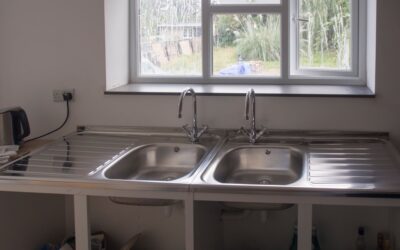
Standing water in the sink almost always means the clog sits downstream of the disposal, not inside the grinding chamber. Knowing how to unclog a garbage disposal with standing water saves you a $150 to $250 plumber visit for a job most homeowners finish in under an hour. The trick is to work methodically, keep your hands away from the impellers, and resist the urge to pour chemical drain cleaner into a sink that will not drain.
I have cleared hundreds of these over the years, and the pattern rarely changes. Grease congeals, coffee grounds pack down, and starchy scraps from potatoes or rice swell into a paste that seals the trap. Here is exactly how to get that water moving again.
- Start by Cutting the Power
- Bail Out the Standing Water First
- Check for a Jammed Flywheel
- Plunge the Clog Loose
- Clear the P-Trap by Hand
- Snake the Line if the Trap Is Clear
- What to Avoid
- Using a Wet/Dry Vacuum for Stubborn Water
- The Baking Soda and Vinegar Approach
- Understanding Double-Basin Sinks
- When to Call a Plumber
- Prevent the Next Clog
Start by Cutting the Power
Before anything else, kill the electricity. Flip the wall switch off, then go to your breaker panel and turn off the circuit feeding the disposal. Many units, including most InSinkErator and Waste King models, are on a dedicated 15-amp or 20-amp circuit. If the disposal shares a circuit with the dishwasher, unplug the unit under the sink instead.
Never put your fingers into the grinding chamber while the unit could energize. Even a bumped switch with your hand inside can cause serious injury. This single habit separates a safe repair from an ER visit.
Bail Out the Standing Water First
You cannot diagnose a clog through six inches of murky water. Use a cup or a small saucepan to scoop the water into a bucket until only an inch or two remains. This matters for two reasons: it lets you see what you are doing, and it prevents a nasty overflow when you start plunging.
If the water smells sour, add a splash of white vinegar to the bucket to cut the odor. Set the bucket aside rather than dumping it down a second drain, which may share the same blocked line.
Check for a Jammed Flywheel
Sometimes water stands because the motor itself is seized, not because the drain is blocked. Look under the unit for a hex-shaped hole in the center of the housing. Insert the small Allen wrench that shipped with your disposal, usually 1/4 inch, and rock it back and forth. You should feel the flywheel break free and spin.
No wrench on hand? A broom handle inserted from the top, pressed against the impeller blades and levered in a circle, does the same job. Once the flywheel turns freely, the obstruction inside the chamber is cleared and the water may begin to drop.
Plunge the Clog Loose
If the flywheel spins but water still stands, the blockage is in the drain line or P-trap. Grab a flat-bottomed sink plunger, not a toilet plunger, and seal it over the disposal drain opening. If you have a double-basin sink, stuff a wet rag into the second drain and hold it down, or you will just push air and water across instead of down the pipe.
Add enough water to cover the plunger cup, then pump firmly ten to fifteen times. The push-pull action breaks up the grease plug. You will often hear a distinct gurgle and see the water swirl away when it lets go.
Clear the P-Trap by Hand
When plunging fails, the P-trap under the sink is the next suspect. This U-shaped pipe traps sewer gas, and it also traps everything heavy that slides past the disposal. Position your bucket directly beneath it, because it is full of water.
- Loosen the two slip nuts on either end of the trap by hand, or with channel-lock pliers if they are stiff.
- Lower the trap and dump its contents into the bucket.
- Fish out the sludge, food debris, and grease with a bottle brush or an old toothbrush.
- Inspect the horizontal arm running into the wall, since clogs frequently pack in there too.
- Reassemble, hand-tightening the slip nuts, then a quarter turn more.
Run clean water and watch for leaks at both joints. A new set of nylon slip-nut washers costs about $3 at any hardware store and prevents seeping if the old ones are cracked.
Snake the Line if the Trap Is Clear
If the trap was clean but water still backs up, the clog sits deeper in the branch drain. Feed a 1/4-inch drum auger, roughly $25 at Home Depot, into the trap arm and crank it into the pipe. Advance until you feel resistance, then work the cable back and forth to chew through the blockage. Reassemble the trap and flush with hot water for two full minutes.
What to Avoid
Skip the chemical drain cleaner entirely. Products like Drano sit in the standing water, generate heat, and can crack older PVC or corrode the disposal’s metal. If a plumber later opens a line full of that caustic sludge, expect a surcharge. Boiling water alone is also risky with a full sink, because it can splash back.
Instead, once the water drains, deodorize with a scoop of baking soda followed by a cup of vinegar. Let it foam for ten minutes, then flush with hot tap water and grind a few ice cubes with cold water to scour the chamber.
Using a Wet/Dry Vacuum for Stubborn Water
When bailing by cup feels endless, a shop vacuum earns its keep. Set a wet/dry vac to liquid mode, remove the paper filter so you do not ruin it, and hold the hose over the disposal opening. Seal around it with a wet rag and let the vacuum pull both the standing water and, often, the loosened clog straight out of the drain.
This trick works especially well after you have already plunged. The suction reverses the pressure and can drag a partially broken grease plug back up and out of the line, clearing what plunging alone could not finish. Empty the vacuum canister into a bucket, not another sink, since that water is full of debris.
The Baking Soda and Vinegar Approach
For a clog that is more grease and grime than solid debris, a chemical-free reaction can help loosen things once you have removed most of the standing water. This is gentle enough that it will not harm pipes or the disposal, unlike caustic drain cleaners.
- Pour about a half cup of baking soda directly into the drain.
- Follow with a cup of white vinegar and let the mixture foam for ten to fifteen minutes.
- Boil a kettle of water and, once the sink has drained enough to be safe, pour it slowly down the drain to flush the softened residue.
- Run hot tap water for a full minute to carry everything to the main line.
This method shines on slow drains and light grease buildup. It will not clear a fully solid obstruction, so pair it with plunging or trap removal for a serious clog.
Understanding Double-Basin Sinks
Double-basin kitchen sinks share a single drain line below the tee fitting, which changes how you attack a clog. Water backing up into the second, disposal-free basin tells you the blockage sits downstream of where the two drains join, not inside the disposal chamber at all.
Always block the opposite drain when you plunge one side. Without that seal, your plunging force simply pushes water and air across to the other basin instead of down the pipe toward the clog. A wet rag jammed firmly into the second drain, held down with your free hand or a heavy weight, creates the closed system you need for the plunger to build real pressure.
When to Call a Plumber
Most disposal clogs yield to the steps above, but a few situations call for a professional. If you have cleared the trap and snaked the branch line yet water still backs up, the blockage may sit in the main drain stack, which needs a longer power auger than most homeowners own. Multiple slow or backed-up drains throughout the house point to that same main-line problem.
A plumber typically charges $150 to $350 to clear a kitchen line, more if they need to run a camera or access a cleanout. That is money well spent once you have exhausted the DIY steps, since a mainline clog left alone can back sewage into the house.
Prevent the Next Clog
Most repeat clogs trace back to a handful of habits. Keep these items out of the disposal and your drain will stay clear:
- Grease, oil, and bacon fat, which solidify as they cool
- Coffee grounds and eggshells, which pack into a gritty paste
- Potato peels, pasta, and rice, which swell and turn gummy
- Fibrous scraps like celery, corn husks, and onion skins
Always run a strong cold-water stream for fifteen seconds before, during, and after grinding. Cold water keeps fats solid so the impellers can shred them, and the flow carries particles all the way to the main line. Follow these steps and knowing how to unclog a garbage disposal with standing water becomes a skill you rarely need to use.