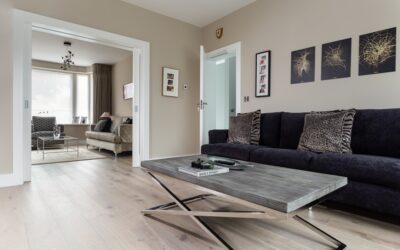
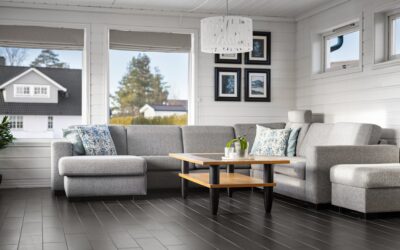
Coastal Queensland punishes flooring. Year-round humidity above 70%, salt-laden ocean breezes, and summer slab temperatures pushing 90°F break down materials that perform fine in temperate climates. Hybrid flooring Gold Coast homeowners install solves most of those problems by fusing a rigid stone-polymer core with a printed wear layer and a click-lock locking system that handles 30°F seasonal swings without gapping. The category covers SPC and WPC products, and the right choice depends on whether your home sits beachfront, hinterland, or somewhere in between.
- Why Hybrid Floors Suit the Gold Coast
- Pros That Matter in Coastal Climate
- Cons to Weigh Honestly
- SPC vs WPC for Gold Coast Conditions
- Top Brands Sold on the Gold Coast
- Installation Cost Breakdown for a 100 Sq M Home
- Local Considerations and Subfloor Realities
- Warranty Terms Worth Reading
- Care and Long-Term Maintenance
Why Hybrid Floors Suit the Gold Coast
Hybrid is essentially LVP that grew up. The stone-plastic composite (SPC) core resists moisture absorption to under 0.05% per ASTM F3261, which means it shrugs off mopped spills, leaking dishwashers, and humid air that warps timber and laminate. Wood-plastic composite (WPC) cores are slightly thicker and softer underfoot but rate similar moisture numbers.
Compared with bamboo or solid spotted gum (the regional Australian timber benchmarks), hybrid avoids the cup-and-crown cycles that humidity drives. Compared with vinyl sheet, it delivers a thicker plank profile (5-8 mm vs 2-3 mm) and a click system that floats over uneven slabs without requiring full glue-down.
Pros That Matter in Coastal Climate
- 100% waterproof core: Surfers Paradise apartments and Burleigh townhomes deal with tracked-in salt water — hybrid takes it without swelling.
- Dimensional stability: SPC expands and contracts roughly 0.2 mm per meter across a 60°F temperature swing, low enough to skip expansion strips on rooms under 40 feet.
- UV resistance: Premium products carry an aluminum oxide wear layer plus UV inhibitors that prevent the fading north-facing rooms suffer.
- Click-lock install: A confident DIYer can lay 20 sq m a day, saving $25-40 per square meter on labor.
- Insect proof: Termite and borer pressure on the Coast can total older timber floors — hybrid offers nothing for them to eat.
Cons to Weigh Honestly
Subfloor prep is non-negotiable. Hybrid bridges 3 mm of unevenness over 2 meters, but anything beyond that telegraphs through the click joints and causes squeaks within months. Older Gold Coast slabs poured before 2000 often need self-levelling compound at $18-30 per square meter to meet AS 1884 tolerances.
Some budget hybrids (under $30 per square meter installed) use thin 0.3 mm wear layers that scratch from dragged barstools and dog claws. Look for 0.55 mm or thicker wear layers on Class 33 commercial-rated planks.
Off-gassing can be an issue with imports skipping testing. Stick to products carrying GreenTag GreenRate Level A certification — brands sold at Carpet Court, Choices, and National Tiles meet this consistently.
SPC vs WPC for Gold Coast Conditions
SPC (stone-plastic composite) is denser at 2,000 kg/m3, which translates to better dent resistance and a more solid acoustic feel. WPC (wood-plastic composite) is lighter, slightly warmer underfoot, and quieter — useful in second-storey apartments where noise transfer to neighbors matters. Both perform identically against moisture.
For ground-floor slabs in coastal homes, SPC wins on dent resistance and is the default. For upper-floor unit conversions where acoustic ratings under BCA 2019 matter, WPC paired with a 1.5 mm cross-linked polyethylene underlay typically meets Lnw 50 dB.
Top Brands Sold on the Gold Coast
- Hybrid Plus / Premium Floors Australia: 6.5 mm SPC, 0.55 mm wear layer, $55-75 per sq m supply.
- Quick-Step Impressive Ultra Hybrid: Belgian-engineered, 6 mm with HydroSeal joints, $80-95 per sq m.
- Airstep Naturale: Australian-designed, 6.5 mm WPC, popular in Robina and Pacific Pines display homes.
- Hometown Australia Hybrid: Budget pick at $40-50 per sq m, suitable for rentals and investment properties.
- Godfrey Hirst Hycraft Hybrid: 25-year residential warranty, made in Australia, $65-85 per sq m.
Installation Cost Breakdown for a 100 Sq M Home
Mid-range hybrid flooring Gold Coast pricing in 2026 typically lands like this for a single-storey home:
- Material at $65 per sq m: $6,500
- Underlay (acoustic 1.5 mm): $600-900
- Removal of old carpet and skirting: $800-1,200
- Professional install at $35 per sq m: $3,500
- New scotia or skirting trim: $700-1,100
- Total: roughly $12,100-13,200
Local Considerations and Subfloor Realities
Beachfront properties from The Spit to Coolangatta deal with salt-air corrosion that pits aluminum trim and rusts steel transitions within a year. Specify stainless steel reducers and edge trims, even if it costs $40 more per linear meter. Concrete slabs in older units (built before the 1990s) often test at moisture content above 4% with a calcium chloride test — that’s the cutoff for direct-stick hybrid. Either run a moisture barrier underlay or wait for the slab to dry.
Rental properties in tourist-heavy areas like Broadbeach and Mermaid see brutal wear from short-stay turnover. Step up to a 0.7 mm wear layer with a Class 33 commercial rating; the extra $10 per square meter pays back in three years of avoided patch repairs.
Warranty Terms Worth Reading
“Lifetime warranty” rarely means lifetime. Read the fine print. Most Australian hybrid warranties cover delamination and click-joint failure for 20-30 years residential, 5-10 years commercial. Surface wear typically carries a separate 10-15 year clause that excludes “abrasion from hard particles” — a loophole that voids coverage if you didn’t use floor mats at exterior doors. Photograph your install and save invoices; warranty claims need both.
Care and Long-Term Maintenance
Sweep or vacuum (hard-floor mode) two or three times weekly. Damp mop weekly with a vinyl-safe cleaner like Bona Stone Tile and Laminate Floor Cleaner or a dilute pH-neutral concentrate. Avoid steam mops, abrasive scrubbing pads, and ammonia-based cleaners — all three accelerate wear-layer breakdown. Wipe spills within 30 minutes; printed wear layers can stain from red wine, beetroot, and shoe polish if left longer.
Use felt protectors under chair legs and walk-off mats at exterior doors. Coastal homes benefit from rinsing tracked-in salt sand off entryway mats weekly to keep abrasive grit from grinding into the wear layer. With this routine, premium hybrid flooring on the Gold Coast routinely delivers 20-25 years of attractive service before any visible wear forces replacement — strong return on the upfront investment.
Prefer to explore on your own?
See how new flooring looks in your actual room in seconds — free, no signup.
Try the free Floor Studio →