Not every room has a sunny window, yet nearly any space can host greenery thanks to a surprising number of resilient, shade-tolerant species. The truth about indoor plants that don’t need sunlight is that while no plant survives in total darkness, many thrive in low, indirect, or even mostly artificial light, making them perfect for offices, bathrooms, and dim corners. This guide covers the best low-light plants and exactly how to keep them healthy.
Part of our Windows & Doors guide — explore the full guide →
The Truth About Low-Light Plants
It is important to set expectations honestly. All plants need some light to photosynthesize, so a plant in a windowless room with no artificial light will eventually decline. What people really mean by plants that do not need sunlight are species adapted to low-light forest floors and shaded environments, which tolerate indirect light, north-facing windows, and even the glow of standard indoor lighting. These plants evolved under tree canopies, so they handle dim conditions far better than sun-loving species. Many also tolerate the artificial light common in offices, which can supplement weak natural light.
Top Plants for Low-Light Spaces
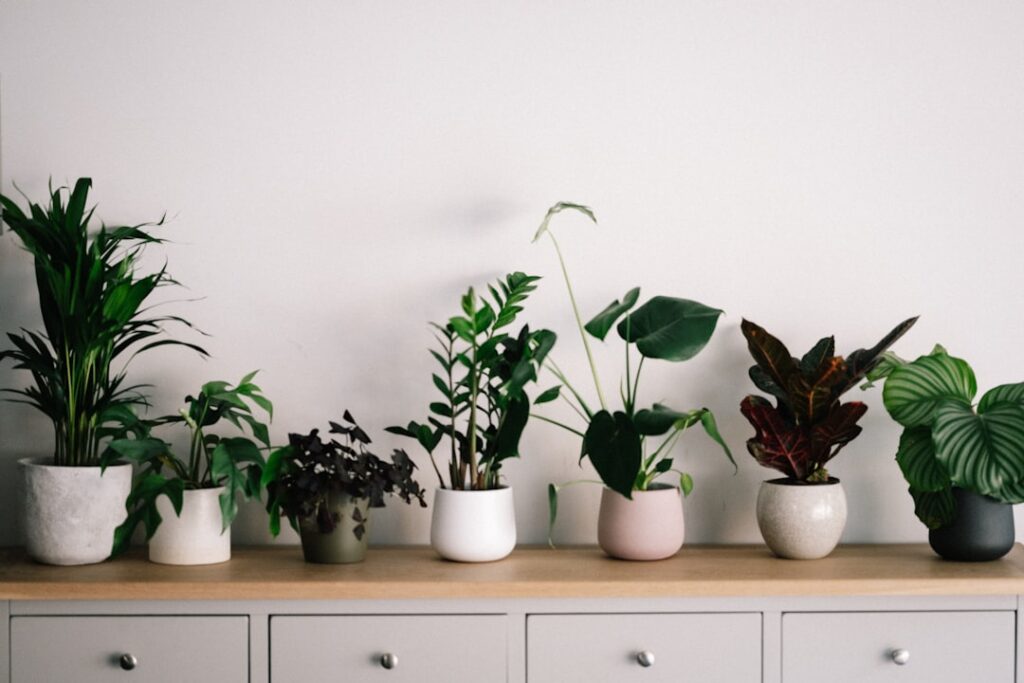
The following species are proven performers in dim rooms, prized for both their tolerance and their easy care.
- Snake plant: Nearly indestructible, it tolerates deep shade and irregular watering. Its upright, architectural leaves suit modern decor, and it is famous for surviving neglect.
- ZZ plant: Glossy, dark green leaves and remarkable drought tolerance make this a top pick for forgotten corners. It thrives in low light and rarely needs attention.
- Pothos: A trailing vine that grows happily in low to moderate light, pothos is one of the easiest houseplants to grow and propagate, cascading beautifully from shelves.
- Peace lily: One of the few low-light plants that flowers, producing white blooms even in shade. It also signals when it needs water by drooping dramatically, then recovering quickly.
- Cast iron plant: Named for its toughness, it tolerates deep shade, temperature swings, and neglect, earning its reputation as nearly unkillable.
- Chinese evergreen: Available in striking patterned and colorful varieties, it handles low light well, though the deepest green types tolerate shade best.
- Philodendron: Both trailing and upright varieties adapt to low and indirect light, making this a versatile, forgiving choice.
- Spider plant: Adaptable and fast-growing, it tolerates low light and produces baby plantlets that are easy to propagate.
How Much Light Do They Really Need
Understanding light levels helps you place plants successfully. Low light does not mean no light; it means areas several feet from a window, rooms with north-facing windows, or spaces lit primarily by lamps and overhead fixtures. A simple test: if you can comfortably read a book without turning on a light during the day, a low-light plant can usually survive there. Rooms with no windows need supplemental light, which a basic grow light or even bright LED lighting can provide for a few hours a day to keep plants healthy.
Watering Low-Light Plants Correctly
The most common way people kill low-light plants is overwatering. In dim conditions, plants grow slowly and use less water, so the soil stays moist longer. Watering on the same schedule you would use for a sunny plant drowns the roots.
- Check the soil before watering by inserting a finger an inch or two deep. Water only when it feels dry.
- Water thoroughly until it drains from the bottom, then empty the saucer so roots never sit in standing water.
- Reduce watering frequency in winter, when growth slows further.
- Use pots with drainage holes, which are essential for preventing root rot in low light.
When in doubt, wait. Most low-light plants tolerate underwatering far better than overwatering.
Soil, Pots, and Drainage
Good drainage matters even more in low light because soil dries slowly. Use a well-draining potting mix, and choose containers with drainage holes. If you love a decorative pot without holes, place the plant in a plastic nursery pot inside it so you can remove and drain the inner pot. Avoid oversized pots, since a large volume of soil holds excess moisture that roots cannot use quickly in dim conditions, raising the risk of rot.
Feeding and Growth Expectations
Plants in low light grow more slowly and need less fertilizer than those in bright spots. Feed them lightly with a diluted, balanced houseplant fertilizer during the growing season of spring and summer, and pause feeding in fall and winter. Do not expect rapid growth or constant new leaves; slow, steady development is normal and healthy for shade-adapted plants. Pushing too much fertilizer in hopes of faster growth can burn the roots and harm the plant.
Caring for Leaves and Health
A few simple habits keep low-light plants vibrant. Dust accumulates on leaves and blocks the limited light they receive, so wipe broad leaves gently with a damp cloth every few weeks to maximize photosynthesis. Rotate plants occasionally so all sides receive even light and grow symmetrically. Watch for pests like spider mites and mealybugs, which can take hold on stressed plants, and address them early with gentle treatment. Remove yellowing or dead leaves to direct energy toward healthy growth.
Using Artificial Light
For truly dark rooms, artificial light bridges the gap. Modern LED grow lights are affordable and energy efficient, and even regular bright LED bulbs provide usable light for low-demand plants. Run supplemental lighting for several hours a day, positioning it close enough to benefit the plant without scorching the leaves. This approach lets you keep greenery in windowless bathrooms, basements, and interior offices that would otherwise be impossible for plants.
Benefits Beyond Decoration
Low-light plants do more than fill empty corners. They add life, color, and a calming natural element to spaces that often feel sterile, like offices and bathrooms. Caring for plants has been associated with reduced stress and improved mood, and greenery softens hard architectural lines. For renters and homeowners alike, these resilient plants offer an easy, affordable way to make any room feel more welcoming, even rooms the sun never reaches.
Final Thoughts
While no plant thrives in complete darkness, a wide range of tough, shade-adapted species flourish in the low light most homes have in abundance. Snake plants, ZZ plants, pothos, peace lilies, and their resilient companions bring life to dim corners with minimal fuss, provided you avoid overwatering, ensure good drainage, and dust their leaves now and then. At D and G Flooring, we believe a well-designed home engages every space, and the right low-light plants prove that even the shadiest corner can become a green, inviting part of your home.