
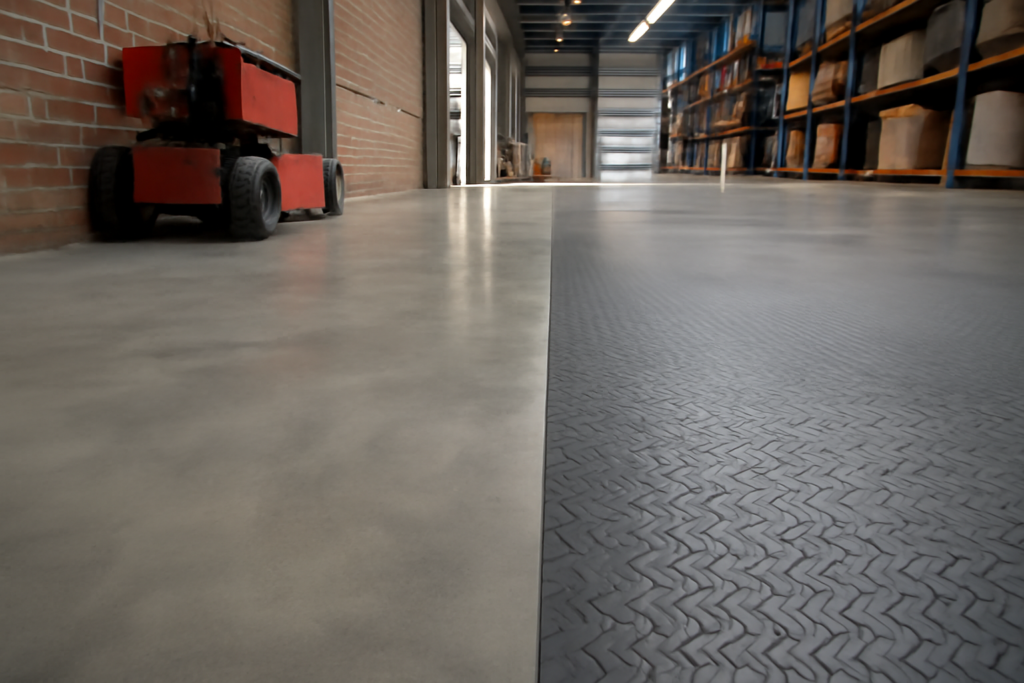
Specifying industrial flooring london projects demand a different mindset than choosing a floor for a home. Warehouses, factories, food production units, car showrooms, and commercial kitchens across the capital need surfaces that resist forklift traffic, chemical spills, heavy point loads, and constant cleaning. The right industrial floor system protects the slab, keeps workers safe, and meets hygiene and safety standards. This guide walks through the main resin and concrete systems, what they cost, and how to pick a competent installer.
- What Industrial Flooring Has to Do
- The Main System Types
- The Pros of Resin and Concrete Systems
- The Cons and Practical Limitations
- What Industrial Flooring Costs in London
- Surface Preparation Matters Most
- Choosing a Commercial Installer
- Matching the System to Your Industry
- Maintenance and Lifespan
- Safety, Compliance, and Slip Resistance
- Making the Right Choice
What Industrial Flooring Has to Do
An industrial floor is a working surface, not a decorative one. It must withstand abrasion from wheeled traffic, resist impact from dropped tools and dropped loads, shrug off oils and chemicals, and remain easy to clean. In food and pharmaceutical settings it also has to meet hygiene requirements, with seamless, non-porous surfaces that do not harbor bacteria. Slip resistance is a legal and safety priority in wet or greasy areas.
The Main System Types
Most commercial and industrial floors in London fall into a few well-established categories.
- Epoxy resin coatings: Hard, chemical-resistant, and cost-effective for warehouses and workshops. Available as thin coatings or thicker self-leveling systems.
- Polyurethane (PU) screeds: Tougher against thermal shock and heavy impact, ideal for commercial kitchens, breweries, and food production where hot washdowns occur.
- Polished concrete: Grinds and densifies the existing slab into a hard, low-dust, attractive surface popular in showrooms and retail.
- Methyl methacrylate (MMA): Cures fast even in cold conditions, useful for cold stores and projects that cannot tolerate long downtime.
The Pros of Resin and Concrete Systems
Industrial floor systems offer durability that domestic materials cannot match. A properly installed resin floor is seamless, which eliminates the joints where dirt and bacteria collect. These surfaces resist chemicals, oils, and abrasion, and they can be specified with anti-slip aggregate for safety. Polished concrete is exceptionally hard-wearing and low maintenance, reflects light to brighten a space, and reduces ongoing cleaning costs. Most systems can be tailored with color, line marking for traffic management, and specific slip ratings.
The Cons and Practical Limitations
These systems are not without drawbacks. Resin floors depend entirely on the condition and preparation of the substrate, so a damp or contaminated slab can cause delamination. Installation usually requires the area to be cleared and out of use during curing, which means downtime. Epoxy can be slippery when wet unless anti-slip aggregate is added, and it can yellow under strong UV. Polished concrete cannot hide a poor-quality base slab and can crack along existing joints. Cost rises quickly with thickness, chemical resistance, and hygiene requirements.
What Industrial Flooring Costs in London
Pricing depends heavily on system type, thickness, area, and substrate condition. As general guidance, thin epoxy coatings sit at the lower end, while heavy-duty PU screeds and specialist hygienic systems cost considerably more per square meter. London labor rates and access constraints in built-up areas can add to the total. Always get a site-specific quote, because surface preparation, such as shot-blasting or repairing a damaged slab, often represents a significant share of the final price.
Surface Preparation Matters Most
The single biggest factor in a successful industrial floor is preparation. The substrate must be mechanically prepared, usually by shot-blasting or grinding, to create the profile that lets resin bond. Moisture in the slab must be measured and controlled, because trapped moisture is the leading cause of resin failure. Cracks and damage need repair before any coating goes down. A contractor who quotes without inspecting and testing the slab is a warning sign.
Choosing a Commercial Installer
Select a contractor with documented experience in your sector, whether that is food production, automotive, or warehousing. Ask for case studies, confirm they carry appropriate insurance, and check that the system they specify carries a manufacturer warranty. Reputable installers will test slab moisture, recommend the correct slip rating for your environment, and provide a clear scope covering preparation, application, and cure times. Get the specification in writing so everyone agrees on thickness, finish, and performance before work begins.
Matching the System to Your Industry
Different sectors place different demands on a floor, and the right specification reflects that. Food and beverage production needs seamless, hygienic, slip-resistant surfaces that tolerate hot washdowns and frequent cleaning, which points toward polyurethane screeds. Warehouses and distribution centers prioritize abrasion resistance and clear line marking for forklift routes, where epoxy systems perform well. Automotive workshops and showrooms want chemical resistance against oils and fluids paired with an attractive finish. Cold stores and freezers need systems that cure and perform at low temperatures, where fast-curing options have an advantage. Pharmaceutical and laboratory settings demand the highest hygiene and cleanability standards.
The clearer you are about the loads, chemicals, temperatures, and cleaning regime your floor will face, the more accurately a contractor can specify a system that lasts rather than one that fails early.
Maintenance and Lifespan
An industrial floor is an investment, and routine care protects it. Regular cleaning with appropriate equipment removes the abrasive grit that wears any surface, while prompt attention to spills prevents chemical damage and slip hazards. Inspect high-traffic zones and joints periodically for early signs of wear so they can be patched before they spread. With proper specification, installation, and maintenance, a quality resin or polished concrete floor can serve reliably for many years, often outlasting cheaper alternatives several times over and reducing the total cost of ownership.
Safety, Compliance, and Slip Resistance
In any commercial or industrial setting, floor safety is a legal and practical priority. Wet, greasy, or high-traffic areas need a specified slip resistance, often achieved by broadcasting anti-slip aggregate into a resin finish to create texture underfoot. Line marking and color zoning help manage forklift routes, pedestrian walkways, and hazard areas, improving both safety and workflow. Hygienic environments such as food production require coved skirting, where the floor curves up the wall, to eliminate the dirt-trapping corner between floor and wall. A competent installer will recommend the right slip rating and detailing for your specific use, helping you meet health and safety obligations rather than leaving compliance to chance.
Making the Right Choice
For most London warehouses and workshops, an epoxy or polyurethane resin system delivers the durability and chemical resistance the job demands, while polished concrete suits showrooms and retail that want a hard-wearing, attractive finish. Match the system to the loads, chemicals, and hygiene rules of your space, insist on proper slab preparation, and hire an experienced commercial installer. Get those fundamentals right and the floor will perform for many years of heavy use.
Prefer to explore on your own?
See how new flooring looks in your actual room in seconds — free, no signup.
Try the free Floor Studio →

