A warehouse roof and a house roof share almost nothing beyond the goal of keeping water out. Industrial roofing covers the vast low-slope and flat roofs on factories, warehouses, distribution centers, and commercial buildings, and it plays by different rules: measured in acres rather than squares, engineered for foot traffic and rooftop equipment, and chosen for lifecycle cost per square foot over decades. The systems and materials are different too. Where a home gets shingles, an industrial building gets a membrane, a built-up assembly, or a standing-seam metal deck. Understanding the main systems, what each costs, and where each fits is the key to specifying a roof that protects a large, expensive operation.
- What Makes Industrial Roofing Different
- Single-Ply Membrane Systems
- Built-Up Roofing (BUR)
- Modified Bitumen Systems
- Metal Roofing Systems
- Comparing Cost, Lifespan, and Weight
- How to Choose the Right Industrial System
- Roof Coatings and Restoration Systems
- Energy Codes, Solar, and Total Cost of Ownership
What Makes Industrial Roofing Different
Industrial roofs are overwhelmingly low-slope or flat, generally under 3:12 pitch, so they can’t shed water by gravity the way a pitched roof does. That means they need a continuous, sealed waterproof surface and carefully engineered drainage, since even minor ponding over a huge area becomes a major load and leak risk.
They’re also big, often tens or hundreds of thousands of square feet, and they carry rooftop loads that homes never see: HVAC units, exhaust fans, solar arrays, walkways, and regular maintenance foot traffic. Durability, puncture resistance, and ease of repair over a large area drive the material choice, and decisions are made on cost per square foot across a 20- to 40-year lifecycle rather than curb appeal.
Single-Ply Membrane Systems
Single-ply membranes are the most common industrial roofing today, and for good reason: they’re lightweight, fast to install over big areas, and offer reflective cool-roof options. The three main types are TPO, PVC, and EPDM.
- TPO: white reflective thermoplastic, heat-welded seams, $5.50 to $9.50 per sq ft, 20 to 30 year life; the popular value leader
- PVC: grease- and chemical-resistant thermoplastic, heat-welded seams, $7 to $12 per sq ft, 20 to 30 years; ideal for food and chemical plants
- EPDM: black rubber thermoset, taped seams, $4.50 to $9 per sq ft, 25 to 30 years; simple and durable in cold climates
The thermoplastics (TPO and PVC) heat-weld into a monolithic surface, while EPDM rubber uses adhesive seams. For a food-processing plant venting grease, PVC is the specialist pick; for a hot-climate warehouse, TPO’s reflectivity cuts cooling loads.
Built-Up Roofing (BUR)
Built-up roofing is the traditional “tar and gravel” system that has protected industrial buildings for over a century. It’s constructed on site from alternating layers, or plies, of bitumen (asphalt or coal tar) and reinforcing felt, topped with a gravel or mineral surface.
BUR’s strength is redundancy: multiple plies mean multiple waterproof layers, so a single puncture rarely causes a leak, and the gravel top protects against UV and foot traffic. It typically costs $5.50 to $9.50 per sq ft installed and lasts 20 to 30 years. The downsides are weight, a labor-intensive hot install with fumes and open flame or hot kettles, and slower application. It remains a solid choice for roofs with heavy foot traffic and a need for proven, multi-layer protection.
Modified Bitumen Systems
Modified bitumen, or “mod bit,” is the modern evolution of built-up roofing. It’s asphalt reinforced with polymers, either APP or SBS, manufactured into rolls that are applied in one or two plies rather than built up ply by ply on site.
The rolls are installed by torch-applying heat, using cold adhesive, or with self-adhering (peel-and-stick) sheets, and often finished with a reflective cap sheet. Mod bit costs roughly $5.50 to $10 per sq ft installed and lasts 20 to 30 years. It combines BUR’s multi-ply toughness with faster, cleaner installation, and its flexibility handles the thermal movement of large roofs well, making it a common choice on industrial and commercial low-slope buildings.
Metal Roofing Systems
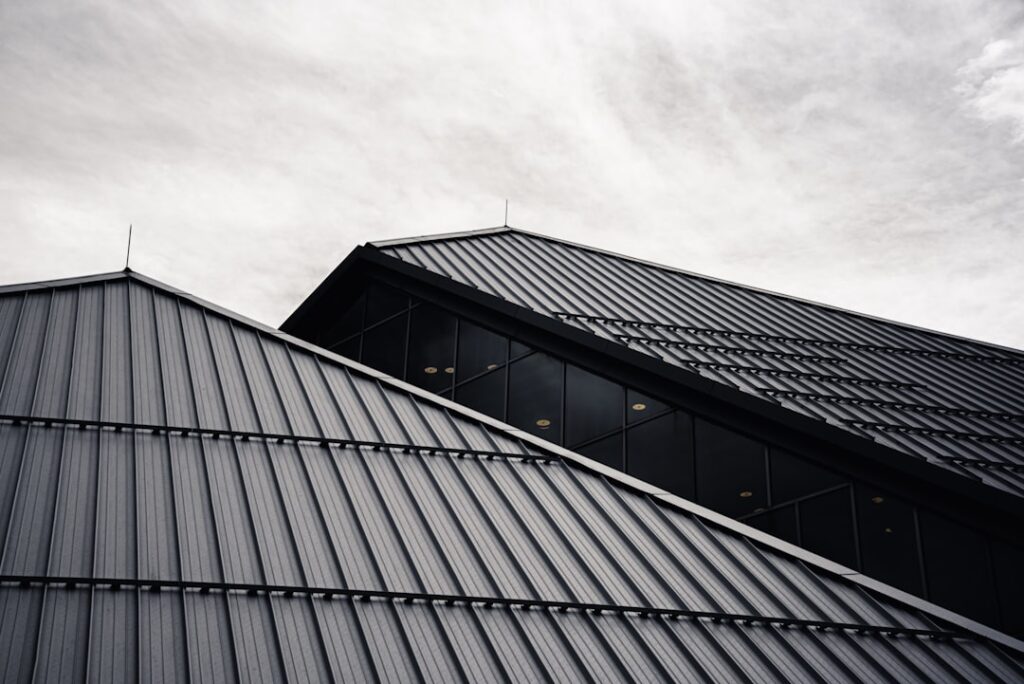
Metal has a place on industrial buildings, especially those with enough slope to shed water. Standing-seam steel and aluminum panels give the longest lifespan of any system, 40 to 70 years, and stand up to weather, fire, and heavy snow.
Industrial metal roofs run roughly $9 to $16 per sq ft installed depending on the metal and gauge. Steel is stronger and cheaper; aluminum resists corrosion for coastal plants. Standing seam hides its fasteners and floats to allow thermal movement, which matters over long panel runs. Metal is also the natural partner for rooftop solar and is fully recyclable. The trade-offs are higher upfront cost and the need for adequate slope, since flat metal roofs are prone to seam leaks.
Comparing Cost, Lifespan, and Weight
Here’s how the main systems stack up for a decision-maker weighing lifecycle cost.
- Cheapest upfront: EPDM and TPO single-ply
- Longest lifespan: standing-seam metal at 40 to 70 years
- Best for chemicals and grease: PVC membrane
- Best multi-layer redundancy: built-up and modified bitumen
- Lightest: single-ply membranes at roughly 30 to 40 pounds per square
Membranes add negligible structural load, while built-up roofing is the heaviest of the group. Match the system to the building’s structure, its rooftop equipment and traffic, and its exposure to chemicals or salt air.
How to Choose the Right Industrial System
Start with the building’s exposure and use. A food plant or chemical facility points to PVC. A hot-climate distribution center favors reflective TPO. A cold northern warehouse suits EPDM or metal. A roof with heavy foot traffic and rooftop equipment benefits from built-up or modified bitumen’s puncture resistance, and a long-term owner who wants maximum lifespan and solar-readiness leans toward standing-seam metal.
Whatever the system, installation quality decides the outcome on a roof this size. Specify adequate membrane thickness or panel gauge, insist on a manufacturer-certified contractor for a full system warranty, and plan for proper drainage and regular maintenance across the large area. Choose industrial roofing on lifecycle cost rather than lowest bid, and the roof will protect the operation beneath it for decades, which on a building this valuable is the only calculation that really matters.
Roof Coatings and Restoration Systems
Full replacement isn’t the only option when an industrial roof ages, and coatings have become a major part of the industry precisely because they defer that huge cost. When the deck and insulation are still sound but the membrane is weathering, a liquid-applied coating, typically silicone, acrylic, or polyurethane, can be sprayed or rolled over the existing roof to renew the surface, seal minor cracks, and add reflectivity. Coatings run roughly $2 to $5 per square foot, a fraction of a tear-off and replacement.
Silicone coatings excel at handling ponding water, which is common on large flat roofs, while acrylics offer good reflectivity at lower cost in drier climates. A restoration can add 10 to 20 years to a serviceable roof and often qualifies for a renewed manufacturer warranty. For facility managers, the appeal is obvious: avoid the disruption and expense of a full replacement, keep operations running underneath, and potentially write the coating off differently than a capital replacement. The catch is that coatings only work over a fundamentally sound roof, so an honest assessment of the existing membrane and insulation comes first.
Energy Codes, Solar, and Total Cost of Ownership
Modern industrial roofing decisions increasingly turn on energy and future use, not just waterproofing. Reflective “cool roof” membranes like white TPO and PVC can cut a building’s cooling load significantly, and many jurisdictions now require a minimum solar reflectance on low-slope commercial roofs, so the roof choice may be dictated partly by code. Over a roof measured in tens of thousands of square feet, even a modest reduction in cooling energy adds up to real money each year.
Rooftop solar is the other forward-looking factor. A huge, flat, unshaded industrial roof is prime real estate for a photovoltaic array, and the roof system needs to be planned around it, since you don’t want to install panels on a membrane with only a few years of life left. Standing-seam metal and thick, durable single-ply membranes that will outlast or match the solar system’s lifespan are the smart substrates. When you evaluate an industrial roof on total cost of ownership, factoring in energy savings, potential solar revenue, maintenance, and lifespan rather than just the install price, the higher-quality system almost always wins over the decades the building will stand.