If you live in a condo, apartment, newer office conversion, or finished basement, there is a good chance your walls are framed with light-gauge steel instead of wood. That matters the moment you try to install tv on metal stud wall framing, because the lag bolts packaged with most TV mounts are designed to bite into wood. Driven into a thin steel stud, they spin, strip, and hold almost nothing.
The fix is to use hardware built for hollow steel studs, usually heavy-duty snap toggles, and to spread the load across more than one stud. This guide explains how to confirm you have metal framing, how to locate the studs, why snap toggles beat self-drilling screws for TVs, and how a backer board makes a large or articulating mount far more secure.
- Before You Install TV on Metal Stud Wall Framing: Confirm the Studs
- Locating Metal Studs Accurately
- Snap Toggles vs Self-Drilling Screws
- Using a Backer Board to Spread the Load
- Tools and Materials
- Step-by-Step: Mounting a TV to Metal Studs
- Electrical Safety When Mounting TVs
- Troubleshooting
- Cost and When to Call a Licensed Professional
- Frequently Asked Questions
Before You Install TV on Metal Stud Wall Framing: Confirm the Studs
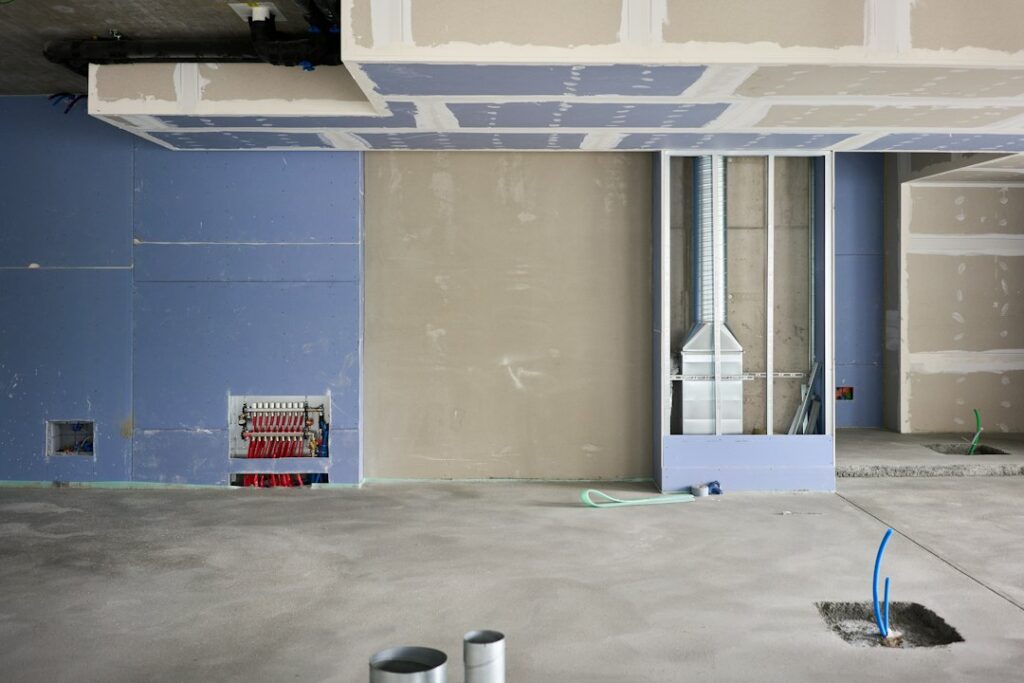
Steel studs are C-shaped channels, typically 1 5/8 inches wide on the face and made of thin galvanized steel. They are standard in commercial buildings and increasingly common in high-rise residential units and some basement finishes.
Signs you are dealing with metal studs:
- A strong magnet sticks firmly along a vertical line at regular spacing, not just at isolated screw heads.
- A small test hole reveals a thin, bright metal edge rather than wood shavings.
- Your building is a condo tower or mid-rise, or the basement was finished recently.
- Drywall screws are in straight vertical lines about every 12 inches, all at the same spacing.
Some buildings mix materials, using wood in one room and steel in another, so check the specific wall you plan to use. Confirming the framing is the first real step whenever you install tv on metal stud wall assemblies, because every hardware choice that follows depends on it.
Locating Metal Studs Accurately
Electronic stud finders work on steel framing, but a strong rare-earth magnet is often more reliable. Slide it slowly across the wall until it grabs a drywall screw, then move it up and down to confirm a vertical line of screws. That line marks the stud.
Metal studs are usually spaced 16 or 24 inches on center. Once you find one, measure over to find the next and confirm it with the magnet. Mark the edges, not just the center. Because a steel stud is a C-channel, the open side and the closed web side behave differently when you drill, and knowing the edges helps you land fasteners in the solid face.
Before drilling anywhere, check for wiring. Steel studs have punched holes that electricians use to run cable horizontally through the wall, often at outlet height. Use a stud finder with AC detection, stay away from the areas directly above and below outlets and switches, and turn off the breaker for nearby circuits if you are uncertain. Confirm power is off with a non-contact voltage tester before drilling near any box.
Snap Toggles vs Self-Drilling Screws
When people search for how to mount into metal studs, two hardware options come up most.
Heavy-Duty Snap Toggle Bolts
A snap toggle passes through a drilled hole, then a steel channel flips flat behind the drywall and the stud face. When you tighten the bolt, the channel clamps against the back of the steel, spreading the load. Snap toggles designed for metal studs are the preferred choice for mounting TV to metal studs because they grip the full thickness of the steel flange and the drywall together.
Self-Drilling Metal Screws
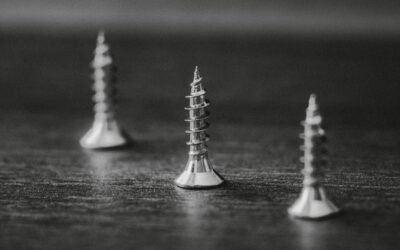
These screws drill and tap their own threads in thin steel. They work for light fixtures and shelves, but their threads engage only the thin wall of the stud, often 25 gauge or 20 gauge steel. Under the constant pull of a TV, especially one on an extending arm, those threads can strip out. They are not a good primary fastener for a TV mount.
Why Not Standard Drywall Anchors or Lag Bolts?
Plastic or self-tapping drywall anchors lack the capacity for most TVs. Lag bolts have coarse wood threads that cannot hold in thin steel. Neither belongs in a metal-stud TV install.
Snap toggle bolts rated for metal studs are the best general recommendation. Always check the manufacturer’s load rating for the specific stud gauge and drywall thickness, and understand that ratings are for ideal conditions. Build in a generous safety margin.
Using a Backer Board to Spread the Load
For larger TVs, heavy screens, or full-motion articulating mounts, a backer board adds a big margin of safety. The idea is simple: attach a painted board, often 3/4 inch plywood or a hardwood panel, across two or three studs with multiple snap toggles, then attach the TV mount to that board with wood lag screws.
This spreads the load across more fasteners and more studs, and it gives your mount’s lag bolts solid wood to grip. A backer board also lets you place the TV where you want it instead of being constrained by stud spacing. Paint it to match the wall, or use it as a design element.
Size the board so it spans at least two studs, and plan for enough toggles per stud to carry the full load with a safety margin. Pre-drill the board before hanging it.
Tools and Materials
- Strong magnet and stud finder with AC wire detection
- 4-foot level
- Drill with a sharp bit sized for your toggles, plus a metal-cutting bit
- Heavy-duty snap toggle bolts rated for metal studs
- TV mount rated for your TV’s weight and VESA pattern
- Optional: 3/4 inch plywood or hardwood backer board, wood lag screws
- Tape measure, pencil, painter’s tape
- Safety glasses and gloves
- A helper
Step-by-Step: Mounting a TV to Metal Studs
Set aside about two hours the first time you install tv on metal stud wall framing, since drilling steel goes slower than wood and each toggle needs careful seating.
- Locate and mark the studs. Confirm stud edges with the magnet and mark with painter’s tape.
- Check for wiring and plumbing. Scan the area and avoid zones above and below outlets. Turn off power if you are drilling near a circuit.
- Position the wall plate or backer board. Level it and mark the hole locations over the stud faces.
- Drill the holes. Wear safety glasses. Drill through the drywall and the steel face with the bit size specified on the toggle package. Go slowly; steel can grab the bit.
- Insert the snap toggles. Slide the channel through the hole, pull the straps to snug it against the back, and snap off the excess strap flush with the wall.
- Attach the plate or board. Thread the bolts through the mount plate or backer board and tighten until firm. Do not overtighten and crush the drywall.
- Attach the mount (if using a backer). Lag the mount to the board.
- Hang the TV. With a helper, hook the TV onto the mount and engage all safety locks.
- Test gently. Apply modest downward pressure and check for movement before letting go.
Electrical Safety When Mounting TVs
Hiding cords is tempting, but never run a TV power cord or extension cord inside the wall cavity. For in-wall power, use a UL-listed in-wall power kit designed for TVs, or have a licensed electrician install a recessed outlet behind the TV. Cutting into steel-stud walls also brings the risk of sharp edges near existing cable, so wiring changes are best left to an electrician who can use proper bushings.
Troubleshooting
The toggle spins when tightening
The channel did not seat flat behind the stud, or the hole is too large. Remove it and use the next size up with a fresh hole.
The drywall cracks around the bolt
You overtightened. Use a backer board to spread the load across a wider surface.
The mount sags slightly
Check fastener tightness and consider adding more toggles or a backer board.
You hit something hard behind the stud
Stop drilling. It could be a pipe, conduit, or a double stud. Relocate the hole.
Cost and When to Call a Licensed Professional
Snap toggles for metal studs cost a few dollars each, and a backer board adds a modest amount. A professional TV installer usually charges a service fee, higher for full-motion mounts or large screens.
If you are unsure how to install tv on metal stud wall framing safely, call a pro. That is especially true for heavy TVs, articulating mounts, walls with shaft liners or fire-rated assemblies, or any condo where building rules restrict drilling. A licensed electrician is required for new outlets or in-wall power. Check HOA or building management rules before drilling into shared or demising walls.
Frequently Asked Questions
Can you mount a TV on metal studs?
Yes. Use heavy-duty snap toggle bolts rated for metal studs, spread across at least two studs, and add a backer board for large or articulating mounts.
Are lag bolts okay for metal studs?
No. Lag bolts are designed for wood and will not hold in thin steel. Use snap toggles or attach a wood backer board with toggles first.
How much weight can snap toggles hold in metal studs?
It depends on the product, stud gauge, and drywall thickness. Check the manufacturer’s rating and leave a generous safety margin.
How do I find metal studs without a stud finder?
Slide a strong magnet across the wall to find drywall screws, which line up vertically along each stud.
Do I need a backer board for a full-motion mount?
It is strongly recommended. Articulating arms create leverage, and a backer board spreads that load across more studs and fasteners.