A polished slab can outlast every other flooring choice in your home by 30 years, yet most homeowners write it off as cold or industrial. Done right, interior concrete flooring reads as warm, sculptural, and surprisingly soft underfoot when paired with radiant heat. From $3-per-sq-ft basic grind-and-seal jobs to $25-per-sq-ft full polish with custom integral color, the price range gives almost any budget a path in. This guide breaks down material choices, sealers, slip ratings, and what to expect from a quality install.
Three Distinct Finish Categories
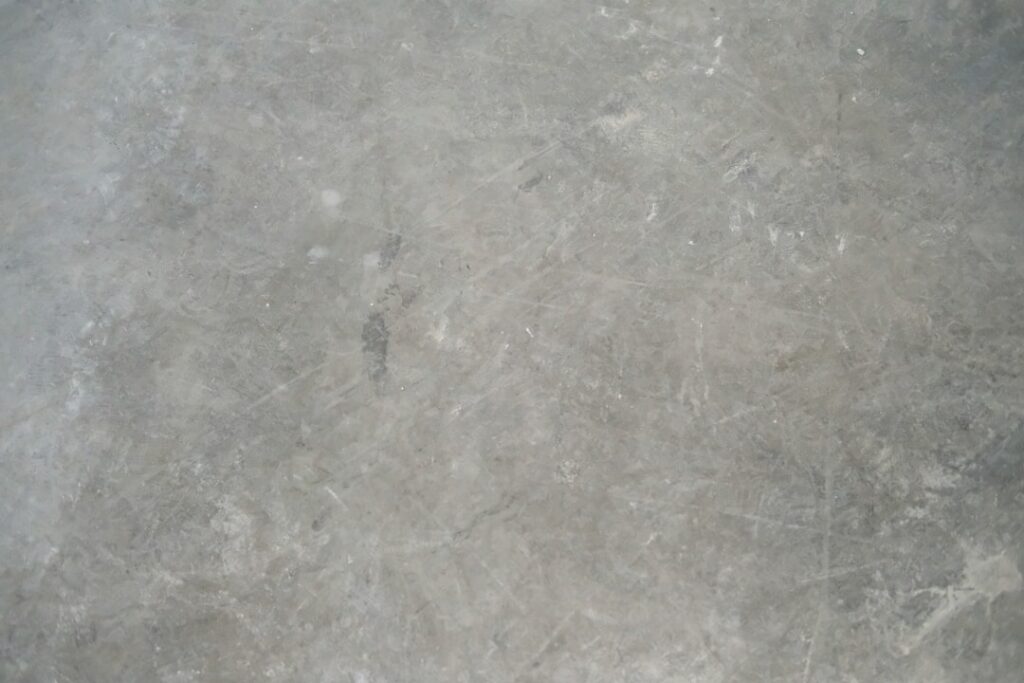
Polished concrete uses progressive diamond grinding from 30 grit up to 3000 grit to expose aggregate and produce a true gloss without a topical coating. Grind-and-seal jobs stop at 100 to 200 grit and rely on a penetrating or topical sealer for sheen. Overlays apply a 1/4 inch to 3/8 inch microtopping over an existing slab to hide cracks and color irregularities.
Each category has its own look, durability profile, and cost. Polished slabs hit 60 percent gloss readings at the 800 grit step and 80 percent at 3000. Overlays come in self-leveling cementitious mixes from Ardex, Mapei, and Bostik that homeowners can color-match to any palette.
Real Cost Per Square Foot
Basic grind-and-seal with a single integral color runs $3 to $7 per sq ft installed. Mid-grade polished concrete with two-color staining or a 400 grit finish lands $6 to $12 per sq ft. High-end polished slabs with full mechanical polishing to 3000 grit, lithium hardener, and decorative scoring sit at $12 to $25 per sq ft.
Microtopping overlays cost $7 to $15 per sq ft because the labor is higher and the material is shipped in 50 pound bags at premium prices. Add $1 to $2 per sq ft for embedded electric or hydronic radiant heat if the slab is being poured fresh.
Sealers and Densifiers Decoded
Lithium silicate densifiers like Prosoco LS or Ameripolish 3DHS penetrate 1/8 inch into the slab, react chemically, and harden the surface against abrasion. Use them on every polished interior concrete flooring project; they cost about $0.50 per sq ft and effectively double surface life.
For topical sealers, water-based acrylics offer a satin look and re-coat every 2 to 4 years at $0.30 per sq ft material. Polyurethanes and epoxies last 7 to 10 years but yellow under UV exposure near windows. Stain-resistant penetrating silanes such as Prosoco Saltguard WB make excellent kitchen sealers and stay invisible.
Warranty Expectations
Polishing contractors typically warrant gloss retention for 1 to 5 years on residential and 1 year on commercial. The slab itself, when properly poured at 4000 psi or higher with #4 rebar on 12 inch centers, carries no formal warranty but should last the life of the structure.
Microtopping warranties run 3 to 5 years against delamination, contingent on a fully prepped substrate with a 1.5 to 2.0 surface profile (CSP). Always require the installer to provide CSP photos before topcoat application.
Installation Method by Slab Age
For new pours, schedule polishing 28 to 60 days after the slab cures so calcium hydroxide migration finishes. Polishing too early causes mottled blotches. Existing slabs need full mechanical removal of carpet glue, paint, and patching compound before grinding can start.
Crack repair uses semi-rigid polyurea fillers like Metzger McGuire MM-80 that flex with the slab. Static cracks under 1/8 inch wide vanish into polished finishes; anything wider should be celebrated as a design feature rather than hidden.
Slip Resistance and Safety
Polished concrete with a high-gloss finish drops below R9 slip rating when wet, which is unacceptable for kitchens and baths. Address this with a penetrating anti-slip treatment such as SlipDoctors Stone Grip or by stopping the polish at 800 grit for a satin sheen that holds R10 to R11.
For wet-zone interior concrete flooring, factor in micro-etching every two years to maintain coefficient of friction above 0.6. Floor mats at sink areas are not optional in households with elderly residents.
Pros and Cons in Practice
The advantages are real: lifespan over 50 years, zero VOCs from the cured slab, fire resistance, compatibility with radiant heat, and integration with thermal mass for passive solar designs. Maintenance is simple, with weekly damp-mopping using a pH-neutral cleaner like Prosoco Consolideck LS Cleaner.
The drawbacks: high upfront labor cost, sensitivity to acidic spills like wine and citrus, hardness on knees and dropped dishware, and a 5 to 14 day install window during which the room is unusable. Insulation under the slab and rugs in key zones soften the experience considerably.
Choosing a Contractor
Hire only ASCC-certified concrete polishers or CTC-accredited installers. Ask to visit two completed jobs at least three years old; gloss meter readings tell a clearer story than fresh photos. Request a written scope listing grit progression, densifier brand and application rate, and final sheen target.
Budget a contingency of 10 to 15 percent for slab surprises: vapor barrier failures, plumbing chases, or moisture readings above 5 pounds per 1000 sq ft over 24 hours. Catching moisture early saves an entire reinstall later.
Long-Term Care Routine
Damp-mop weekly with a neutral pH cleaner. Skip ammonia, vinegar, and citrus-based products; they etch the cement matrix. Burnish polished surfaces yearly with a high-speed (1500 to 2000 rpm) propane burnisher and a hog-hair pad to restore gloss without re-grinding.
Reseal topical coatings on the schedule the manufacturer specifies, typically every 3 to 5 years. With this routine, a quality interior concrete flooring install will look fresh well past its 25-year mark with only minor cosmetic touch-ups in high-traffic lanes.