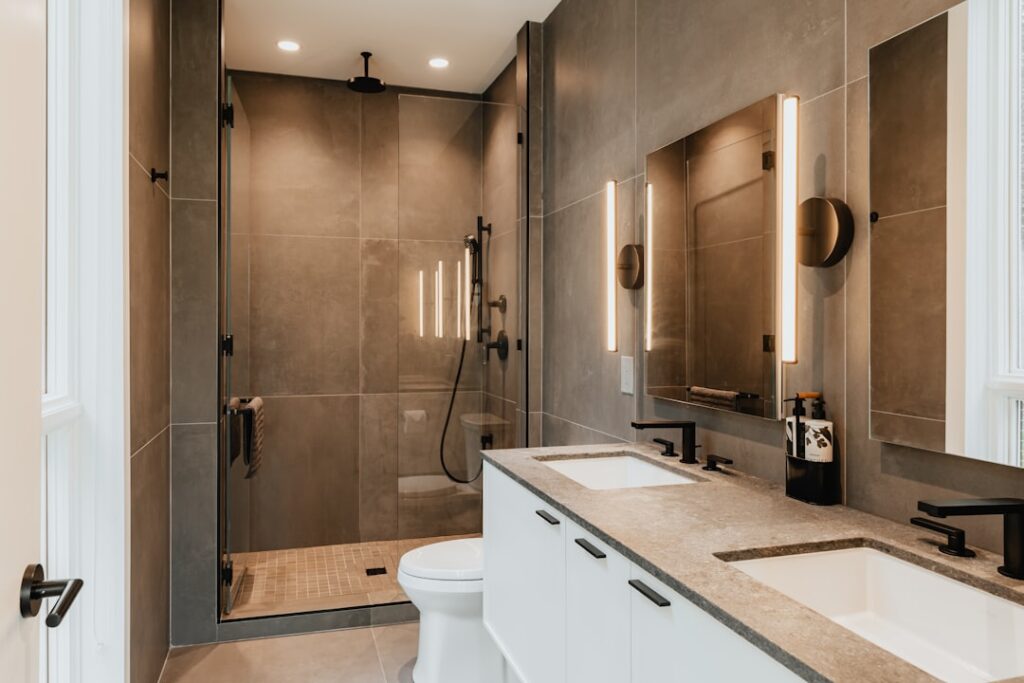
The ionDrops shower head belongs to a fast-growing category of filtered, mineral-bead sprayers that promise softer water, stronger pressure, and cleaner spray from a single screw-on unit. If your tap water leaves your skin feeling tight or your hair dull, an ionDrops shower head is one of the cheaper ways to change what actually comes out of the wall without plumbing in a whole-house softener.
These heads have gotten popular for a simple reason: they combine three things people want — a filter, a pressure boost, and a modern handheld design — into one part that installs in five minutes. Here is how the technology works, what the mineral beads actually do, and what to expect before you buy.
How the ionDrops Shower Head Works
Inside the head sits a clear chamber packed with small mineral filter beads, usually a mix of mineralized ceramic and negative-ion stones. Water passes through the bead bed on its way to the face plate. The beads do two jobs. First, they act as a physical and mineral filter, catching sediment and rust flakes and reducing some of the chlorine smell that comes off municipal water. Second, the marketing centers on “ionization” — the stones are said to release negative ions and minerals into the stream to make the water feel softer on skin and hair.
The pressure boost is the part you feel first. The face plate uses hundreds of tiny laser-cut micro-nozzles instead of a few big holes. Squeezing the same water through smaller openings raises the velocity, so the spray feels stronger even though the actual gallons per minute stay the same or drop. That is also why these heads tend to be water-saving: many run around 1.8 to 2.0 GPM while feeling like more.
What the Mineral Beads Actually Do
Set expectations honestly here. The beads are a light filtration and conditioning stage, not a substitute for a plumbed water softener or a carbon block filter. What you can reasonably expect:
- Sediment capture — The bead bed traps visible rust, grit, and scale flakes, which is a real benefit on old pipes or well water.
- Reduced chlorine odor — Many users notice less of that pool smell, though heavy chlorine removal really needs a dedicated carbon filter.
- Softer feel — The conditioning minerals can make water feel less harsh, especially in hard-water areas.
- Stronger spray — The micro-nozzle plate is the most consistent, measurable win.
Treat the ionic and mineral claims as a comfort feature rather than a proven water-treatment spec, and you will be happy with the head for what it reliably does.
Replacing the Filter Beads
The beads do not last forever — they saturate and lose effectiveness, and the whole point of a replaceable-bead design is that you refresh them instead of tossing the head. How the swap works:
- Unscrew the head from the hose or shower arm.
- Open the twist-off cap or bead chamber, usually a quarter turn.
- Pour out the spent beads and rinse the chamber.
- Pour in a fresh bead refill packet up to the fill line.
- Reseal the chamber and screw the head back on.
Plan on refilling every two to six months depending on your water hardness and how many people use the shower. Hard water and heavy sediment use up the beads faster. Refill packets are cheap, which is a big part of the value versus filter cartridges that cost far more each cycle.
Installation in Five Minutes
The ionDrops shower head threads onto the standard 1/2-inch NPT connection every U.S. shower uses, so no tools or plumber are needed for the basic swap:
- Unscrew your old head counterclockwise by hand, or with a strap wrench if it is stuck.
- Clean the old tape off the shower arm threads.
- Wrap the threads with two or three turns of PTFE plumber’s tape.
- Thread on the new head hand-tight, then snug it a quarter turn — do not overtighten plastic parts.
- Run the shower and check for drips at the connection.
If it comes as a handheld with a hose, connect the hose to the wall arm first, then the head to the hose, taping both threaded ends.
Flow Rate and Water Savings
Most filtered mineral heads in this class run 1.8 to 2.0 GPM, at or under the WaterSense 2.0 GPM ceiling and below the 2.5 GPM federal maximum. Because the micro-nozzle plate keeps the spray feeling firm, you generally save water without feeling like you traded away pressure. On a well or on low household pressure, that same nozzle design can actually make a weak shower feel stronger, which is a common reason people buy one.
Spray Modes and Handle Design
Most ionDrops-style heads ship as a handheld on a 60-inch or 79-inch hose, and many add a mode selector so you can rotate the face plate between settings. Common modes are a wide rainfall spray for gentle coverage, a stronger jet or massage setting for rinsing, and a mist. The mode ring turns on the head itself, so you adjust it mid-shower without reaching for a valve. A handheld design also makes the filtered water easy to direct — rinsing long hair thoroughly is where the pressure boost and the softer feel show up most.
Look for a head with a comfortable non-slip handle and a metal or metal-reinforced hose nut rather than thin plastic that strips. The clear bead chamber is a nice touch beyond looks: you can see at a glance when the beads are dirty or spent, which takes the guesswork out of when to refill.
Who Benefits Most
Not every home sees the same gain from a filtered mineral head. You will notice the biggest difference if you live in a hard-water region where soap never seems to rinse fully, if you are on well water with occasional sediment or a rust tint, or if your municipal supply carries a strong chlorine smell. Renters get a lot out of these heads too, since the whole thing unscrews and comes with you when you move, leaving no plumbing changes behind. If your water is already soft and clean and your pressure is strong, the filtration upside is smaller and you are mostly buying the spray feel and the modern look.
Cleaning and Maintenance
Two maintenance tasks keep an ionDrops head performing. First, swap the beads on schedule as above. Second, clear mineral scale off the face plate. If your spray gets patchy, unscrew the head, soak the face in white vinegar for an hour, and scrub the nozzles with an old toothbrush. Many models use flexible silicone nozzle tips you can just rub with a thumb to pop the scale loose. Keeping the plate clean matters even more on a filtered head, since a clogged plate hides the pressure benefit you bought it for.
What It Costs
- $20 to $40 — The head itself, typically with one starter bead charge included.
- $8 to $20 — Refill bead packets, good for one full chamber swap each.
Over a year, figure the head plus two to four refills, so roughly $40 to $90 all in for the first year and just the refill cost after. That is far cheaper than a plumbed softener and cheaper to maintain than most cartridge-style shower filters.
Is It Worth It?
An ionDrops shower head makes the most sense if you have hard water, visible sediment, or a chlorine smell, or if your current shower feels weak and you want more apparent pressure. Go in expecting light filtration and conditioning plus a genuinely stronger-feeling spray, not medical-grade water treatment, and it is an easy, low-cost upgrade. For a five-minute install on a standard 1/2-inch fitting and a refillable design that keeps running costs low, the ionDrops shower head is a reasonable pick for anyone who wants better-feeling shower water without touching their plumbing.