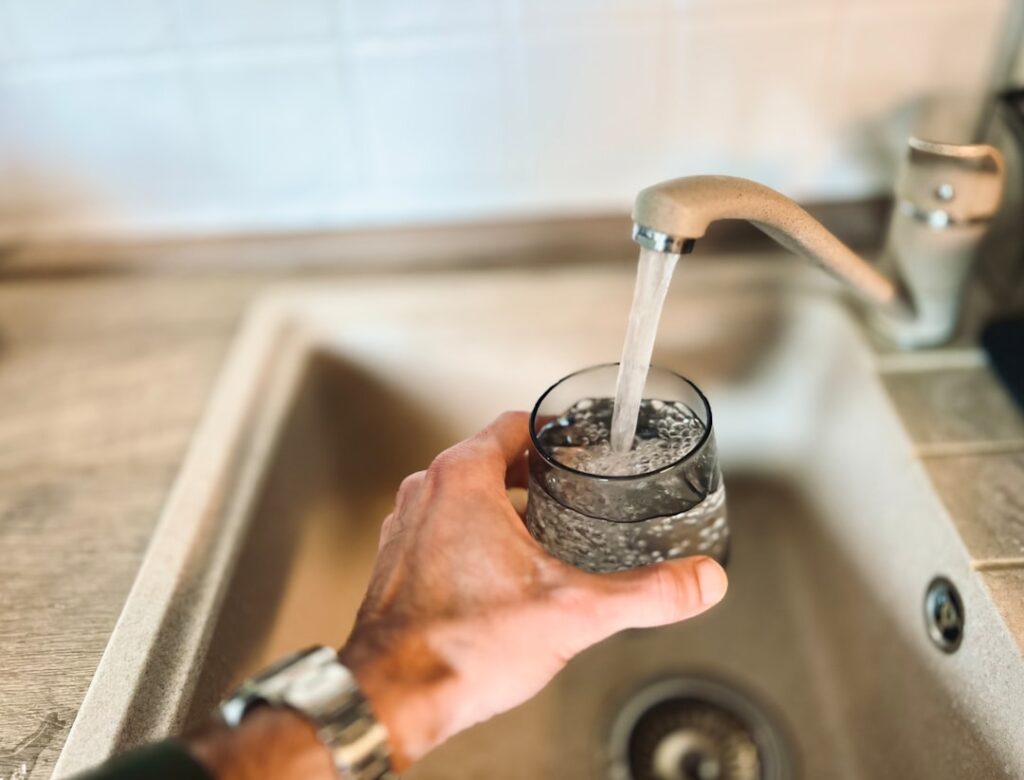
Americans buy roughly 15 billion gallons of bottled water a year, much of it purchased by people whose tap water tests cleaner than the bottle. So is faucet water safe to drink? For the large majority of US households on municipal systems, yes — American tap water is among the most regulated and monitored drinking water in the world. But “the majority” is not “everyone”: lead service lines, private wells, aging building plumbing, and localized contamination create real exceptions, and knowing whether you are in one takes about twenty minutes of checking. Here is the honest answer, the red flags, and exactly how to verify your own tap.
How US Tap Water Is Regulated
Municipal tap water falls under the EPA’s Safe Drinking Water Act, which sets enforceable limits (Maximum Contaminant Levels) for more than 90 contaminants — bacteria, nitrates, arsenic, disinfection byproducts, lead and copper at the tap, and more. Utilities test continuously, report violations, and must notify customers of serious problems within 24 hours. Bottled water, by contrast, is regulated by the FDA as a packaged food — standards largely mirror the EPA’s, but testing frequency and public disclosure requirements are lighter, and a meaningful share of bottled water is simply municipal water re-filtered. The regulatory reality is the opposite of the marketing: your utility publishes its lab results every year; the bottler does not have to hand you theirs.
The system’s genuine weak point is the last hundred feet. EPA rules govern water leaving the treatment plant and in the mains — but lead service lines, lead solder (legal until 1986), and brass fixtures can add contamination inside your property line, which is why the tap-side checks below matter.
When Tap Water Is Fine
If you are on a city system with no current violations, your home was built after 1986 (or has updated plumbing), and your water looks, smells, and tastes normal, drink it. Chlorine taste is an aesthetic issue, not a safety one — the residual disinfectant is what keeps the distribution system safe, and an hour in an open pitcher in the fridge dissipates it. Cloudy water that clears from the bottom up in a glass is dissolved air, harmless. Hardness (white scale on kettles) is minerals, also harmless to drink.
Red Flags That Change the Answer
- Lead service lines. Homes built before roughly 1960 in older cities may have a lead pipe connecting to the main; pre-1986 homes may have lead solder. Lead is the one contaminant with no safe level, and it is tasteless and invisible. Many utilities now publish service-line inventories (required under the Lead and Copper Rule Improvements) — check yours, and look at the pipe entering your meter: lead is dull gray, non-magnetic, and scratches shiny with a key.
- Private wells. About 13 million US households are on wells, which the EPA does not regulate at all. Testing is entirely on you: annually for coliform bacteria and nitrates, every few years for arsenic, uranium, and VOCs depending on region.
- Boil-water advisories after main breaks, floods, or treatment failures — follow them literally, including for brushing teeth and ice.
- Sensory changes: sudden rotten-egg odor (sulfur or a water heater anode issue), brown or yellow water that persists beyond a few minutes of flushing, oily sheen, or metallic taste all warrant investigation before drinking.
- Local contamination news — PFAS plumes near military bases and industrial sites, nitrate spikes in agricultural areas. New federal PFAS limits are phasing in; utilities must test and disclose.
Check Your CCR — the Report You Already Get
Every community water system must publish an annual Consumer Confidence Report (CCR), typically each July, covering the prior year’s testing: what was detected, at what level, against what limit, and any violations. Finding yours takes two minutes — search “[your city] water quality report” or “[utility name] CCR,” or use the EPA’s CCR search tool. Read it for: violations (listed prominently), lead 90th-percentile results, nitrate and arsenic levels relative to their limits, and disinfection byproducts (TTHM/HAA5) trends. A CCR showing everything well under limits is strong evidence your tap is fine at the main — it cannot tell you about your own pipes, which is what testing covers.
Testing Your Own Tap
Options by budget and concern:
- Free or subsidized lead tests — many utilities and health departments offer free lead sampling kits, especially in older cities. Ask first.
- Certified mail-in labs ($30-$180) — Tap Score, SimpleLab, or your state-certified lab list. A standard city-water panel ($50-$100) covers metals, lead, copper, and basics; well owners want bacteria + nitrate + metals panels; add PFAS ($75-$150) if you are near a known source.
- Hardware-store strip kits ($10-$25) — fine for hardness and chlorine, too crude for lead. Do not make decisions on strips.
Sample lead correctly: first-draw, after water has sat 6+ hours, from the kitchen cold tap — that is the worst-case number you actually drink.
Matching Filters to Problems
Filter to the contaminant, not to fear. Chlorine taste and odor: any NSF/ANSI 42 carbon pitcher or faucet-mount unit. Lead: NSF/ANSI 53-certified for lead specifically — quality faucet-mount filters and under-sink carbon blocks qualify; verify the certification, not the marketing. PFAS: NSF 53/58 units certified for PFOA/PFOS, with reverse osmosis the most robust. Wells with bacteria risk: UV plus sediment prefiltration. We cover faucet-mounted filter picks in a separate guide; the short version is that a certified $30 unit solves taste, but lead and PFAS demand checking the certification sheet before checkout. Whatever you install, replace cartridges on schedule — an exhausted carbon filter can shed accumulated contaminants and grow bacteria, making water worse than the tap.
Bathroom Tap, Hot Tap, and Other Common Questions
Bathroom vs kitchen tap: same water, same safety in a modern home. The caveats are old homes (a rarely-used bathroom tap sits stagnant in old branch lines — flush 30 seconds first) and homes with storage-tank plumbing (rare in the US, common in the UK). Hot tap warning: never drink or cook from the hot side. Hot water leaches lead and copper from pipes far more aggressively and has been sitting in a tank with sediment and an anode rod. Draw cold, then heat it — this is the one rule that applies to every house regardless of age. And after any vacation, flush taps for a minute before drinking; after any plumbing work, flush longer and remove aerators to clear debris.
Renters, Apartments, and Older Buildings
Multi-unit and rental housing adds a wrinkle: the building’s plumbing between the meter and your tap belongs to the landlord, and older apartment buildings can have galvanized risers, lead solder, or long-stagnant branch lines the CCR knows nothing about. Renters can still test — a $50 first-draw lead test from your own kitchen tap answers the only question that matters — and in most states a confirmed lead result creates disclosure and remediation leverage. Practical moves that need no permission: flush the tap 30-60 seconds first thing each morning (stagnation overnight is when leaching peaks), draw only cold for drinking and cooking, clean your aerator quarterly since upstream pipe debris collects there, and if results warrant it, install a certified NSF 53 faucet-mount or countertop filter you can take when you move.
The Bottom Line
On a municipal system with a clean CCR, post-1986 plumbing, and normal-tasting water: drink the tap, save the bottle money. Spend one evening checking your CCR and your service line material; spend $50-$100 on a certified lab test if your home predates 1986, you are on a well, or anything smells, stains, or tastes off. Fix what the numbers show — usually nothing, occasionally a $150 certified filter, rarely a service-line replacement your utility may subsidize. That is the whole game: verify once, filter if warranted, and stop paying 1,000x markup for water in plastic.