Japandi blends two design philosophies that share a surprising amount of DNA: Japanese minimalism rooted in wabi-sabi and Scandinavian functional craft rooted in hygge. The combination has dominated the high-end residential remodel market since around 2021, and a well-executed japandi bathroom design reads calm, warm, and intentional rather than spare or cold. A typical mid-range Japandi master bath remodel runs $28,000 to $52,000 in a 100-square-foot footprint, with most of the budget landing on the soaking tub, the wood vanity, and large-format porcelain tile. Done with care, the look ages slowly and forgives years of daily use without feeling tired.
The Material Palette That Defines Japandi
Three materials repeat across nearly every successful Japandi bathroom: warm light wood, matte natural stone or stone-look porcelain, and brushed metal in either black, brass, or oil-rubbed bronze. The color palette stays narrow, usually three to four tones in the cream, warm white, oat, taupe, and charcoal range.
White oak, ash, and maple are the dominant wood choices, all finished with a clear matte hardwax oil from Rubio Monocoat or Osmo Polyx. The finish lets the grain breathe and patina rather than locking it under a glossy poly coat. For tile, look at limestone, travertine, and large-format porcelain mimicking these stones from Florim, Daltile, or MSI.
Soaking Tubs as the Centerpiece
The Japanese ofuro tradition centers the bathroom around a deep soaking tub, and Japandi design pulls that idea forward. Standard American 60-by-30-inch tubs feel too long and shallow for the look. Instead, freestanding soaking tubs in oval or rectangular form, 60 inches long and 22 to 27 inches deep, fit the aesthetic and the comfort goal.
Top picks for the style include the Kohler Veil at $4,200, the Toto Aimes at $5,900, the Maax Optik at $1,800, and Signature Hardware’s Greyfield at $1,400. For a true Japanese soak, the Cedar Tubs Plus Japanese ofuro in hinoki cedar runs $3,500 to $7,500 depending on size. Hinoki develops a rich amber tone with use and releases a faint citrus scent in warm water.
Vanities and Storage
Wood vanities with clean horizontal lines anchor the look. Floating wall-mounted vanities free the floor visually and let the eye travel under the cabinet, which makes small bathrooms feel larger. Look for white oak, walnut, or rift-sawn ash with simple recessed channel pulls or no hardware at all.
For prefab options, Ronbow, James Martin, and Kohler all sell Japandi-leaning vanity lines in the $1,800 to $5,200 range. Custom-built vanities from a local cabinet shop run $3,500 to $9,000 depending on size and finish. Pair the wood vanity with a vessel sink or a thin-edge integrated stone countertop from Cosentino Dekton or Caesarstone.
Tile Selection and Layout
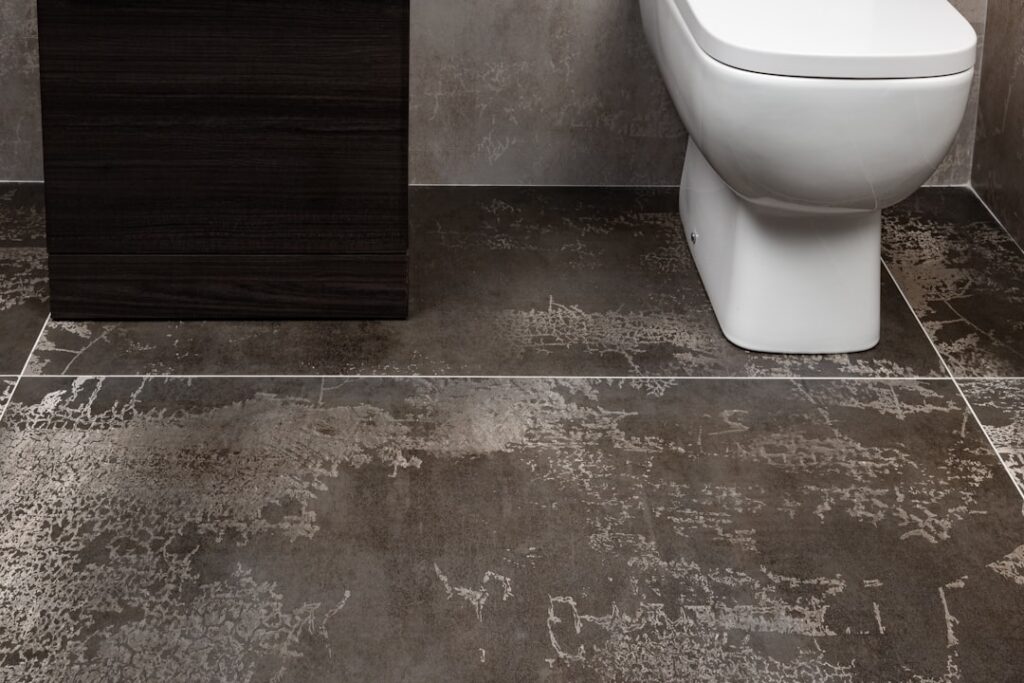
Large-format tile reduces visible grout lines, which keeps the visual quiet. 24-by-48-inch or 24-by-24-inch porcelain in a soft warm white or warm grey reads as a single material rather than a tiled wall. Run the tile from floor to ceiling in the shower wet zone, and continue it across the floor for visual continuity.
- Daltile Marble Attache Lavish $7.95 per sq ft
- MSI Glacier white limestone-look porcelain $6.40 per sq ft
- Florim B&W Stone large format $11.95 per sq ft
- Ann Sacks tatami stone $22 per sq ft for accent walls
For accent walls behind the tub or vanity, consider zellige tile in warm white or shou sugi ban charred wood panels. Both add textural interest without breaking the calm palette.
Fixtures and Hardware
Brushed brass and matte black are the two dominant fixture finishes in current Japandi work. Matte black reads more Scandinavian, brushed brass more Japanese. Mixing them on a single project is fine if you commit to consistency on the wet wall.
Top fixture brands for the style include Kohler Components, Brizo Litze, Moen Doux, and Watermark. Toto leads on toilet design with the Aquia IV and Neorest series. A wall-hung Geberit in-wall carrier system with a Toto Carlyle II 1G wall-hung toilet runs about $2,200 installed and clears floor space dramatically.
Lighting That Earns the Look
Layered warm lighting is mandatory. A single overhead can fixture flattens the room. Plan for three layers: ambient overhead, task at the mirror, and accent below or behind features.
Linear LED bars from Visual Comfort or DCW Editions Belle de Nuit on the wall beside the vanity mirror eliminate facial shadows for grooming. A pendant or wall sconce in a paper-shaded or rice-paper-inspired form near the soaking tub adds soft glow. Cove lighting under floating vanities or behind built-in shelves provides night-mode ambient light without overhead glare. Use 2700K to 3000K bulbs throughout. Cooler light reads sterile and breaks the warmth.
Plants and Natural Elements
Living plants reinforce the connection to nature that drives the style. Snake plants, ZZ plants, and bird of paradise tolerate bathroom humidity and low light. A single sculptural specimen by the tub does more work than three smaller plants scattered around.
For non-living natural elements, look at Japanese hinoki bath stools, smooth river stones in a wooden tray, single-stem ikebana arrangements, and unglazed ceramic vessels. Each piece should earn its spot. Japandi rooms fall apart visually when surface decor accumulates.
Storage Without Visual Clutter
Hidden storage is the workhorse of the style. Built-in niches in the shower wet zone replace shower caddies. A medicine cabinet recessed into the wall behind the mirror holds the daily-use items invisibly. Pull-out vanity drawers with custom inserts from cabinet shops or California Closets keep counters bare.
For visible storage, use one or two wood or rattan baskets from MUJI, Ferm Living, or HAY to hold towels. Roll the towels rather than fold them flat. The texture reads intentional and matches the natural material language of the rest of the room.
Budget by Project Tier
A cosmetic Japandi refresh, swapping vanity, fixtures, and paint, runs $4,500 to $9,500. A mid-range remodel with new tile, new tub, and updated electrical lands at $28,000 to $52,000. A full gut remodel with custom millwork, premium tile, and Toto smart toilet pushes past $65,000.
The savings on a Japandi remodel often come from buying fewer finish materials at higher quality, since the look depends on restraint. Three good fixtures beat eight average ones. A great japandi bathroom design holds together for 15 to 20 years before feeling dated, which is longer than most trend-driven styles deliver.