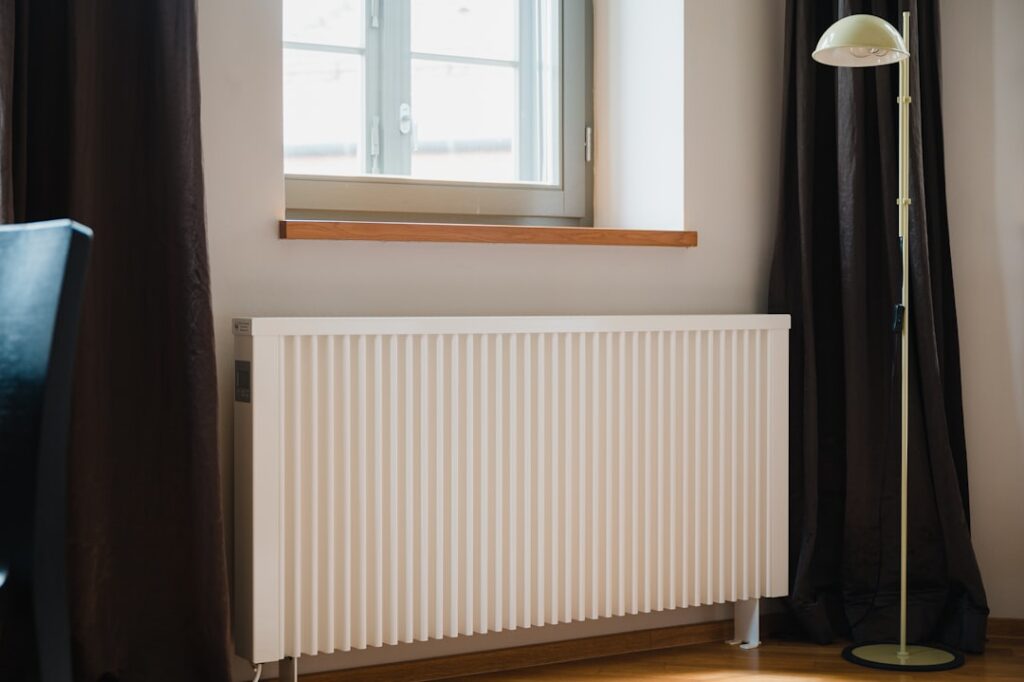
Walk into an older home in the Northeast and run your hand along the wall near the floor, and you will likely find a long metal panel humming with quiet warmth. Hot water baseboard heaters, also called hydronic baseboard, heat your rooms by circulating water warmed in a central boiler rather than blasting hot air through ducts. That difference matters more than most homeowners realize. The heat is even, draft-free, and remarkably quiet, and it explains why these systems have stayed popular for over half a century.
If you are buying a home with hydronic heat, replacing tired old units, or just trying to understand the strange clicking sound coming from your walls every morning, this guide covers what you actually need to know.
How Hydronic Baseboard Heat Works
At the heart of the system sits a boiler, usually fueled by natural gas, propane, or heating oil. Water heated to roughly 160°F to 180°F gets pushed by a circulator pump through copper pipes that run inside each baseboard unit. Thin aluminum fins are crimped tightly around that copper. As hot water passes through, the fins shed heat into the air, and physics does the rest: warm air rises off the fins and pulls cooler floor-level air up behind it, creating a gentle convection loop that blankets the room.
No fan, no blower, no rattling ductwork. That natural convection is why hydronic heat feels so different from forced air. A typical home is split into zones, each with its own thermostat, so you can keep bedrooms cooler at night while the living room stays at 70°F.
Hydronic vs. Electric Baseboard
People confuse these two constantly because they look nearly identical on the wall. The mechanics could not be more different.
- Electric baseboard heats a metal element directly with electricity. Cheap to install, expensive to run, and each unit works independently.
- Hot water baseboard relies on a central boiler and circulating water. More expensive to install, but far cheaper per BTU in most regions, especially where natural gas is available.
- Retained heat is the quiet advantage of hydronic systems. The water and copper stay warm after the boiler cycles off, so the room keeps warming for several minutes instead of going cold the instant the thermostat clicks.
For a whole-house solution in a cold climate, hydronic almost always wins on comfort and long-run operating cost.
Sizing and Output
Baseboard units are rated in BTUs per linear foot. A standard residential element puts out somewhere between 500 and 600 BTU per foot at 180°F water. To size a room, a contractor performs a heat-loss calculation that accounts for square footage, ceiling height, insulation, and window area.
As a rough rule of thumb, a well-insulated room needs about 10 watts of heating per square foot, which translates to roughly 34 BTU. A drafty 12-by-15-foot room with two large windows might need 12 to 16 feet of baseboard to stay comfortable when it is 10°F outside. Undersizing leaves rooms cold during cold snaps; oversizing wastes money and causes the boiler to short-cycle.
What It Costs
Pricing varies widely by region and labor rates, so treat these as general market ranges rather than quotes. Replacement baseboard elements typically run $8 to $15 per linear foot for the bare unit, with quality covers and end caps adding more. Professional installation of new baseboard in an existing room often lands between $200 and $600 per room depending on length and access.
A full boiler replacement is the big-ticket item, generally falling in the $4,000 to $9,000 range installed, with high-efficiency condensing boilers at the upper end. The payoff is a unit that can hit 90 percent or better efficiency compared to the 80 percent typical of older models.
Maintenance That Keeps Them Quiet and Efficient
Hydronic systems are low-maintenance, but a few habits prevent most of the common headaches.
- Vacuum the fins. Dust packed between aluminum fins kills output. Pop off the front cover once a year and run a vacuum brush across them.
- Bleed the air. Trapped air causes gurgling and cold spots. Most systems have bleeder valves; open each one until water runs steadily, then close it.
- Straighten bent fins. Crushed fins from a stray vacuum or furniture move block airflow. A fin comb realigns them in minutes.
- Check the boiler pressure. Cold systems should read around 12 psi on the gauge. A sustained drop points to a leak worth investigating.
- Service the boiler annually. A technician should inspect the burner, pump, and expansion tank before each heating season.
That Clicking and Ticking Noise
New owners often panic over the sharp ticking that comes from the walls when the heat kicks on. It is almost always harmless. Copper pipe expands as hot water flows through it, and the metal slides against the fins and brackets, producing those clicks. As the system cools, it ticks again while contracting.
If the noise becomes loud banging instead of gentle ticking, that usually signals trapped air or a baseboard pinched too tightly against framing. Bleeding the lines or loosening a mounting screw often solves it.
Upgrades and Modern Options
You do not have to settle for the dented beige covers from 1975. Replacement covers in clean white or even custom colors instantly modernize a room for a modest cost. For higher output in the same footprint, some homeowners switch to high-output baseboard rated near 1,000 BTU per foot, or move to low-profile panel radiators that deliver more heat from a shorter run.
Pairing the system with a smart, zone-aware thermostat lets you schedule setbacks and trim fuel use without sacrificing comfort. If you are renovating, this is also the moment to consider whether radiant floor loops off the same boiler make sense in a bathroom or kitchen.
Is Hydronic Right for You?
Hot water baseboard heat rewards homeowners who value steady, silent warmth and have access to affordable fuel. The comfort is genuinely better than forced air, with no blowing dust and no temperature swings. The trade-offs are real, too: no built-in cooling, slower response when you crank the thermostat from cold, and baseboard runs that limit furniture placement along exterior walls.
For most cold-climate homes, those trade-offs are easy to live with. Keep the fins clean, bleed the lines each fall, and a well-maintained hydronic system will deliver quiet, even heat for decades. If you are weighing a boiler swap or planning a renovation, get a professional heat-loss assessment first so every room is sized correctly for the coldest day of the year.