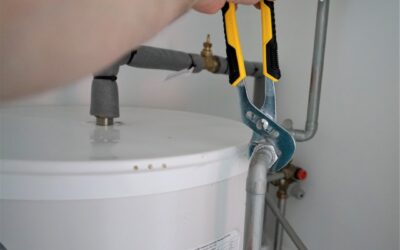
A standard residential water heater holds 40 to 50 gallons and should recover a full tank in roughly 60 to 90 minutes, so when your hot water heater not heating turns your morning shower ice cold, something specific has gone wrong. The good news is that the majority of no-hot-water calls trace back to a handful of predictable failures, and several of them are safe to diagnose yourself before you spend money on a service visit.
First, Identify Whether You Have Gas or Electric
The single most useful thing you can do is confirm the fuel source, because the failure points differ completely. An electric unit has a thick cable running into the top and usually two access panels on the side that cover the heating elements. A gas unit has a black or yellow gas line, a control valve near the bottom with a temperature dial, and a flue pipe rising from the top to vent exhaust. Mislabeling your own heater leads to chasing the wrong parts, so spend a minute here.
Once you know the type, check the obvious culprits in order. Roughly 30 percent of no-heat complaints are actually a tripped breaker, a pilot light that blew out, or a thermostat set too low after someone bumped the dial.
Troubleshooting an Electric Water Heater
Electric heaters fail to produce hot water for three main reasons: lost power, a tripped high-limit switch, or a burned-out heating element. Work through them in this sequence.
- Check the breaker. Go to your electrical panel and find the double-pole 30-amp breaker labeled for the water heater. A breaker that has tripped sits in the middle position. Push it fully off, then firmly back on. If it trips again immediately, stop and call an electrician, because that signals a short.
- Reset the high-limit switch. Turn off the breaker first. Remove the upper access panel, fold back the insulation, and look for a red reset button on the thermostat block. Press it until you hear a click. This switch trips when water exceeds about 180 degrees, often because a thermostat or element has failed.
- Test the heating elements. A standard tank has two elements, upper and lower. If you get a little warm water that runs out fast, the lower element has usually failed. No hot water at all often points to the upper element. Testing requires a multimeter set to ohms; a good element reads roughly 10 to 16 ohms, while a reading of infinity means it is burned out.
Replacing an element is a moderate DIY job that requires draining the tank and using an element wrench, but it is one of the cheaper repairs, with parts typically running $15 to $40 each.
Troubleshooting a Gas Water Heater
Gas units add the variables of the pilot light, thermocouple, and gas supply. If you smell gas at any point, leave the house and call your utility from outside. Otherwise, proceed carefully.
- Confirm the pilot is lit. Look through the small sight glass near the bottom of the tank. No flame means the pilot is out. Newer units relight with a built-in igniter button following the printed instructions on the tank; you turn the dial to pilot, hold it down, click the igniter, and keep holding for 30 to 60 seconds.
- Suspect the thermocouple. If the pilot lights but dies the moment you release the dial, the thermocouple is likely failing. This inexpensive safety sensor tells the valve the flame is present; when it weakens, the gas shuts off as a precaution. Replacements cost only a few dollars but require disassembling the burner.
- Verify the gas supply. Make sure the shutoff valve on the gas line is parallel to the pipe, meaning open. If other gas appliances in the home are also out, the problem is upstream and belongs to the utility.
When the Water Is Warm but Not Hot
Lukewarm water is a different symptom than no hot water, and it usually has its own short list of causes. Sediment buildup is the most common: minerals settle to the bottom of the tank over years, insulating the burner or lower element from the water and forcing it to work harder for less result. Flushing the tank once a year clears this and can restore lost capacity.
A crossed connection is another sneaky cause. If a nearby faucet or a recirculation line lets cold water bleed into the hot side, you get tepid water throughout the house even though the heater works fine. Finally, on gas units, a dip tube that has broken can dump incoming cold water at the top of the tank where it mixes with the outgoing hot supply.
Quick Recovery and Capacity Issues
Sometimes the heater works, but the household has simply outgrown it. A 40-gallon tank serving a family of five with back-to-back showers will run cold not because it is broken but because demand exceeds the recovery rate. If your unit only disappoints during peak morning use, the fix may be a larger tank, a tankless upgrade, or simply staggering hot water use. Raising the thermostat slightly, up to but no higher than 120 degrees for safety, can also stretch available hot water.
Maintenance That Prevents Future Failures
Most premature heater failures are preventable with a little routine care. Building these into your seasonal home checklist will extend the life of the unit, which typically lasts 8 to 12 years.
- Flush a few gallons from the drain valve every six months to limit sediment.
- Test the temperature-pressure relief valve annually by lifting its lever; water should discharge and then stop.
- Inspect the anode rod every two to three years and replace it once it is heavily corroded, since it sacrifices itself to protect the tank lining.
- Keep the area around a gas unit clear so the burner gets adequate combustion air.
When to Call a Professional
Some situations are not DIY territory. Call a licensed plumber or electrician if the breaker trips repeatedly, if you see water pooling at the base of the tank, if the relief valve is constantly leaking, or if you smell gas. A leaking tank in particular is rarely repairable; once the inner liner corrodes through, replacement is the only real answer, and continuing to run it risks water damage to your floors and subfloor.
At D and G Flooring, we see the aftermath of failed water heaters often, because a slow leak under or near a heater can quietly ruin hardwood, laminate, and the subfloor beneath it. Catching a heating problem early is not just about comfort; it protects the flooring and structure around the appliance too.
The Bottom Line
A water heater that stops heating is frustrating, but it is usually a solvable problem. Start by confirming your fuel type, then methodically check power or pilot, the safety switches, and the heating components before assuming the worst. Many homeowners restore hot water in under an hour with nothing more than a reset button or a relit pilot. For anything involving electrical shorts, gas leaks, or a tank that is actively leaking water, bring in a pro and protect both your home and the floors around it.