Regional flooring dealers operate in a competitive middle ground between national chains and small mom-and-pop shops. Jeffco Flooring falls into this category — large enough to stock multiple brands and run their own crews, small enough that the owner often answers the phone. The advantages can be real, but so can the risks. This guide covers how to evaluate any regional dealer in this size class and decide whether they earn your business.
- What Defines a Mid-Size Regional Dealer
- Pros of Working With a Regional Dealer
- Cons and Risks to Consider
- The Vetting Checklist
- Reading Online Reviews Critically
- Pricing Reality for a Mid-Size Job
- What a Quality Install Looks Like
- Negotiation Levers Worth Trying
- Common Add-On Charges to Anticipate
- Final Verdict
What Defines a Mid-Size Regional Dealer
Dealers in this segment typically operate one to three showrooms within a 60-mile radius, employ five to 15 in-house installers, and stock anywhere from 200 to 800 active SKUs across hardwood, LVP, laminate, carpet, and tile. Annual revenue tends to fall in the $3 million to $15 million range — large enough to negotiate volume pricing with mills, small enough to remember individual customers.
The business model rewards relationship building. Repeat customers and word-of-mouth referrals make up 40 to 60 percent of typical regional dealer revenue, which gives owners a strong incentive to do right by you on the first job.
Pros of Working With a Regional Dealer
- One-call accountability — product, install, and warranty handled by one company
- Curated product mix — staff has narrowed thousands of SKUs to a working short list
- In-house install crews — typically more experienced than rotating big-box subs
- Free in-home consultations — measurements, moisture testing, subfloor inspection
- Faster lead times than big boxes during peak season
- Local product stock — replacement boxes available for repairs years later
- Custom services — stair noses, custom trim, transitions cut to spec
Cons and Risks to Consider
The biggest risk with any regional dealer is business continuity. A shop with five to 15 employees can close suddenly during economic downturns, leaving you with manufacturer warranty only. Verify how long the business has operated under current ownership and ask about national buying group affiliations like Carpet One, Flooring America, or Abbey, which provide warranty backup if the local store closes.
Pricing on identical SKUs runs 8 to 15 percent higher than big-box pricing in most markets. The premium is sometimes justified by install quality but always worth verifying. Pull at least one big-box quote on the exact same product number for comparison.
Some regional dealers push private-label products at higher margins. Always ask which manufacturer makes the product and what the equivalent name-brand SKU costs.
The Vetting Checklist
- How many years has the business operated under current ownership?
- Are installers W-2 employees or 1099 contractors?
- What is your average lead time from contract to install completion?
- What is the labor warranty length and exactly what does it cover?
- How do you handle subfloor leveling beyond what the original quote covers?
- Will you provide three references from installs completed in the last six months?
- Are you part of a national buying or warranty group?
- Do you carry general liability and workers compensation insurance? (Request certificates.)
- What is the deposit structure and at what milestones are payments due?
- What does the contract include — tear-out, disposal, transitions, furniture moving?
Reading Online Reviews Critically
Google and Yelp reviews on regional dealers tend to skew strongly positive or strongly negative. The middle-ground three-star reviews often contain the most useful information. Look for repeated complaints about the same issue — late starts, poor cleanup, ghosted warranty claims, change orders that doubled the price. Patterns matter more than individual ratings.
Cross-check any dealer with the Better Business Bureau and your state’s contractor license board. Active complaints, lapsed licenses, or repeated insurance lapses should disqualify a dealer regardless of marketing polish.
Pricing Reality for a Mid-Size Job
For a 1,200-square-foot whole-floor install of mid-grade LVP, expect quotes in this range from a regional dealer in 2026:
- Material: $5,400 to $7,200 ($4.50 to $6.00 per square foot)
- Labor: $2,400 to $3,600 ($2.00 to $3.00 per square foot)
- Tear-out and disposal: $480 to $720
- Floor prep and leveling: $300 to $900 depending on slab condition
- Trim, transitions, quarter round: $400 to $700
- Total turnkey: $9,000 to $13,100
A big-box quote on the same job typically lands $1,000 to $2,500 lower on paper but often excludes prep work and transitions that turn into change orders during the install.
What a Quality Install Looks Like
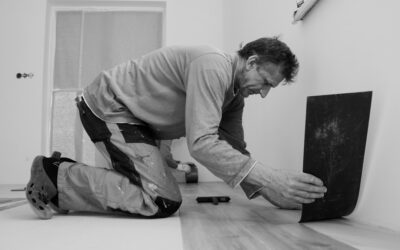
Day one: a clean tear-out by lunchtime, subfloor inspection with any soft spots noted in writing, and moisture readings recorded on slabs. Day two through three: install proceeds with end pieces measured precisely, expansion gaps maintained at every wall and vertical, and no cracked corners on plank ends. Final day: trim and transitions installed, baseboards reset or new quarter round added, jobsite cleaned, walk-through with the project manager.
If any of those steps gets skipped, hold the final 10 percent payment until the punch list is complete.
Negotiation Levers Worth Trying
Regional dealers expect to negotiate, especially at the end of the month or quarter when buying-group rebates are tied to volume targets. Reasonable asks include:
- Free upgraded underlayment
- Free quarter round in matching color
- Extended labor warranty from 1 year to 3 years
- Free moving of appliances and large furniture
- Free disposal of old flooring
Most dealers will not drop core material prices more than 5 percent but will often throw in $300 to $700 worth of extras to close the deal.
Common Add-On Charges to Anticipate
Beyond the base material and labor numbers, regional dealers commonly bill for additional services that big-box quotes often omit. Knowing the line items in advance keeps surprise change orders to a minimum. Stair-step installation runs $50 to $90 per step on top of square-foot labor. Slab moisture testing typically costs $75 to $150. Self-leveling compound costs $1.50 to $3 per square foot of treated area. Stair nose pieces and reducer transitions run $35 to $65 each.
Final Verdict
A reputable mid-size dealer like Jeffco Flooring or any well-run regional shop is worth the modest premium over big-box pricing — but only after you verify ownership stability, installer credentials, warranty terms in writing, and current customer references. The product on the floor is half the deal. The crew installing it and the people answering the phone in year three are the other half.
Prefer to explore on your own?
See how new flooring looks in your actual room in seconds — free, no signup.
Try the free Floor Studio →