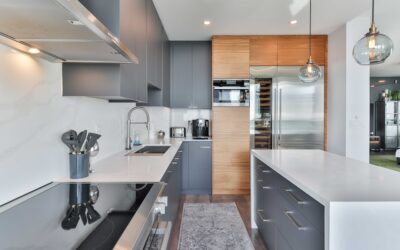
The humble support under a base cabinet does two big jobs: it carries the weight of the cabinet and countertop, and it sets the finished look, whether hidden behind a toe kick or exposed like furniture. Understanding kitchen cabinet legs helps you level cabinets on uneven floors, choose between concealed adjustable feet and decorative legs, and pick supports rated for the real loads a loaded cabinet carries. This guide covers the types, heights, load ratings, costs, and installation.
Part of our Kitchen Remodeling guide — explore the full guide →
- What Kitchen Cabinet Legs Do
- Types of Cabinet Legs
- Standard Heights
- Load Ratings Matter
- Adjustable Levelers Explained
- What They Cost
- How to Install Cabinet Legs
- Choosing Legs for Your Kitchen Style
- Plastic Versus Metal Levelers
- The Toe Kick and Concealing the Legs
- Cleaning Underneath and Pest Considerations
- Final Thoughts
What Kitchen Cabinet Legs Do
Cabinet legs serve two distinct purposes. Functionally, adjustable legs let you level a run of cabinets on floors that are never perfectly flat, which is essential for a straight countertop and doors that hang true. Aesthetically, exposed legs can lift the cabinets off the floor to create a light, furniture-like look, popular in freestanding islands, vintage-style kitchens, and open-plan spaces. Some legs do only one job; the best modern systems do both, hiding an adjustable leveler behind a decorative or standard toe kick.
Types of Cabinet Legs
The category breaks into a few clear groups:
- Adjustable plastic leveling legs — the workhorse of European-style (frameless) cabinetry; a threaded post lets you fine-tune height, then a clip-on toe kick hides them.
- Adjustable metal legs — stronger than plastic for heavy stone countertops and large cabinets.
- Decorative wood legs — turned or tapered furniture-style legs for exposed islands and end cabinets.
- Metal furniture legs — stainless, brass, or black-finished legs for a modern, industrial, or mid-century look.
- Bun feet and corbels — traditional rounded feet for a classic furniture appearance.
Standard Heights
Leg height sets the cabinet’s finished elevation and must coordinate with countertop height:
- Standard toe-kick height: about 4 to 4.5 inches, so hidden leveling legs commonly adjust in that range.
- Adjustable leveler range: many offer roughly 3.75 to 8 inches with clip-in extensions, absorbing floor variation.
- Decorative exposed legs: often 4 to 6 inches for a subtle lift, or taller for a distinctly furniture look.
- Target finished counter height: 36 inches, which the leg height plus cabinet box plus countertop must add up to.
Load Ratings Matter
A loaded base cabinet with a granite or quartz countertop, a farmhouse sink full of dishes, and drawers packed with cookware weighs far more than an empty box. Cheap legs can bow or crack under that load. Look at the rated capacity per leg and multiply by the number of legs supporting the cabinet. Quality plastic levelers are typically rated around 150 to 350 pounds each, and metal legs higher. As a rule, use four legs per standard cabinet and add a fifth or sixth leg for long runs or heavy stone tops. Never rely on decorative legs alone for a heavy stone island; pair them with rated supports.
Adjustable Levelers Explained
The most common modern system is the adjustable leveler, and it’s worth understanding because it makes installation so much easier. A plastic or metal socket mounts to the underside of the cabinet, and a threaded foot screws into it. You spin the foot up or down, often with a screwdriver through an access hole from inside the cabinet, to raise or lower each corner until the whole run is dead level. A separate toe-kick panel then clips onto the front legs to hide them. This system removes the old headache of shimming cabinets and lets you re-level later if the floor settles.
What They Cost
Cabinet legs are inexpensive relative to the cabinets they support:
- Adjustable plastic levelers — $1 to $4 each, often sold in sets.
- Adjustable metal legs — $3 to $10 each.
- Decorative wood legs — $10 to $40 each depending on size and detail.
- Metal furniture legs — $8 to $30 each.
- Toe-kick clips and panels — a few dollars per clip plus the panel material.
How to Install Cabinet Legs
Installing adjustable legs is a straightforward DIY task:
- Mark the mounting points. Position sockets near each corner, set in from the edges per the manufacturer’s spec, with an extra pair mid-span on long cabinets.
- Attach the sockets. Screw the leg sockets to the cabinet base, drilling pilot holes to avoid splitting.
- Thread in the feet. Screw the adjustable feet into the sockets, leaving them at a mid-range starting height.
- Set the cabinets and level. Place the cabinets, put a long level across the run, and turn each foot until the tops are flat and aligned.
- Secure and connect. Fasten cabinets to each other and to the wall studs, then re-check level.
- Install the toe kick. Clip on the toe-kick panel to conceal the front legs.
Choosing Legs for Your Kitchen Style
Match the leg to the look you want. For a seamless built-in kitchen, hidden adjustable levelers with a flush toe kick are standard. For a freestanding island that reads as furniture, exposed tapered wood or slim metal legs add character and let light pass underneath, making the kitchen feel more open. In a modern or industrial kitchen, black or brushed-metal legs suit the aesthetic; in a traditional kitchen, turned wood or bun feet fit better. Always confirm exposed decorative legs are rated for the weight or reinforce them with concealed supports.
Plastic Versus Metal Levelers
When it comes to the hidden adjustable levelers that do the real work, the choice between plastic and metal matters more than it seems. Quality glass-filled nylon levelers are rated for surprisingly high loads, often 300 pounds or more each, and they resist moisture and won’t corrode if a leak wets the cabinet floor, which makes them the standard in frameless European cabinetry. Metal levelers offer even higher capacity and a more solid feel, valuable under a long run topped with heavy granite or a cast-iron farmhouse sink. In damp locations like under a sink, corrosion-resistant plastic or stainless metal is preferable to plain steel, which can rust. For most kitchens, a set of good nylon levelers with enough legs per cabinet handles the load comfortably, with metal reserved for the heaviest islands.
The Toe Kick and Concealing the Legs
In a built-in kitchen, the legs are meant to disappear behind a toe kick, and getting that detail right is what makes the installation look finished. After leveling the cabinets, a recessed toe-kick panel clips onto the front legs, hiding them while providing the standard recess that lets you stand close to the counter without stubbing your toes. Toe-kick clips snap onto the leg posts and grip the panel, so it can be removed for cleaning or to re-level later. Matching the toe kick to the cabinet color, or choosing a contrasting or metallic toe kick for a modern accent, is a small design decision that affects the whole kitchen’s look. A well-fitted toe kick with tight, even reveals signals a professional installation.
Cleaning Underneath and Pest Considerations
One underrated benefit of exposed legs on a freestanding island is the ability to clean underneath, which a floor-to-toe-kick cabinet makes impossible. Raising a cabinet or island on visible legs lets you sweep and mop below it, preventing the buildup of crumbs and dust that can attract pests. In built-in cabinets, the toe-kick space is sealed off, which looks seamless but hides any spills that seep under the cabinet. If you like the open, cleanable look and want to discourage pests, exposed furniture legs on an island are practical as well as stylish. Just ensure whatever legs you choose are rated for the load and, for heavy stone tops, backed by concealed structural supports so appearance never compromises strength.
Final Thoughts
Kitchen cabinet legs are a small component with an outsized impact on both function and style. Adjustable levelers make it possible to set a perfectly flat run of cabinets on an imperfect floor, while decorative legs can transform a boxy base cabinet or island into a piece of furniture. The essential rules are to respect load ratings, using enough properly rated legs to carry a fully loaded cabinet and heavy stone countertop, and to coordinate leg height so the finished counter lands at the standard 36 inches. Choose the right type for your look, install the levelers before setting the cabinets, and you’ll have a level, solid, and stylish foundation for the whole kitchen.