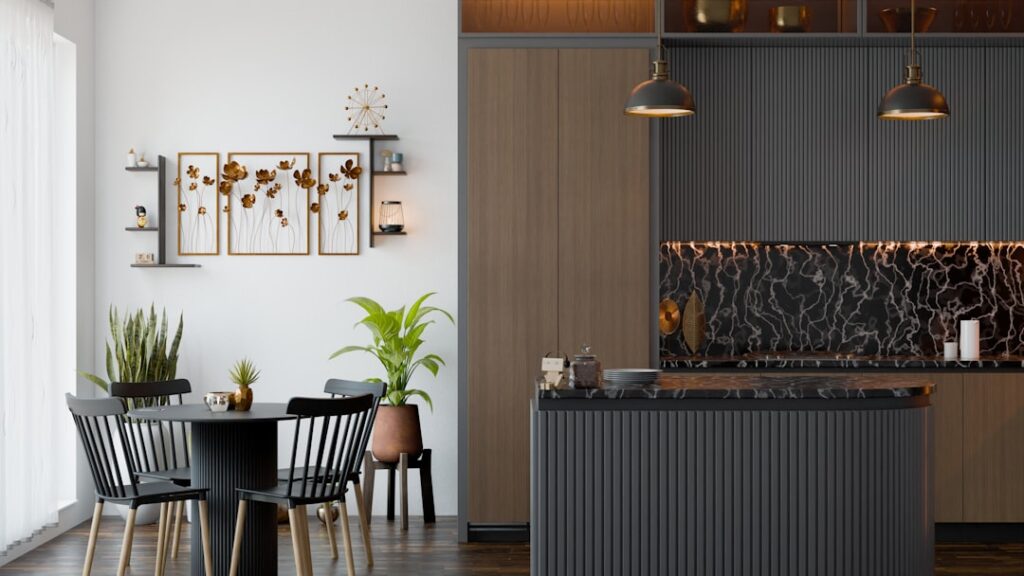
The wood behind your cabinet doors decides more than the color; it dictates how they age, how they take stain, how much abuse they shrug off, and how much of your remodeling budget disappears into the kitchen. Choosing among the common kitchen cabinet wood types means weighing hardness against grain, cost against character, and painted finishes against natural stains. A hickory cabinet and a soft maple cabinet may look similar in a showroom, but they behave very differently over a decade of slamming doors and steaming pots, so it pays to know what you’re actually buying.
Hardwood Versus Engineered Options
Before comparing species, understand that not every cabinet is solid wood. Most quality cabinets use a hardwood frame and solid-wood or veneer-over-plywood doors, while cabinet boxes are frequently made of plywood or, in budget lines, particleboard and medium-density fiberboard. That’s not automatically a downgrade. Furniture-grade plywood resists moisture better than solid wood in a humid kitchen and won’t split, while MDF takes a painted finish more smoothly than any species of solid wood because it has no grain to telegraph through the paint.
The smart approach mixes materials: solid hardwood face frames and doors for durability and repairability, plywood boxes for stability, and MDF center panels on painted doors to prevent seasonal cracking. Knowing where each material belongs keeps you from overpaying for solid wood in places it offers no benefit.
Maple: The Versatile Workhorse
Maple is the most popular hardwood for cabinets, and for good reason. It’s dense, hard, and has a smooth, fine grain with only subtle figure, which makes it the ideal candidate for painted finishes and clean contemporary stains. On the Janka hardness scale, hard maple rates about 1,450, so it stands up to daily use without denting easily.
Maple does have quirks. It can blotch when stained with dark colors, so many finishers use a conditioner or opt for lighter tones and paint. Expect maple cabinets to fall in the mid price range, generally $150 to $350 per linear foot installed for semi-custom lines. If you want a crisp white or gray painted kitchen that will still look sharp in fifteen years, maple is the default choice.
Oak: Bold Grain and Budget-Friendly
Oak fell out of fashion in the 2000s but has surged back, especially white oak in modern and Scandinavian-inspired kitchens. Its defining feature is a strong, open grain that adds visible texture. Red oak runs warmer with pinkish tones, while white oak leans cooler and more contemporary, taking on the rift-cut and quarter-sawn looks designers currently love.
Oak is hard and forgiving, rating around 1,290 Janka for red oak, and its pronounced grain actually hides scratches and everyday wear better than smoother woods. Red oak is one of the more affordable hardwoods, while premium rift-cut white oak commands a significant upcharge. If you want visible wood character on a moderate budget, oak delivers.
Cherry: Warmth That Deepens With Age
Cherry is the choice for traditional and transitional kitchens that want a rich, refined look. Freshly finished cherry starts as a light reddish-brown and darkens dramatically over the first year of sun exposure, mellowing into a deep, warm patina. That aging is a feature to fans and a surprise to the unprepared, so expect the color to shift.
Its grain is smooth and satiny with occasional gum streaks and pin knots that add character. Cherry is softer than maple at about 950 Janka, so it dents a bit more easily, and it sits at the higher end of the price range. For homeowners who want an heirloom, formal feel and don’t mind paying for it, cherry is hard to beat.
Hickory, Birch, and Alder
Beyond the big three, several species fill specific niches. Each brings a distinct look and price point:
- Hickory — The hardest common cabinet wood at roughly 1,820 Janka, with dramatic light-to-dark color variation. Perfect for rustic, farmhouse, and lodge kitchens, though its wild grain fights formal designs.
- Birch — A smooth, affordable hardwood that mimics maple at a lower price. It stains a touch less evenly but is an excellent value for stained cabinets on a budget.
- Alder — A softer wood, around 590 Janka, prized for knotty rustic looks. It dents easily but takes stain beautifully and costs less than cherry while imitating its warmth.
- Walnut — A premium dark hardwood with straight, elegant grain. Expensive, but unmatched for high-end modern and mid-century kitchens.
Matching Wood to Finish and Lifestyle
Your finishing plan should drive the species choice as much as looks do. For painted cabinets, smooth, tight-grained woods like maple, birch, or an MDF panel give the flattest, most durable result; open-grained oak lets its texture show through paint, which some love and others hate. For a stained natural look, cherry, walnut, and oak reward you with rich figure, while maple and birch suit lighter, more uniform stains.
Lifestyle matters too. A busy family kitchen with kids benefits from harder species like hickory, maple, and oak that resist dents and hide scuffs in their grain. A softer wood like alder or cherry will show life’s dings sooner, which reads as either charm or damage depending on your tolerance.
How Wood Grain Affects the Final Look
Grain is the visual fingerprint of each species, and it interacts with your chosen finish in ways worth understanding before you commit. Open-grained woods like oak, hickory, and ash have deep, visible pores that create texture you can feel and see, even through a coat of stain or paint. That texture reads as rustic warmth to some and as dated to others, so it’s a matter of taste, but it’s permanent, since you can’t sand pronounced grain flat.
Closed-grained woods like maple, cherry, and birch have tight, subtle pores that yield a smoother, more uniform surface, which is why they dominate painted and contemporary kitchens where a flawless finish is the goal. The cut of the wood matters too: plain-sawn boards show the familiar cathedral grain pattern, while rift-sawn and quarter-sawn cuts produce straight, linear grain that looks calmer and more modern, though they cost more because they yield less usable lumber per log. When you order samples, look at how the grain reads under both natural daylight and your kitchen’s artificial lighting, since grain contrast can look dramatically different between the two.
Durability and Everyday Wear
A kitchen is a punishing environment, and how a wood ages depends on both hardness and finish. Harder species like hickory and maple resist the daily dings from pot handles, dropped utensils, and kids better than softer alder or cherry, whose surfaces mark more easily. But the finish does much of the protecting: a durable catalyzed conversion varnish or a quality factory finish shields even softer woods far better than a thin hand-applied topcoat.
Moisture is the other enemy. Cabinets near the sink and dishwasher endure constant humidity and splashes, and solid wood expands and contracts with those swings, which is why painted joints can develop hairline cracks over the seasons. This movement is natural and not a defect, but it’s why quality painted cabinets use MDF center panels that don’t move. In humid climates or busy family kitchens, lean toward harder species and the most durable finish you can afford, and wipe up standing water promptly to protect the wood at the vulnerable bottom edges and toe kicks where it collects.
What to Budget
Wood species is one of the largest cost variables in a cabinet order. As a rough guide, stock and semi-custom cabinets run $100 to $400 per linear foot installed, with birch, red oak, and paint-grade maple at the lower end, and cherry, walnut, and rift-cut white oak at the top. A typical 25-linear-foot kitchen therefore swings from around $2,500 for budget birch to well over $10,000 for premium walnut.
Before you commit, order door samples in your top two species and set them in your kitchen for a week. See how they read under your actual lighting, morning and night, and remember that stained woods will shift over time. Choose the species that fits your finish, your traffic, and your budget, and your cabinets will look right for the twenty-plus years they’re likely to hang there.