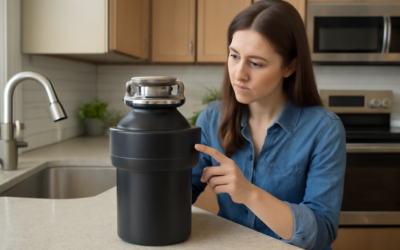
A garbage disposal pays for itself in the first week by eliminating the slop bucket and the Tuesday-morning trash odor, but the wrong model burns out in 3 years and the right one runs 12 to 15. Picking a kitchen disposal comes down to horsepower, grind stages, and motor type, not brand loyalty. This guide covers sizing, installation, food rules, and the maintenance tricks that keep disposals running past a decade.
Part of our Kitchen Remodeling guide — explore the full guide →
Horsepower Ratings Explained
Disposals come in 1/3, 1/2, 3/4, and 1 horsepower classes. One-third HP units cost $70 to $110 and suit rental properties or single-person households. Half-HP units ($100 to $180) handle families up to four with light-to-moderate food prep.
Three-quarter HP ($170 to $300) grinds fibrous foods like celery, corn husks, and chicken bones quickly with fewer jams. Full 1 HP units ($280 to $450) handle heavy use in gourmet kitchens and large families; they are overkill for most households.
Grind Stages
Single-stage disposals have one grinding chamber and one impeller ring. They work but clog faster on stringy foods. Two-stage and three-stage disposals pass food through successive chambers, reducing particles to finer slurry that flows through drain lines more reliably.
Budget 1/3 and 1/2 HP units usually have single-stage grinding; most 3/4 HP and all 1 HP models offer multi-stage. Multi-stage units reduce drain line clogs by roughly 40% in independent tests.
Motor Type: Induction vs Permanent Magnet
Induction motors (used in most InSinkErator and Waste King disposals) start under load and run quietly. They are heavier, more durable, and typically last 10 to 15 years. Permanent magnet motors in cheaper units spin faster but jam more easily and burn out after 3 to 6 years.
Look for induction motor specs on the box when comparing models at similar price points. Weight is a quick indicator: induction disposals feel noticeably heavier for the same grinding capacity.
Top Brands and Models
InSinkErator dominates with 75% of US market share. The Evolution Excel 1 HP at $340 and Evolution Compact 3/4 HP at $230 are the bestsellers. Waste King L-8000 1 HP at $180 is the value pick with higher RPM (2800 vs InSinkErator’s 1725) and a lifetime warranty.
Moen Host Series GX75C ($210) splits the difference. Avoid off-brand 1/3 HP disposals under $60; the motors often fail within 18 months and replacement costs more than a decent unit upfront.
Foods to Avoid
Skip fibrous foods like celery strings, artichoke leaves, corn husks, and onion skins, which wrap around grinding components. Never feed grease, cooking oil, or bacon fat down the disposal; these cool and congeal in drain lines, causing expensive clogs 10 to 20 feet downstream.
Starchy foods like rice, pasta, and potato peels absorb water and swell, pasting inside the drain. Bones from chicken wings and fish work in 3/4 HP and larger units; large beef or pork bones belong in the trash regardless of horsepower.
Installation Basics
Disposal installation takes 60 to 120 minutes and requires a wrench, Phillips screwdriver, plumber’s putty, and a dedicated 15-amp electrical circuit (most kitchen disposals are not code-compliant on shared small-appliance circuits).
Cost to hire: $150 to $350 labor plus permits in some jurisdictions. If the sink lacks an electrical outlet under it or a switch above the counter, add $200 to $400 for electrical work. Dishwasher-compatible models include a side nipple for the drain line; always remove the knockout plug inside that nipple before connecting.
Routine Maintenance
Run cold water for 15 seconds before starting the disposal, keep it running while grinding, and let water run another 30 seconds after the grinding sound stops. Cold water keeps fats solid so they grind rather than smear.
Monthly, grind a cup of ice cubes with a tablespoon of rock salt to scour the grinding chamber walls. Follow with half a lemon to freshen. Avoid commercial disposal cleaners with harsh chemicals; they corrode rubber splash guards.
Troubleshooting Common Problems
Disposal hums but doesn’t spin: the motor is jammed. Turn off power at the switch, insert the hex wrench (included) into the bottom center socket, and rock it back and forth. Free the impeller, then press the red reset button on the bottom.
Disposal completely dead: press the reset button first. If that fails, check the circuit breaker. If both are fine, the motor has failed, which typically means replacement rather than repair since motor parts cost nearly as much as a new unit. Slow drain after grinding: the trap or drain line has food buildup. Snake the P-trap under the sink or call a plumber for $150 to $250 to clear the line. Budget 10 to 12 years of service from a quality 3/4 HP disposal before planned replacement.
Odor Prevention Habits
Disposal odor comes from food residue on the underside of the rubber splash guard, not from the grinding chamber. Pull the splash guard out (most snap free with a firm tug) and scrub the underside weekly with a stiff brush and dish soap. Replace the splash guard annually at $8 to $15 per part.
For ongoing freshness, freeze lemon or orange peels with a tablespoon of distilled white vinegar in an ice cube tray. Drop 3 to 4 cubes into the running disposal weekly. The citrus oils cut grease, the ice scrubs the chamber walls, and the vinegar neutralizes bacteria without corroding metal components the way commercial cleaners sometimes do.
Septic System Compatibility
Homes on septic rather than municipal sewer need to choose disposals carefully. Standard disposals feed food waste into the septic tank, which speeds up sludge buildup by 25 to 40% and shortens pumpout intervals from 3 to 5 years down to 2 years. Budget an additional $300 to $500 annually in pumping costs if running a conventional disposal.
Septic-friendly disposals like the InSinkErator Evolution Septic Assist ($380) inject enzyme treatment with each use, partially breaking down food before it reaches the tank. These cost 30 to 50% more than standard units but can extend septic pumpout intervals back to near-normal. Alternatively, skip the disposal entirely and compost food waste; it is the safest long-term practice for any septic-based home.